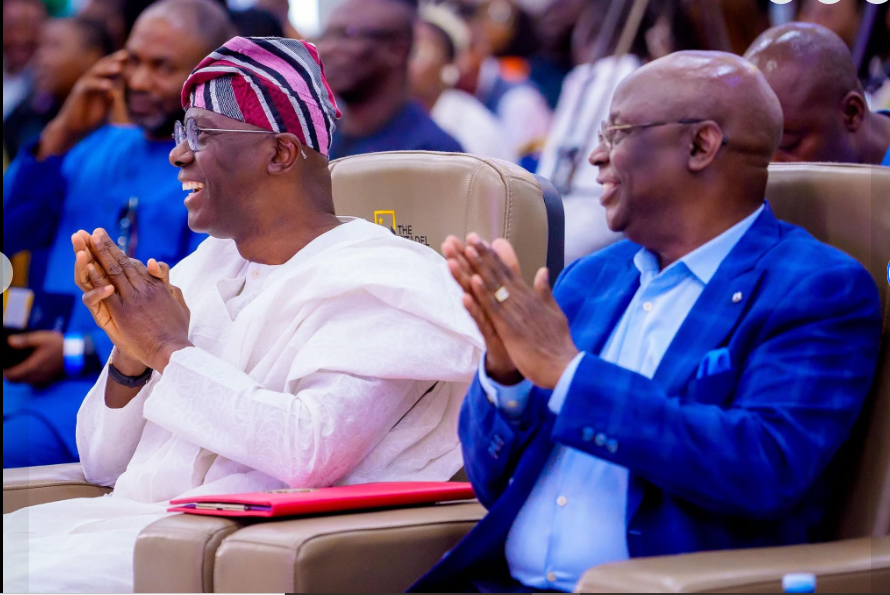




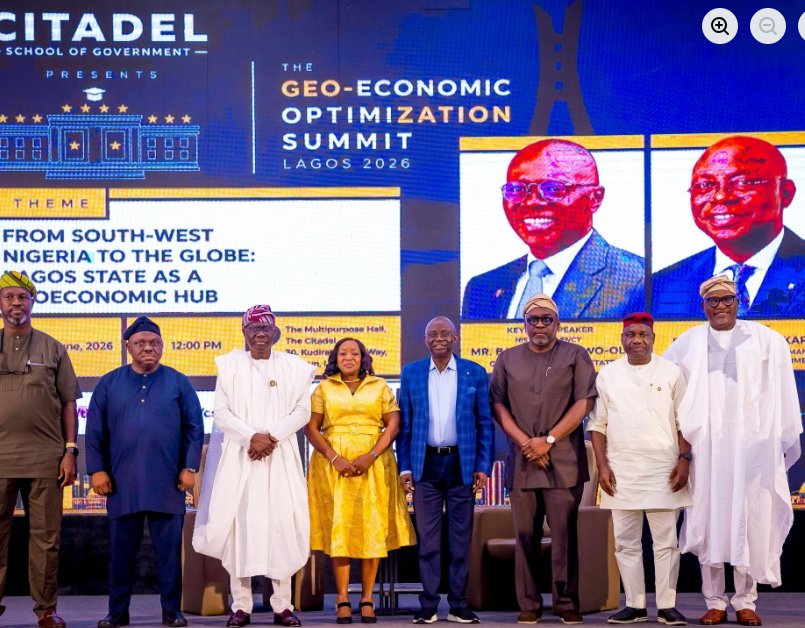
Lagos State Governor Babajide Sanwo-Olu has reaffirmed the state’s readiness for local and international investments, describing Lagos as a leading economic hub positioned to drive growth across Nigeria and West Africa.
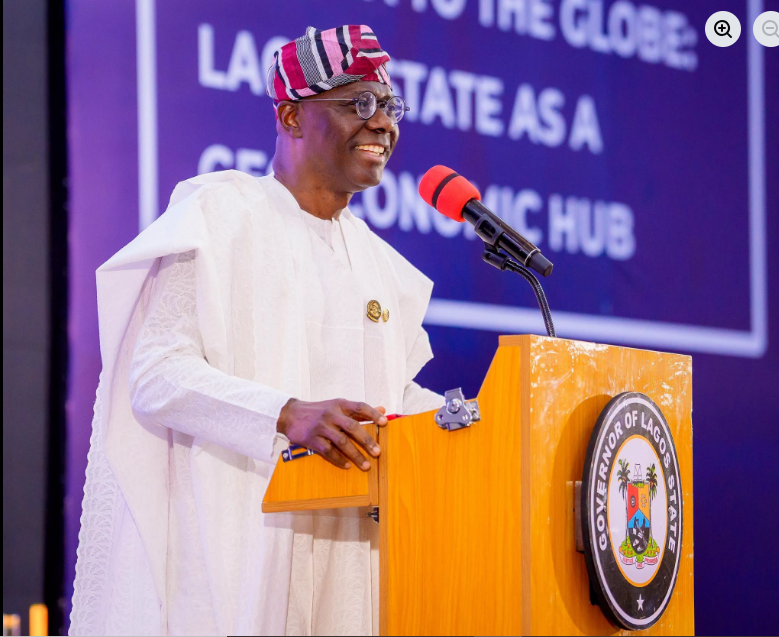
Eko Hot News reports that the governor spoke at the maiden edition of the Geo-Economic Optimization Summit Lagos 2026 hosted by the Citadel School of Government in Oregun, Ikeja.
The summit, themed “From South-West Nigeria to the Globe: Lagos State as a Geoeconomic Hub,” brought together policymakers, business leaders, academics, and stakeholders to discuss economic development and investment opportunities.
Addressing participants, Sanwo-Olu described Lagos as a sub-national economy with the capacity and influence of a nation.
He noted that Lagos remains the commercial and financial centre of Nigeria, contributing significantly to the country’s economic output.
According to the governor, Lagos accounts for approximately one-third of Nigeria’s Gross Domestic Product and remains Africa’s second-largest metropolitan economy.
He stated that the state’s economic output exceeds $259 billion on a purchasing power parity basis, highlighting its strategic importance on the continent.
Sanwo-Olu explained that Lagos has positioned itself as a major gateway for trade, investment, innovation, and economic transformation.
He attributed the state’s progress to deliberate investments in infrastructure, transportation, technology, energy, and industrial development.
The governor highlighted the importance of the Lekki Deep Sea Port, describing it as a key asset strengthening Lagos’ position as a regional trans-shipment and logistics hub.
He also referenced the Dangote Refinery, noting its contribution to industrial growth and economic expansion.
Sanwo-Olu pointed to ongoing rail infrastructure projects, including the operational Blue and Red Rail Lines, which continue to improve urban mobility and connectivity.
He revealed that plans are advancing for the Green Line, which will connect the Lekki-Epe corridor to Lagos Island.
The governor also disclosed that work is progressing on the Purple Line, a rail project expected to connect Lagos with neighboring Ogun State.
According to him, both domestic and international investors have shown interest in supporting these transformative infrastructure projects.
On energy development, Sanwo-Olu said Lagos has enacted its own electricity law to encourage a competitive energy market capable of supporting industrial growth and economic productivity.
He added that reliable electricity remains critical to attracting investments and creating opportunities for businesses.
The governor also highlighted Lagos’ growing technology ecosystem, describing it as one of the fastest-growing innovation hubs globally.
He noted that the state hosts the largest concentration of startups in Africa, creating opportunities for entrepreneurship, digital innovation, and job creation.
Sanwo-Olu emphasized the role of culture and creative industries in driving economic growth.
He described Lagos as the home of Nollywood and one of Africa’s leading centres for entertainment, film production, tourism, and creative enterprise.
According to him, strategic partnerships between the government, private sector, and federal authorities are helping to unlock new opportunities in tourism and the creative economy.
The governor credited many of Lagos’ developmental achievements to the visionary foundation established by President Bola Ahmed Tinubu during his tenure as governor of the state.
He said successive administrations have continued to build on that foundation through strategic planning and policy continuity.
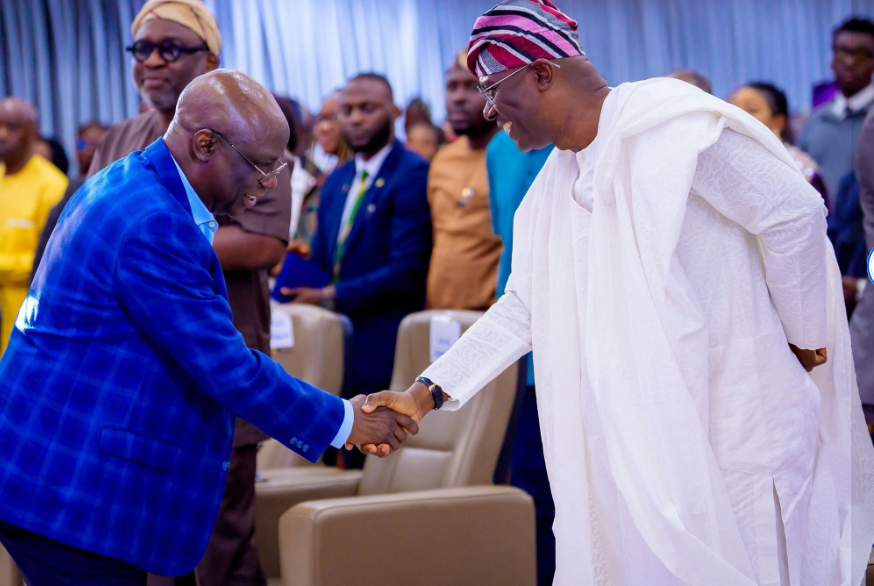
Sanwo-Olu urged investors to take advantage of the opportunities available across various sectors of the Lagos economy.
He assured potential investors that the state remains committed to creating an enabling environment for business growth and sustainable development.
The governor also encouraged young people to prepare for future opportunities emerging from ongoing investments and economic reforms.
According to him, Lagos is determined to strengthen its position among the world’s leading economic centres.
In his keynote address, the Founder and Board Chairman of the Citadel School of Government, Pastor Tunde Bakare, described Lagos as a model of economic transformation and institutional development.
Bakare noted that Nigeria’s future depends on aligning its social, political, and economic realities to unlock national prosperity.
He explained that the summit was designed to promote dialogue on governance, economic development, and national competitiveness.
The cleric praised Lagos for demonstrating how strategic vision, policy consistency, and sustained investments can transform a sub-national government into a globally relevant economic hub.
Bakare added that Lagos serves as an example of what is possible when leadership, planning, and economic opportunities are effectively aligned.
He expressed optimism that other states can replicate similar development models to create multiple centres of prosperity across Nigeria.
The summit concluded with renewed calls for stronger collaboration between government, investors, and development partners to unlock economic opportunities and position Lagos as a global investment destination.