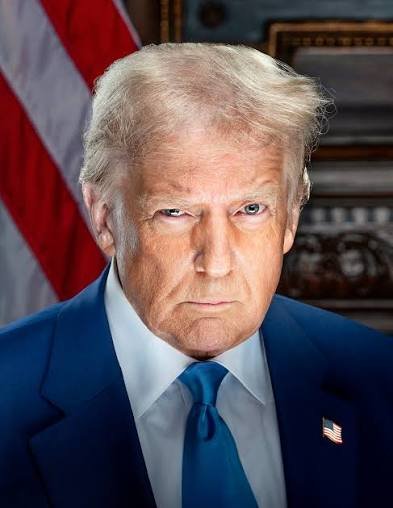




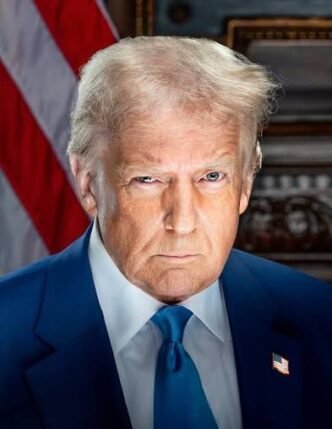
A recent public disagreement between Italian Prime Minister Giorgia Meloni and U.S. President Donald Trump is being viewed as a sign of changing political attitudes among European conservative leaders ahead of key elections across the continent.
Eko Hot News reports that the dispute marks a noticeable shift in what was once considered one of the closest transatlantic political relationships between Trump and a leading European right-wing figure. Meloni has emerged as one of the most prominent conservative voices in Europe, and her response has drawn wide attention across political circles.
The disagreement reportedly began after comments attributed to President Trump during an interview suggested that Meloni had made an overly personal appeal during a recent G7 gathering in France. The Italian leader strongly rejected the claim, describing it as inaccurate and dismissing the narrative as misleading.
Meloni’s response has been interpreted by analysts as both a defence of national dignity and a reflection of evolving political calculations within Europe’s conservative bloc. Observers say leaders are increasingly sensitive to how alignment with Trump is perceived by domestic voters.
The incident has also intensified discussions about the broader impact of Trump’s return to global political prominence, particularly among European parties that once viewed him as a strategic ally on issues such as immigration, sovereignty, and economic nationalism.
According to political commentators cited in European media, Trump’s influence is becoming more controversial in parts of Europe, where his positions on NATO, trade relations, and international security are generating mixed reactions among both conservative and centrist groups.
The tension comes at a time when several European countries are preparing for elections, creating pressure on political leaders to carefully manage foreign alliances and public perception. Analysts note that domestic priorities are increasingly shaping how European conservatives engage with U.S. leadership.
Italy’s position within this dynamic is particularly significant, given its role in European diplomacy and security discussions. Reports indicate that Rome has recently taken a more cautious stance on certain U.S. military-related requests, reflecting a broader effort to balance international partnerships.
Beyond Italy, similar trends are emerging in other European nations. In France, for example, leading figures in the conservative bloc have also begun adopting a more cautious tone toward Trump’s political style and foreign policy positions.
Some European politicians have expressed concern over statements made by Trump regarding NATO and territorial issues involving allied nations, arguing that such positions complicate efforts to maintain unity within Western security alliances.
Despite these tensions, many European conservative parties continue to share policy similarities with Trump on domestic issues such as border control, national identity, and economic protectionism. However, alignment on these topics is increasingly separated from foreign policy cooperation.
Political analysts suggest that NATO remains a central point of divergence. With ongoing security concerns in Europe, particularly relating to the conflict in Ukraine, public support for collective defence structures has strengthened in several member states.
This shift has placed additional pressure on leaders who must balance domestic political expectations with international alliance commitments, especially as voter concerns about security remain high.
Meloni’s previous close relationship with Trump, including diplomatic engagement and public support, had positioned her as one of his strongest European allies. However, the recent exchange highlights how quickly political relationships can evolve under changing geopolitical conditions.
Observers say the development does not necessarily indicate a complete rupture but rather a recalibration of priorities as European leaders respond to shifting electoral and security realities.
As election cycles approach in multiple European countries, analysts expect further adjustments in how conservative parties position themselves in relation to the United States and its leadership.
For now, the Meloni-Trump disagreement is being seen as a symbolic moment reflecting a broader trend: European conservatives are increasingly seeking to define their own political identity, even when it means stepping back from once-close international alignments.