



The Lagos State Wastewater Management Office (LSWMO) has commenced moves to establish a clearer regulatory and financial framework for wastewater and faecal sludge management across the state.
Eko Hot News reports that the agency presented its proposed rates and charges to the Lagos State Water Regulatory Commission (LASWARCO) for review and consideration as part of ongoing reforms in the sector.
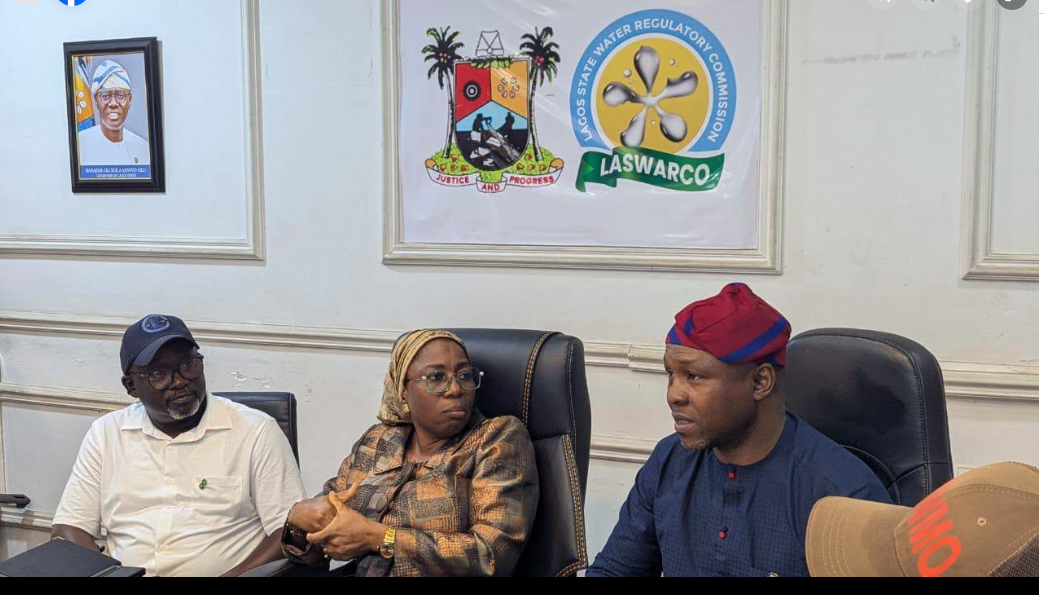
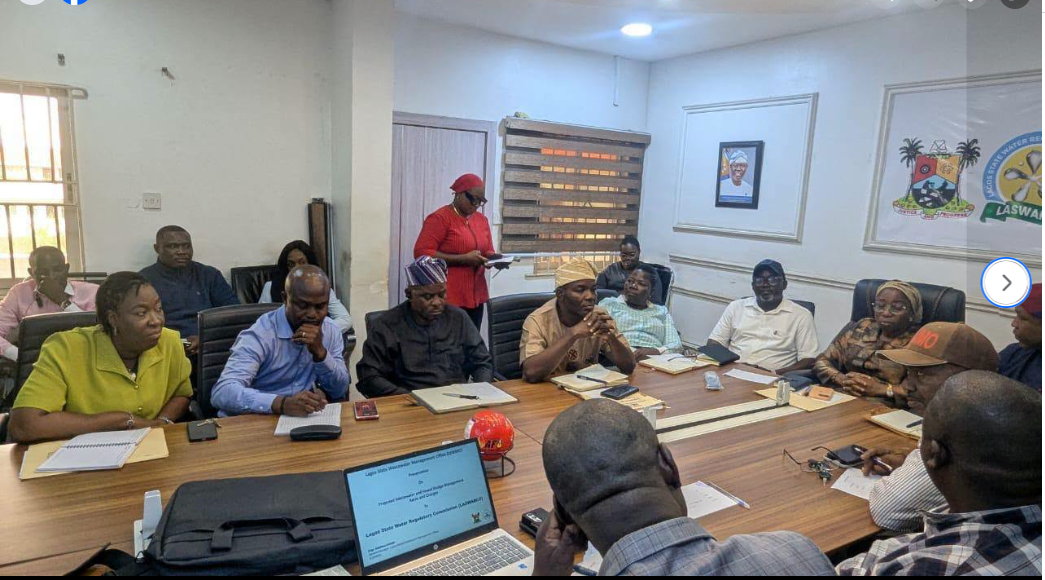
The presentation was led by the General Manager of LSWMO, Engr. Adefemi Afolabi, alongside heads of strategic departments within the agency.
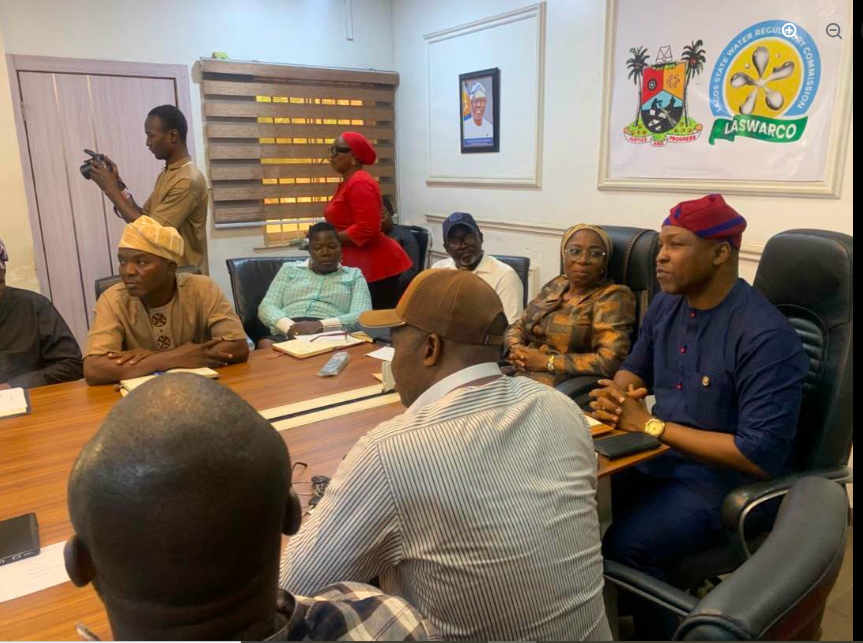
The team visited LASWARCO at Alausa, Ikeja, where the proposed rates were presented for technical and regulatory consideration.
Receiving the delegation, the Executive Secretary of LASWARCO, Mrs. Bukola Khadijah Adeyemo, welcomed the initiative.
Adeyemo stressed the importance of a strong regulatory structure capable of improving service delivery and protecting public health.
She also noted that effective regulation is essential to promoting environmental sustainability across Lagos State.
The engagement is expected to strengthen coordination between LSWMO and LASWARCO in the management of wastewater and faecal sludge.
Both agencies are working towards establishing clear, fair and enforceable provisions to guide operators and service users across the sector.
Speaking during the presentation, Afolabi said the proposed rates and charges are important to developing a sustainable wastewater management system.
He pointed to Lagos’ growing population and increasing volume of wastewater as reasons for strengthening the sector’s regulatory structure.
According to him, improved compliance with environmental and sanitation standards requires a system that provides clarity for all stakeholders.
He identified property owners, businesses, facility managers and service providers among those expected to benefit from clearer guidelines.
Afolabi explained that an effective tariff structure would provide greater certainty for stakeholders while supporting the government’s environmental management objectives.
The proposed framework is also expected to improve accountability throughout the wastewater management value chain.
It could provide a more predictable basis for planning, monitoring and delivering wastewater and faecal sludge management services.
The LSWMO General Manager said the reforms are designed to support a more organised approach to wastewater management in the state.
He emphasised the importance of protecting waterways and communities from the negative effects of poorly managed wastewater.
The agency also linked the proposed framework to Lagos’ wider environmental and public health objectives.
Afolabi said the initiative would help lay the foundation for a more structured wastewater and faecal sludge management system.
He noted that the objective is to promote a cleaner, healthier and more sustainable Lagos.
The proposed rates are part of wider regulatory reforms being pursued by LSWMO to reposition wastewater management in the state.
The agency considers wastewater management an important component of environmental governance and sustainable urban development.
The reforms are also expected to support improved professional standards among operators within the wastewater sector.
A clearer financial framework could help stakeholders understand their responsibilities and obligations under the emerging regulatory structure.
It could also assist authorities in monitoring service delivery and encouraging compliance with established standards.
Following the presentation, the proposed rates and charges will undergo further technical and regulatory consideration.
The framework is expected to proceed to the appropriate legislative process before any final approval is granted.
The rates will also be subject to the required gazetting process after the necessary approvals.
This process is intended to ensure that the proposed charges are properly reviewed and established within the relevant regulatory framework.
The development highlights the importance of collaboration between government agencies in managing Lagos’ growing environmental needs.
With rapid urban development placing increasing pressure on infrastructure and public services, effective wastewater management remains an important policy priority.
The Lagos State Government is seeking to create a system that combines regulatory compliance with financial sustainability.
Such a framework could provide a stronger foundation for improving wastewater collection, treatment and disposal practices.
It could also support better coordination among property owners, businesses, service providers and regulatory authorities.
For residents, improved wastewater management has implications for environmental cleanliness, public health and the protection of waterways.
For businesses and facility managers, clearer rates and regulatory requirements could provide greater certainty when planning wastewater services.
The proposed reforms therefore have implications across several parts of Lagos’ rapidly expanding urban environment.
LSWMO and LASWARCO are expected to continue technical engagement as the proposed framework moves through the required stages.
The agencies will also be required to address relevant regulatory considerations before the rates can take effect.
The initiative reflects the state government’s broader effort to strengthen environmental management through improved regulation and institutional coordination.
It also demonstrates the increasing focus on sustainable management of wastewater and faecal sludge as Lagos continues to urbanise.
The proposed framework, once fully considered and approved, could provide a more structured basis for managing wastewater services across the state.
It is expected to promote accountability, improve compliance and support more sustainable service delivery.
The Lagos State Government has reiterated its commitment to building an environmentally responsible wastewater management system that can meet the needs of a growing population.
The latest engagement between LSWMO and LASWARCO represents another step towards achieving that objective.