



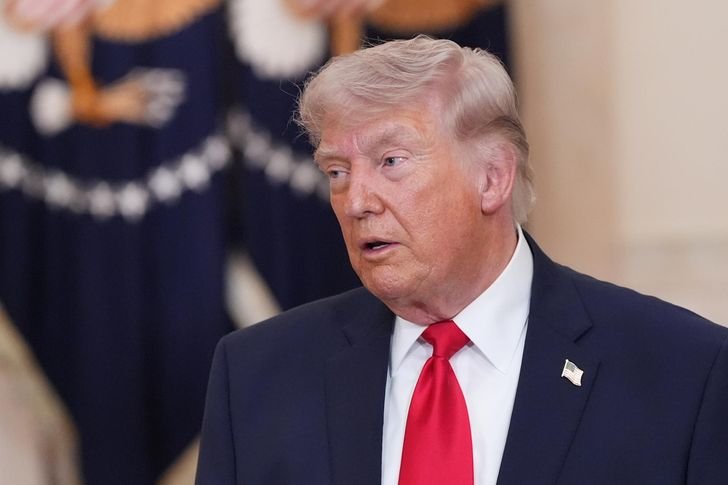
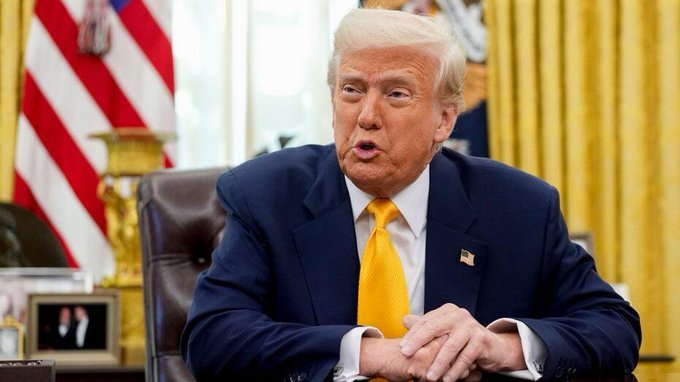
President Donald Trump says his administration is reviewing the use of Flock Safety surveillance cameras amid growing debate over privacy, law-enforcement access and the ability of the technology to monitor vehicle movements.
Eko Hot News reports that Trump said the issue was “under review” during remarks at the Oval Office on August 18, adding that his administration would announce its position in the coming weeks.
Flock Safety operates automated license plate reader systems that capture vehicle license plates and other identifying characteristics as cars pass the cameras. Law-enforcement agencies can use the information to assist investigations and locate vehicles of interest.
The technology has become increasingly controversial because the cameras collect information about large numbers of vehicles, including those belonging to people who are not suspected of any wrongdoing.
Privacy advocates argue that widespread access to the information could allow authorities to reconstruct people’s movements and create extensive records of where vehicles have travelled.
Supporters of the system, however, say the technology can assist law-enforcement agencies in locating stolen vehicles, finding missing people and developing leads in investigations.
Flock Safety has faced increasing scrutiny following reports of alleged misuse by some law-enforcement personnel.
The company recently announced additional safeguards in response to the concerns. Among the changes is a requirement for law-enforcement users to provide case information when conducting searches.
Flock also said it would make its auditing system mandatory and introduce measures designed to identify unusual searches that could indicate improper use.
Another major change involves data retention. The company announced that the default retention period would be reduced from 30 days to seven days, although longer retention can still apply in specific investigations.
Despite the changes, civil liberties groups remain concerned about the broader implications of automated license plate surveillance.
Critics say safeguards should include clear limits on who can access the information, how long records can be retained and when authorities can search data collected through the systems.
The controversy has also spread to local governments across the United States.
A growing number of cities and jurisdictions have reconsidered or ended contracts involving Flock cameras amid concerns about privacy, transparency and oversight.
Some law-enforcement agencies have also launched internal reviews of how their personnel use the technology.
In Atlanta, for example, officials ordered a comprehensive review of the city’s Flock system and related policies amid growing public scrutiny.
The debate has placed greater attention on the balance between public safety and individual privacy.
Flock Safety maintains that its technology is designed to support public safety efforts rather than monitor individuals for personal reasons.
However, concerns have intensified as the technology becomes more widespread and the amount of vehicle data available to participating agencies increases.
Trump’s decision to review the system could therefore have implications beyond Flock Safety itself.
A federal position could influence how local and state agencies approach automated license plate readers and other technologies capable of collecting large amounts of information about residents.
The discussion also comes as lawmakers and advocacy groups consider stronger rules governing government access to surveillance databases.
The central question is how authorities can use technology to support legitimate investigations without creating systems that enable excessive monitoring of ordinary citizens.
For the Trump administration, the review provides an opportunity to examine both the public-safety benefits and privacy concerns surrounding Flock cameras.
Trump has not yet announced whether his administration will support continued use of the technology, impose additional restrictions or recommend broader changes.
He is expected to give his position in the coming weeks.
Until then, the debate over Flock Safety is likely to continue as communities, law-enforcement agencies, privacy advocates and policymakers examine the appropriate limits of automated surveillance.
The growing discussion reflects a wider national conversation about how modern technology should be used while protecting the privacy and civil liberties of Americans.