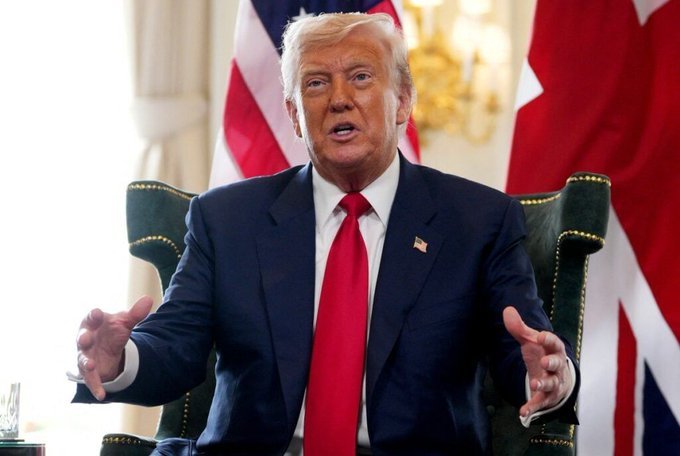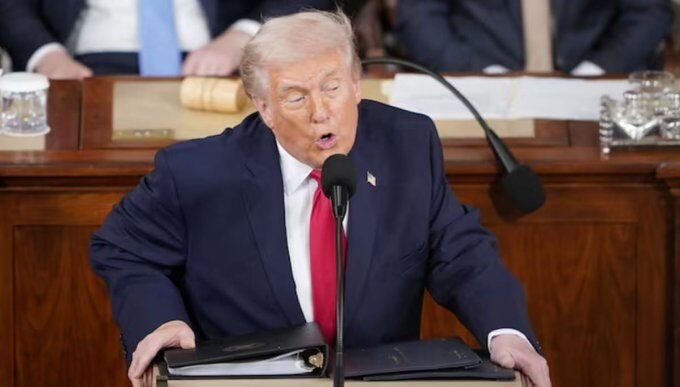






President Donald Trump has said Canada could face tariffs over the impact of wildfire smoke drifting into parts of the United States, linking the issue to concerns about forest management.
Eko Hot News reports that President Trump suggested Canada should bear responsibility for the effects of wildfire smoke that has affected air quality in several U.S. cities. He said tariffs could be considered as part of the administration’s response.
The President made the remarks while discussing the environmental and economic effects of cross-border wildfire smoke. His comments have attracted attention from policymakers and environmental observers in both countries.
According to Trump, communities in the United States should not continue experiencing the consequences of smoke from Canadian wildfires without accountability. He argued that the issue deserves greater attention.
The President also raised concerns about forest management practices in Canada. He suggested that stronger prevention and maintenance measures could help reduce the scale and impact of future wildfire seasons.
Several Republican lawmakers have echoed similar concerns. They have argued that improved forest management could help lessen the frequency and severity of wildfire-related smoke affecting neighbouring regions.
Wildfire smoke has periodically reduced air quality across several parts of North America in recent years. Depending on weather conditions, smoke from large fires can travel hundreds of miles across international borders.
Health authorities often advise residents to limit outdoor activities when air quality declines because of wildfire smoke. Children, older adults and people with respiratory conditions are generally encouraged to take additional precautions during such periods.
Environmental experts note that wildfire activity is influenced by a combination of factors, including prolonged dry conditions, high temperatures, vegetation levels and weather patterns. Forest management is one element often discussed in broader wildfire prevention strategies.
Canada experiences wildfire seasons every year, with provincial and federal agencies working together to monitor, contain and manage active fires. Emergency response teams are regularly deployed to affected areas.
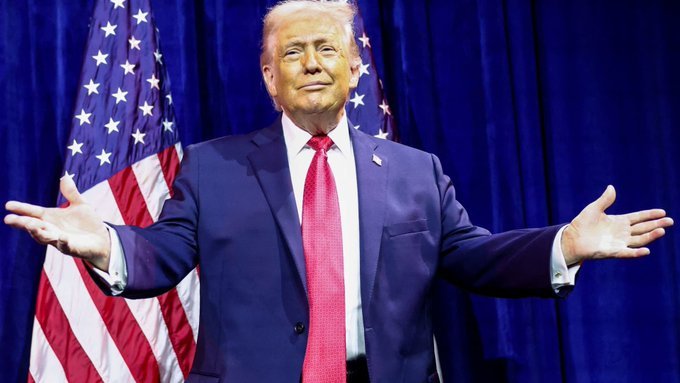
The United States and Canada have a long history of cooperation on wildfire response. Both countries frequently share personnel, equipment and technical expertise when large fires threaten communities or natural resources.
Trade relations between the two neighbouring countries remain among the largest in the world. The United States and Canada maintain extensive commercial ties covering manufacturing, agriculture, energy, technology and other sectors.
Analysts say any proposal involving tariffs would likely attract careful legal and economic review because of existing trade agreements between both countries. Trade measures are typically subject to established domestic and international procedures.
The President’s comments have also renewed discussion about environmental cooperation between the United States and Canada. Many experts believe coordinated planning remains important in addressing challenges that extend across borders.
Environmental specialists continue to encourage investment in wildfire prevention, emergency preparedness and sustainable forest management. They say collaborative approaches can strengthen resilience during future wildfire seasons.
Air quality remains a public health priority during periods of increased wildfire activity. Government agencies in both countries regularly issue updates, forecasts and health guidance to help residents stay informed.
Officials continue to monitor wildfire conditions and changing weather patterns as the season progresses. Authorities also encourage residents in affected areas to follow official advisories and take appropriate precautions when air quality declines.
The latest comments from President Trump have added a political dimension to ongoing discussions surrounding wildfire management, environmental responsibility and cross-border cooperation. Observers say the issue is likely to remain part of broader conversations on trade, public health and environmental policy in the months ahead.