



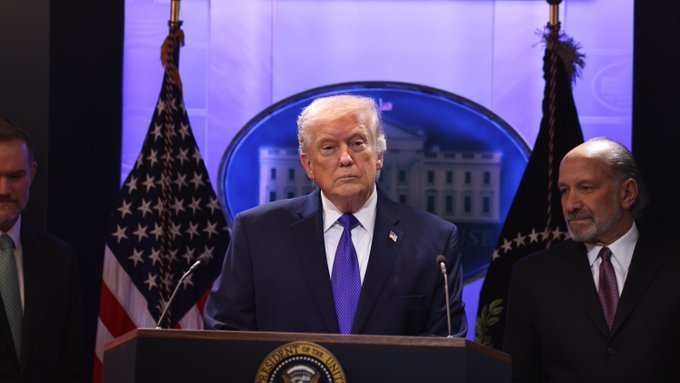
U.S. President Donald Trump has said Washington is only “semi-negotiating” with Iran after Tehran presented new conditions concerning the reopening of the Strait of Hormuz.
Eko Hot News reports that Trump’s comments came after Iran outlined demands that include compensation for damage it says resulted from recent fighting.
The Strait of Hormuz remains a major international shipping route and an important passage for global energy supplies.
Any development affecting access through the waterway is closely monitored by governments, energy companies and international markets.
Trump indicated that discussions between Washington and Tehran were continuing but described the current level of engagement as limited.
His remarks suggest that significant differences remain between the two sides over the conditions for reaching an understanding.
Iran’s latest demands have added another issue to the discussions, with Tehran seeking compensation as part of its proposed conditions for reopening the strategic waterway.
The demand has introduced a financial component into negotiations that already involve wider political and security concerns.
Trump did not indicate that the United States had agreed to Iran’s demands.
Instead, his description of the discussions as “semi-negotiating” suggested that formal progress remained limited.
The Strait of Hormuz connects the Persian Gulf with the Gulf of Oman and is widely regarded as one of the world’s most important maritime routes.
Large volumes of energy products pass through the waterway, making developments around the strait particularly significant for international markets.
Any prolonged disruption could create concerns about energy supplies, shipping costs and global economic stability.
For this reason, diplomatic efforts involving the United States and Iran are being closely watched internationally.
Iran’s demand for compensation could become a major point of discussion if negotiations move toward a broader agreement.
The financial request would require Washington to consider the economic implications of any proposed arrangement.
It could also complicate efforts to establish mutually acceptable conditions for reopening the waterway.
Trump’s comments indicate that his administration remains engaged with Tehran but is not yet describing the talks as full negotiations.
The U.S. president has previously expressed a preference for agreements that address American interests while placing pressure on Tehran to make concessions.
Iran, meanwhile, has continued to advance its own conditions for any agreement involving the Strait of Hormuz.
The differences between the two positions could determine how quickly discussions progress.
International stakeholders are particularly interested in whether the two countries can reach an understanding that would ensure stable passage through the waterway.
Energy markets are also sensitive to developments around the strait because of its importance to global petroleum and gas shipments.
A return to predictable maritime traffic would likely be welcomed by international businesses and governments.
However, the latest demands indicate that several outstanding issues still need to be addressed.
Trump’s statement that the United States is only “semi-negotiating” suggests that Washington is keeping its options open.
The administration may continue assessing Iran’s proposals before deciding whether to move toward more formal discussions.
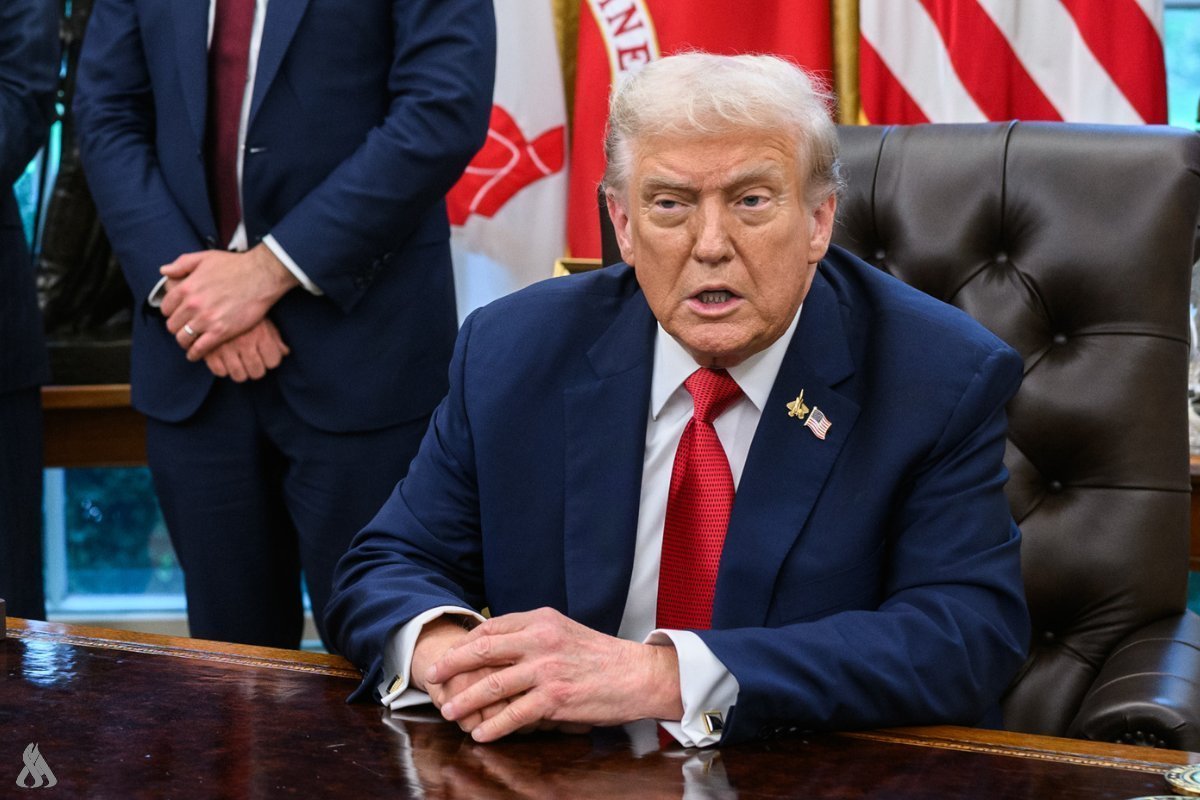
Iran’s compensation demand could also become part of wider diplomatic exchanges concerning future relations between the two countries.
The talks are taking place against the backdrop of broader disagreements between Washington and Tehran.
Those disagreements have historically included sanctions, regional security and Iran’s international economic activities.
The Strait of Hormuz has added another important dimension to the current discussions.
Any agreement concerning the waterway would have implications well beyond the United States and Iran.
Countries that depend on energy shipments through the region would have a strong interest in maintaining reliable access.
Shipping companies would also be watching for signs that conditions around the strait are becoming more stable.
Trump’s latest remarks provide no indication that a final agreement has been reached.
Instead, they point to an ongoing process in which both sides are still presenting demands and assessing possible terms.
The next stage of discussions could determine whether the current limited engagement develops into more structured negotiations.
Much will depend on whether Washington and Tehran can narrow their differences over compensation, access through the strait and other outstanding issues.
For now, the United States appears unwilling to describe its contact with Iran as full-scale negotiations.
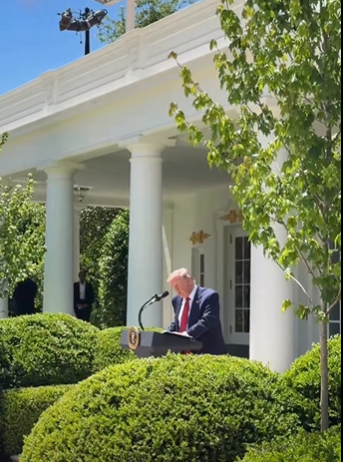
Iran’s position, meanwhile, places compensation among the conditions it wants addressed before reopening the strategic waterway.
The international community is expected to continue monitoring developments because of the Strait of Hormuz’s importance to global trade and energy supplies.
Any breakthrough could ease uncertainty surrounding the waterway, while continued disagreement could prolong concerns among international markets.
Further statements from Washington and Tehran are likely to provide greater clarity on the direction of the discussions.
For now, Trump’s “semi-negotiating” description highlights the limited progress between the two sides as they consider their respective demands.