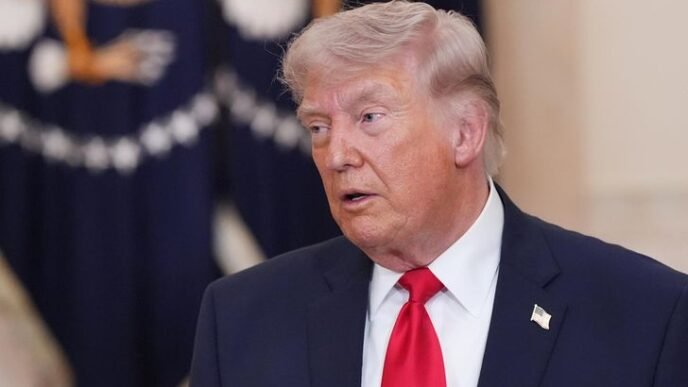




A credible surface-to-air missile threat reportedly prompted a major security operation to move President Donald Trump from Air Force One during his visit to Turkey last month.
Eko Hot News reports that U.S. intelligence indicated Iran had detailed information about Trump’s location, leading security officials to introduce an unusual decoy operation as a precaution.
The security concern reportedly emerged during Trump’s visit to Turkey for the NATO summit.
Officials responsible for the president’s protection were concerned that information about his movements could have reached parties capable of identifying his location.
The reported intelligence assessment prompted the Secret Service and other U.S. security agencies to review the president’s travel arrangements.
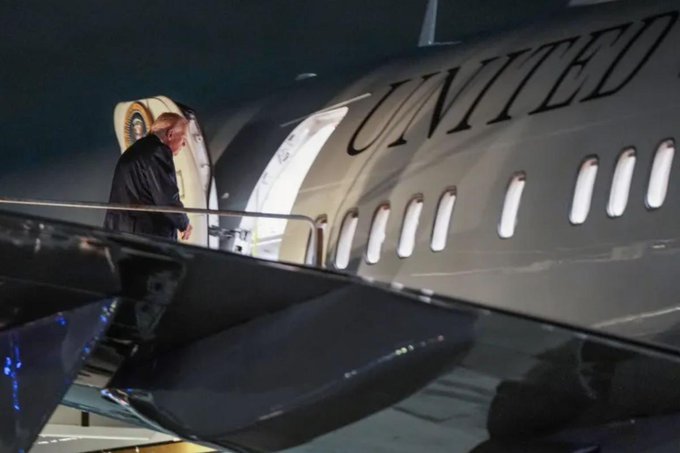
As part of the response, Trump was moved from the presidential aircraft under discreet circumstances.
The operation was reportedly designed to make it difficult for anyone monitoring the president’s movements to determine which aircraft was carrying him.
Air Force One subsequently continued operating with government personnel, journalists and military members aboard.
The arrangement created a decoy element while security teams ensured that Trump travelled separately.
The unusual procedure highlights the level of planning involved in protecting the U.S. president during international trips.
Air Force One is closely associated with presidential travel and is normally one of the most identifiable elements of a presidential movement.
Security officials therefore have to consider how information about the aircraft’s movements could be used to identify the president’s location.
In this case, intelligence reportedly suggested that Iran had unusually detailed information about Trump’s whereabouts.
That assessment raised concerns about maintaining the president’s security during his time in Turkey.
The reported surface-to-air missile threat added another dimension to the security situation.
Rather than canceling the president’s schedule entirely, officials reportedly developed an alternative plan.
Trump was moved away from the expected travel arrangement while the original aircraft continued as part of the broader operation.
The strategy was intended to protect the president while avoiding unnecessary disruption to the presidential schedule.
Trump later confirmed that his security team had instructed him to change aircraft.
He said he generally follows the directions of security officials when they determine that special precautions are necessary.
The president also acknowledged that he receives numerous security warnings that are not publicly disclosed.
However, officials have not publicly released all details surrounding the reported threat.
Information concerning presidential security arrangements is generally kept confidential because revealing operational details could create additional risks.
The reported incident nevertheless provides an unusual insight into the protective measures used during presidential travel.
International trips involving the U.S. president require extensive coordination between the Secret Service, intelligence agencies, military personnel and diplomatic officials.
These agencies assess potential risks and develop contingency plans before and during presidential movements.
When new information emerges, travel arrangements can be changed quickly.
The reported operation demonstrates how security officials can use alternative aircraft and travel patterns to protect the president.
It also shows the importance of keeping presidential movements unpredictable when intelligence indicates a heightened security concern.
The NATO summit in Turkey brought together senior leaders and officials from member countries.
The gathering required extensive security coordination because of the number of international leaders attending.
Trump’s presence added another layer of security planning for U.S. officials.
The reported intelligence concerning Iran made the situation more sensitive.
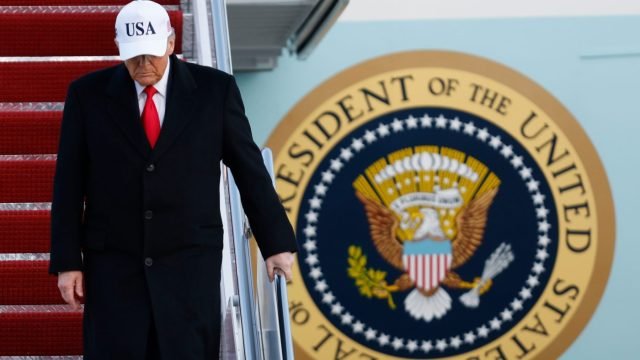
According to the account, U.S. intelligence indicated that Iranian authorities had detailed knowledge of Trump’s location.
This information reportedly contributed to the decision to use a decoy arrangement.
The operation allowed Air Force One to continue its scheduled role while Trump travelled separately.
Government employees, reporters and military personnel reportedly remained aboard the aircraft.
The presence of those individuals helped maintain the appearance of a normal presidential flight.
Trump was reportedly moved discreetly to another aircraft as part of the protective plan.
The unusual method of transferring him was intended to reduce attention and make his actual location less obvious.
Such measures are uncommon and reflect the seriousness with which presidential security teams treat credible threats.
The incident also demonstrates that security decisions can be based on intelligence that is not immediately available to the public.
Officials may receive information from multiple sources before determining that additional protective measures are necessary.
In this case, the reported assessment involved both a missile-related concern and information about Trump’s location.
The combination reportedly led to the decision to use an alternative travel arrangement.
Trump’s security team has not publicly disclosed every detail of the operation.
The president has instead said that he trusted the professionals responsible for his protection.
The incident is likely to attract continued attention because of the unusual use of Air Force One as part of a decoy strategy.
It also highlights the challenges involved in protecting a president during international travel.
For security agencies, maintaining uncertainty around presidential movements can be an important protective measure.
The reported operation demonstrates how quickly those measures can be activated when intelligence changes.
Despite the security concern, Trump’s broader schedule in Turkey continued.
The president was able to participate in his planned engagements while security officials managed the travel arrangements.
The incident did not result in a public disruption of the wider NATO summit programme.
However, the reported details show that extensive protective planning was taking place behind the scenes.
The U.S. government is expected to continue reviewing intelligence concerning threats to presidential travel.
Security officials will also continue coordinating with international partners during future overseas visits.
For now, the reported incident remains an example of the extraordinary measures sometimes used to protect a sitting U.S. president.
The decision to move Trump from Air Force One was reportedly driven by intelligence suggesting that his location had become known and that a credible surface-to-air missile threat existed.
The decoy operation allowed security officials to reduce the risk while maintaining the wider presidential travel schedule.