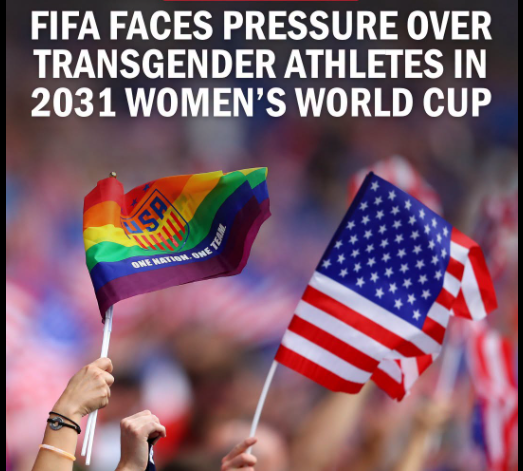




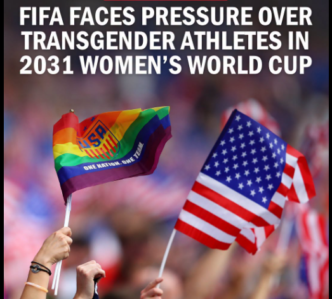
FIFA is facing renewed debate over athlete eligibility in women’s football after members of the Trump administration signalled they intend to raise the issue during discussions linked to the proposed 2031 FIFA Women’s World Cup.
Eko Hot News reports that Andrew Giuliani, Director of the White House World Cup Task Force, said the administration plans to seek assurances that participation in the 2031 FIFA Women’s World Cup will be limited to athletes who meet its proposed eligibility standard for the women’s category.
The 2031 FIFA Women’s World Cup is expected to be hosted by a joint bid involving the United States, Mexico, Costa Rica and Jamaica, although FIFA has not yet formally awarded hosting rights.
According to Giuliani, the issue of player eligibility could become one of the key topics discussed between the U.S. government and FIFA as preparations for the tournament continue.
The proposal forms part of the Trump administration’s broader approach to eligibility standards in women’s sports.

Supporters of the proposal argue that clear eligibility rules help preserve fairness in women’s sporting competitions and provide consistent standards for international events.
Earlier this year, the International Olympic Committee introduced a policy requiring one-time genetic screening for athletes competing in women’s events, reflecting a wider international discussion on eligibility criteria.
The proposal has generated differing opinions among sports administrators, athletes and advocacy organisations.
Some advocacy groups have expressed concern that stricter eligibility requirements could affect transgender athletes as well as individuals with certain differences in sex development.
Piara Powar, Executive Director of the anti-discrimination organisation Fare Network, urged FIFA to carefully consider any future policy before making permanent regulatory changes.
He said any eligibility rule adopted for a future tournament should not automatically become a permanent part of FIFA’s regulations without broader consultation.
Powar also encouraged football’s governing body to maintain an approach that supports broad participation while balancing competition requirements.
FIFA has not publicly announced any changes to its current eligibility regulations and has not commented on the latest proposals.
Under FIFA’s existing framework, national football associations are responsible for verifying the eligibility of players before submitting official tournament squads.
The governing body does not currently operate a centralised eligibility verification system for women’s competitions.
Jon Holmes, spokesperson for Football v Homophobia, also urged caution, noting that any future policy should carefully consider its potential impact on athletes.
Another advocate, Payoshni Mitra, said it would be premature to speculate about FIFA’s future position because no formal proposal has been presented by the organisation.
She expressed confidence that any future policy discussions would likely consider scientific evidence, athlete welfare and the interests of the game.
Sports governance experts note that eligibility rules in international competitions continue to evolve as governing bodies seek to balance fairness, inclusion and regulatory consistency.
The debate reflects wider global conversations taking place across several international sports regarding participation standards in women’s competitions.
Observers say any changes to FIFA’s regulations would likely involve extensive consultation with member associations, medical experts, legal advisers and athlete representatives before implementation.
As planning for the 2031 FIFA Women’s World Cup continues, discussions surrounding eligibility standards are expected to remain part of broader conversations between football authorities and host nations.
FIFA has yet to announce the successful host of the 2031 tournament or introduce any revised eligibility framework. Until formal decisions are made, the organisation’s current regulations remain in effect while stakeholders continue to express a range of views on the issue.