




U.S. senators have left Washington for the summer recess without advancing President Donald Trump’s SAVE America Act, a proposed measure that would require proof of citizenship for voting in federal elections.
Eko Hot News reports that lawmakers departed the capital early Saturday without reaching an agreement on the legislation, leaving the proposal pending as the Senate begins its summer break.
The SAVE America Act has become a major issue in the ongoing debate over federal election rules in the United States.
Supporters of the legislation argue that proof of citizenship should be required before an individual can register to vote in federal elections.
They say the measure would strengthen election procedures and provide additional safeguards around voter registration.
Opponents, however, have raised concerns about the potential impact of the proposal on eligible voters.
They argue that additional documentation requirements could create challenges for some citizens who may have difficulty providing the required proof.
The disagreement has made it difficult for lawmakers to reach consensus on the legislation before the Senate recess.
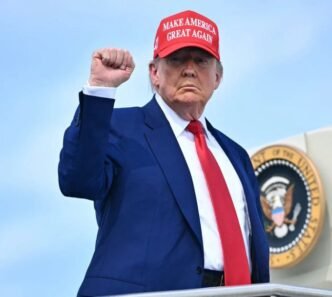
Trump has strongly supported the SAVE America Act and has urged lawmakers to advance the proposal.
The president and his allies have made election integrity a key issue and have argued that citizenship verification should form part of the federal voting process.
The legislation would apply to federal elections and seeks to establish proof of citizenship as a requirement for voter registration.
However, the measure still faces questions over its prospects in Congress.
With senators now away from Washington, consideration of the legislation is expected to remain on hold during the summer recess.
The Senate’s decision not to advance the bill represents a setback for supporters seeking immediate action.
It also provides additional time for lawmakers on both sides to consider the potential consequences of the proposed requirements.
The issue is likely to return to the Senate agenda when lawmakers resume their legislative activities.
The debate could become more prominent as the United States moves closer to future federal elections.
Supporters are expected to continue pressing for congressional approval of the proposal.
They maintain that stronger citizenship verification would help protect the integrity of federal elections.
Opponents are expected to continue challenging provisions they believe could make voter registration more difficult.
The disagreement reflects broader political divisions over election administration and voting requirements in the United States.
The federal government currently relies on existing election laws and registration procedures governing participation in federal elections.
The SAVE America Act would introduce additional requirements if it becomes law.
Its supporters say the proposed changes would provide greater confidence in the voter registration process.
Critics, however, are concerned about how the new requirements would be implemented across different states.
Election administration in the United States involves both federal and state authorities, creating additional considerations for any national voting legislation.
The proposed measure would therefore require lawmakers to consider how its provisions would interact with existing election systems.
The Senate’s failure to advance the bill before recess means those discussions will continue after lawmakers return.
Trump’s administration is expected to maintain its support for the legislation during the congressional break.
Republican lawmakers who back the proposal could also use the recess period to build further support for the measure.
Democratic lawmakers and other opponents are expected to continue raising concerns about its potential effects on voters.
The legislation has consequently become part of a wider national discussion about voting rights, election administration and citizenship verification.
For now, however, no final congressional action has been taken on the SAVE America Act.

The Senate’s summer recess means lawmakers will have to wait until their return before further consideration can take place.
The delay also leaves uncertainty over whether the legislation can secure enough support to move forward.
Its future will depend on negotiations among senators and the broader political priorities of Congress.
The debate could also intensify as lawmakers prepare for the next phase of the legislative calendar.
Trump’s continued backing is likely to keep the proposal in focus when senators return to Washington.
The president has made election-related reforms an important part of his political agenda.
The SAVE America Act represents one of the key measures associated with that agenda.
Supporters are likely to argue that Congress should act quickly when lawmakers return.
Opponents, meanwhile, are expected to demand further consideration of the implications for eligible voters.
The Senate’s decision to leave Washington without advancing the measure therefore leaves a significant election-policy debate unresolved.
Further developments are expected after the summer recess when lawmakers resume their work.
Until then, the SAVE America Act remains pending, with its future in Congress still uncertain.