



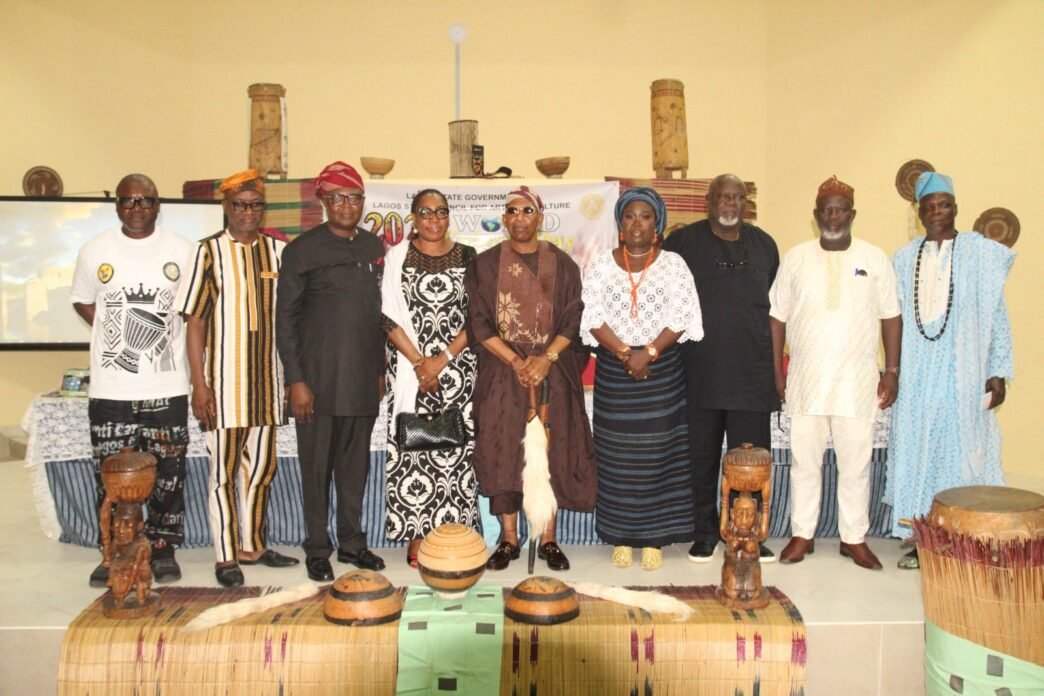
The Lagos State Government has called for a renewed integration of Nigeria’s cultural values into governance and political leadership as part of efforts to strengthen democracy, promote national unity and foster responsible leadership.
Eko Hot News reports that the Lagos State Council for Arts and Culture (LSCAC), under the Ministry of Tourism, Arts and Culture, commemorated the 2026 World Culture Day with a symposium themed “Using Culture to Redefine Nigerian Politics: The Way Forward.”
The event, held at the Lagos State Council for Arts and Culture Theatre Hall, brought together government officials, traditional rulers, academics, policymakers, cultural practitioners, students and other stakeholders to examine how Nigeria’s rich cultural heritage can contribute to building a more ethical, inclusive and people-centred political system.
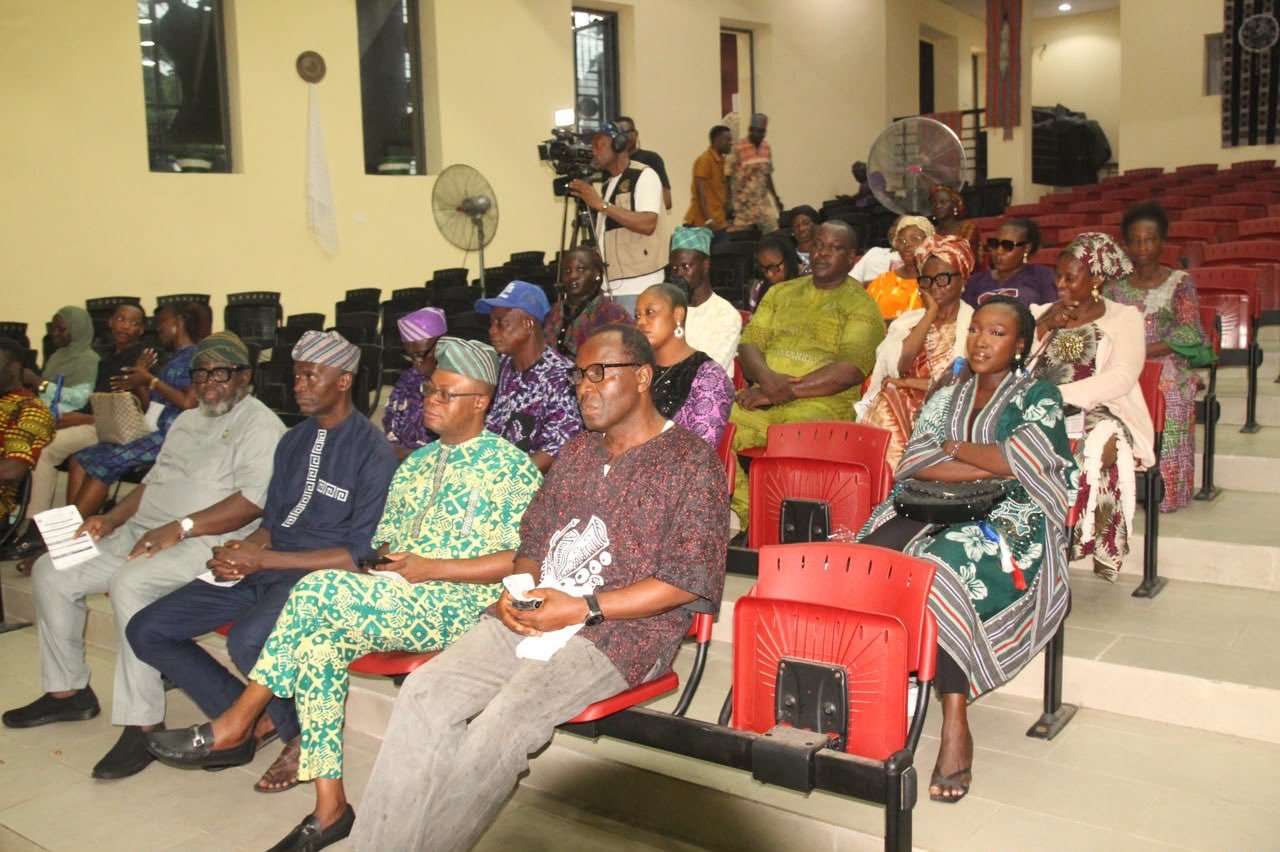
Delivering the keynote address on behalf of the Permanent Secretary, Ministry of Tourism, Arts and Culture, Mrs. Bopo Oyekan-Ismaila, the Director of Administration and Human Resources, Mr. Taoreed Dosunmu, reaffirmed the Lagos State Government’s commitment to preserving cultural heritage while leveraging arts, culture and tourism as catalysts for economic growth, social cohesion and sustainable development.
According to the Permanent Secretary, politics should be driven by the enduring values of integrity, accountability, patriotism, tolerance, service and the collective good rather than the pursuit of power.
She urged political leaders, scholars, traditional institutions, cultural practitioners and young people to work together in promoting a democratic culture rooted in peace, inclusiveness and responsible leadership.
In his welcome address, the Director and Chief Executive Officer of the Lagos State Council for Arts and Culture, Mr. Idowu Johnson, described culture as the foundation of every society, noting that it goes beyond festivals, music and traditional attire to include the values, beliefs and principles that define a people.
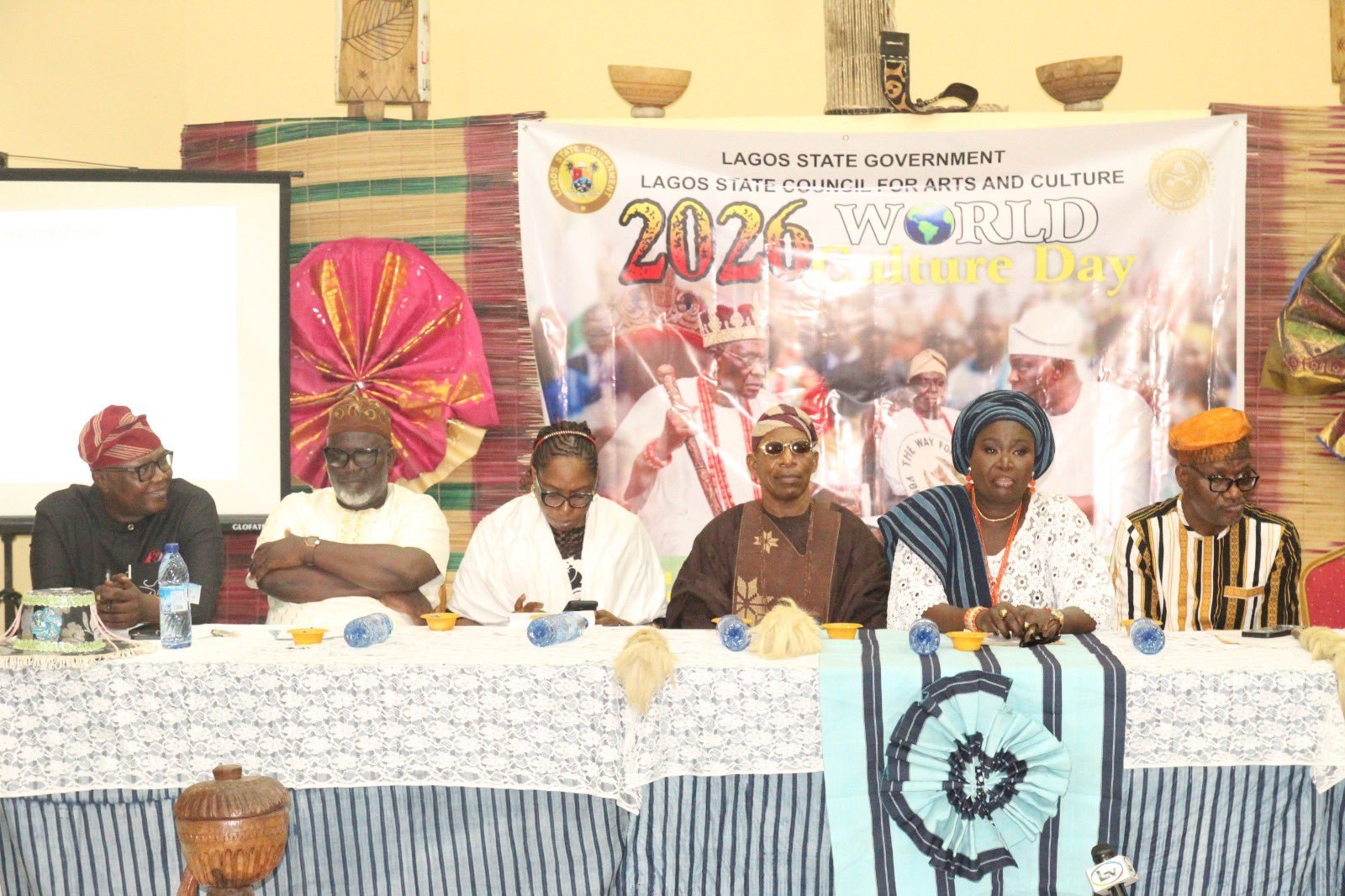
Johnson stressed that Nigeria stands at a critical point where there is an urgent need to embrace indigenous values such as honesty, communal responsibility, dialogue, consensus-building, hospitality and mutual respect in order to restore public confidence in governance.
He encouraged participants to contribute meaningfully to the discussions, emphasising that collective engagement remains essential to building a society where culture serves as the moral compass for leadership and national development.
The intellectual highlight of the symposium was the presentation of a lead paper titled “Culture and Politics in Nigeria: A Critical Attempt to Redefine Politics in Nigeria,” delivered by Professor Danoye Oguntola Laguda of the Department of Religion and Peace Studies, Lagos State University (LASU).
Professor Laguda cautioned against allowing Nigeria’s cultural identity to diminish under the influence of globalisation and modernisation, arguing that indigenous cultural values remain powerful tools for promoting good governance, accountability and national unity.
He called on Nigerians to preserve their cultural heritage and elect leaders who appreciate and are committed to promoting the nation’s values as part of governance and development.
Serving as discussant, Dr. Adeyinka Olarinmoye of the Department of Tourism and Hospitality, Lagos State University, commended the Lagos State Council for Arts and Culture for organising the symposium, describing it as timely and intellectually enriching.
She observed that while culture plays a vital role in nation-building, institutional reforms are equally necessary for meaningful political transformation.
According to her, sustainable development can only be achieved through a strategic partnership between culture, politics, institutions and active civic participation.
She also expressed concern over the growing influence of social media on societal values and urged stakeholders to critically examine its impact on Nigeria’s social fabric.
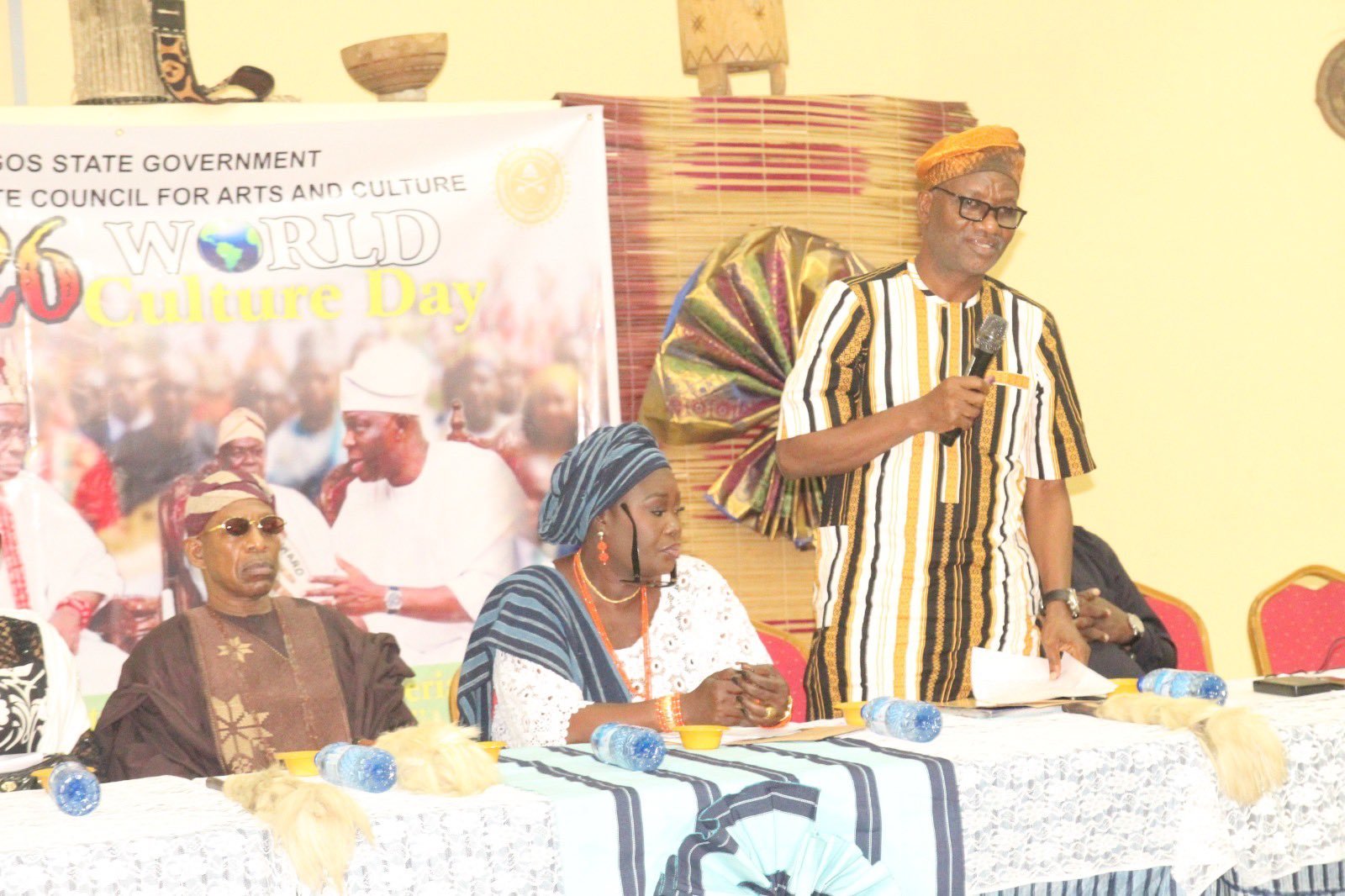
Contributing to the discussions, Mr. Taoreed Dosunmu encouraged Nigerians to reconnect with their cultural roots, noting that national development begins with a renewed appreciation of shared values and identity.
Mr. Idowu Johnson further reiterated that meaningful political reform cannot be achieved without first transforming the culture of society. He stressed that citizens share responsibility for the quality of governance and called for greater civic participation, particularly at the grassroots level, to strengthen democracy and promote accountability.
Traditional institutions also reaffirmed their support for preserving Nigeria’s cultural heritage. Representing the Permanent Secretary, Ministry of Local Government, Chieftaincy Affairs and Rural Development, Mrs. Toyin Adeniji joined the Olu of Oregun, Oba (Dr.) Olukunmi Olusesan Atunbowa, and other traditional rulers in highlighting the role of monarchs in promoting peace, moral values, unity and sustainable community development.
The symposium concluded with a collective call on Nigerians to embrace the nation’s cultural values as the foundation for responsible leadership, social justice, democratic governance and sustainable national development.
The 2026 World Culture Day celebration once again underscored the Lagos State Council for Arts and Culture’s commitment to preserving and promoting the rich cultural heritage of Lagos while encouraging meaningful dialogue on issues critical to Nigeria’s future.