



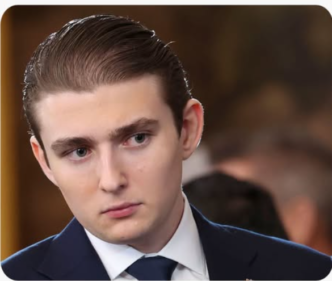
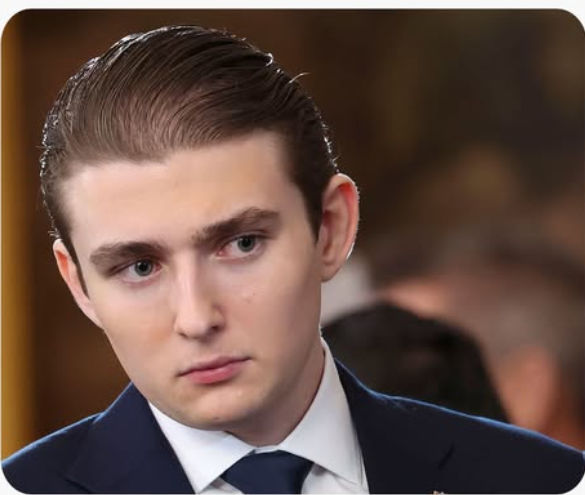
The United States Secret Service says it is aware of a video aired by Iran’s state broadcaster that appeared to threaten the safety of Barron Trump, the youngest son of President Donald Trump.
Eko Hot News reports that the agency confirmed it was aware of the broadcast and would assess anything that could be interpreted as a threat to individuals under its protection.
The nearly three-minute video reportedly focused on Barron Trump, who is 20, and featured images and references to locations associated with him.
Reports said the footage also presented claims about his movements and security arrangements. However, the operational claims presented in the broadcast have not been independently verified.
The broadcast has drawn attention because of its direct focus on a member of the US president’s immediate family.
Reports about the programme said it included surveillance-style graphics and references to places connected with Barron.
The video also reportedly referred to a $10 million reward linked to efforts targeting the president’s son. The claim about the reward has not been independently established as a genuine offer.
The Secret Service has not publicly disclosed details of any protective measures that may be under consideration.
The agency generally avoids discussing operational security information concerning people under its protection.
Its response indicates that the broadcast is being treated as information requiring attention and assessment.
Barron Trump is the youngest son of President Trump and is currently a student at New York University.
His public profile has increased since his father returned to the White House, although he has generally maintained a relatively private life.
The Iranian broadcast has raised concerns because it appeared to focus on personal information about the president’s son.
The reports come amid heightened tensions between Washington and Tehran.
Iranian state-linked media have previously aired material targeting members of the Trump family and senior American officials.
The latest broadcast has therefore attracted increased scrutiny from US security officials.
The Secret Service has stressed that it evaluates information that could present a potential concern for those it protects.
However, officials have not provided details about the nature or seriousness of the current assessment.
The video’s claims about Barron’s whereabouts and security arrangements have also not been independently confirmed.
This distinction is important because state television broadcasts can contain political messaging, claims and imagery that may not accurately reflect real-world circumstances.
US officials are expected to continue monitoring developments surrounding the broadcast.
The situation also highlights the security challenges faced by members of presidential families who receive protection from the Secret Service.
The agency’s responsibilities include assessing potential threats and maintaining security for designated protectees.
Any credible information involving a protected individual can therefore receive attention from security authorities.
The latest development has also generated discussion about the role of state media during periods of international tension.
Governments frequently use official broadcasters to communicate political messages to domestic and international audiences.
In this case, the focus on Barron Trump has drawn particular concern because he is not a government official.
The Secret Service’s acknowledgement of the video does not mean that authorities have confirmed that a specific threat or plan exists.
Instead, the agency is aware of the material and is responsible for assessing information that could affect those under its protection.
The reported broadcast comes as US-Iran relations remain highly strained.
Both governments have exchanged strong statements in recent months, increasing international attention on their relationship.
Against that backdrop, the video has added another sensitive issue to the broader US-Iran discussion.
American officials are expected to avoid publicly revealing details that could compromise protective operations.
The Secret Service has similarly maintained that operational security prevents it from discussing specific protective intelligence matters.
For now, authorities have not announced any change to Barron Trump’s public schedule or security arrangements.
The focus remains on assessing the content of the broadcast and determining whether any information within it represents a genuine security concern.
The episode also underscores the importance of caution when reporting unverified claims contained in state media broadcasts.
Further information could emerge as US officials review the material and assess its significance.
The White House and Secret Service are expected to continue monitoring the situation.
For the moment, the agency’s position is that it is aware of the video and is assessing information relevant to the people it protects.