



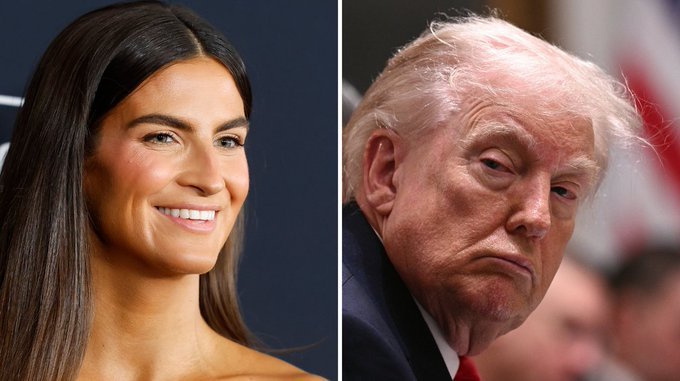
A recent exchange between President Donald Trump and CNN anchor Kaitlan Collins has generated reactions following a comment made during a political discussion that quickly gained attention across media platforms.
Eko Hot News reports that the moment occurred during a televised interaction in which Collins questioned the president, prompting Trump to respond by criticizing the journalist’s demeanor, including a remark about her not smiling. The exchange immediately drew attention online and sparked debate about tone and conduct in political interviews.
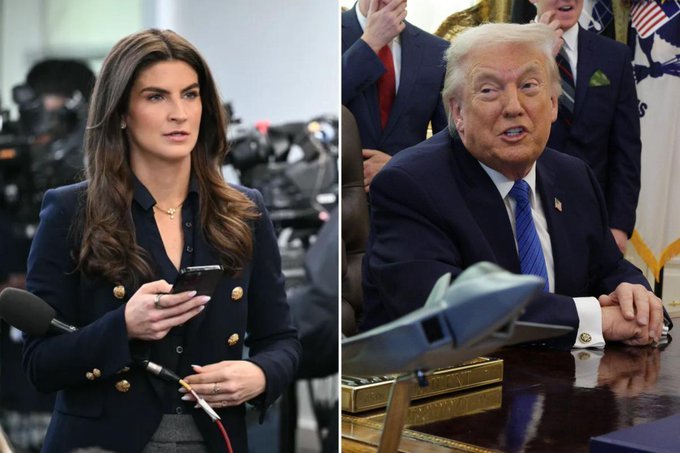
The incident highlights the continuing tension between political figures and members of the press, particularly during high-stakes interviews. Observers noted that the conversation shifted from policy-related discussion to personal commentary, drawing criticism from some media analysts and supporters alike.
Supporters of the president argued that the response reflected frustration with what they described as aggressive questioning from news outlets. Critics, however, said the remark underscored concerns about attacks on journalists and the growing hostility between political leaders and the media.
The video clip circulated widely on social media platforms shortly after it aired, with commentators analyzing both the substance of the exchange and the broader implications for political communication. Media experts noted that such moments often shape public perception beyond the original policy discussion.
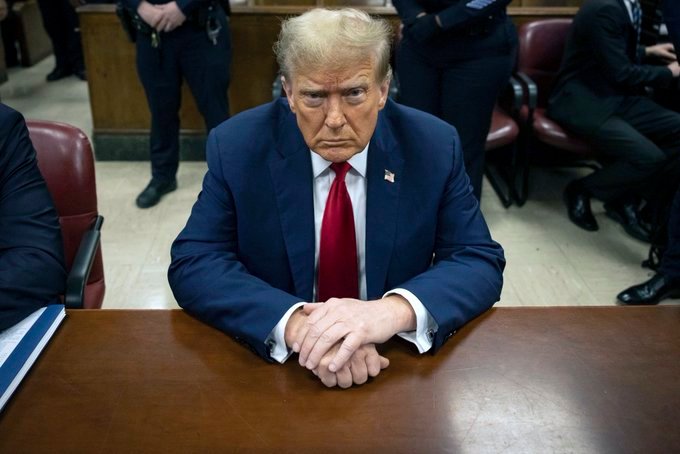
The exchange also reflects a broader trend in modern political coverage where personal exchanges between politicians and journalists become headline moments. Analysts say these incidents often dominate news cycles, overshadowing policy discussions and reinforcing divisions among audiences.
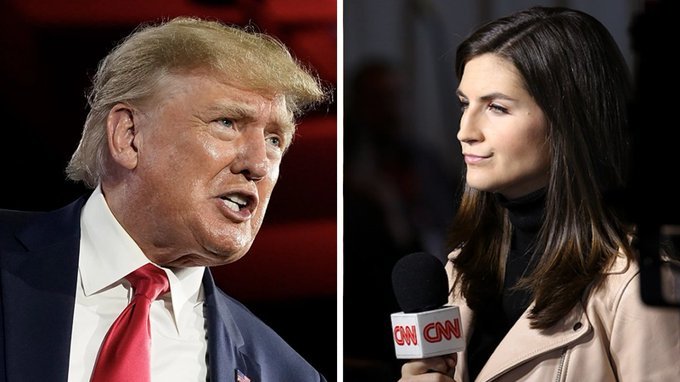
Political commentators say the episode demonstrates how televised interviews remain a powerful platform where unscripted interactions can quickly escalate into viral moments. The attention surrounding the Trump smile remark further illustrates how media interactions continue to influence public discourse in the United States.
As reactions continue, the incident adds to ongoing debates about press freedom, political rhetoric, and the evolving relationship between elected officials and news organizations in the digital age.