



The United States is moving its last aircraft carrier operating in the western Pacific toward the Middle East as the Trump administration continues its military campaign against Iran.
Eko Hot News reports that the USS George Washington is expected to replace the USS Abraham Lincoln in the Middle East, temporarily leaving the western Pacific without a U.S. aircraft carrier.
The redeployment highlights the growing pressure on the U.S. Navy as it manages operations across several strategic regions.
The USS Abraham Lincoln has remained at sea for more than 260 days while supporting U.S. operations involving Iran.
The prolonged deployment has raised concerns about the wellbeing of the approximately 5,000 sailors and Marines serving aboard the carrier.
Reports have highlighted concerns involving living conditions, supplies and the strain associated with an unusually long deployment.
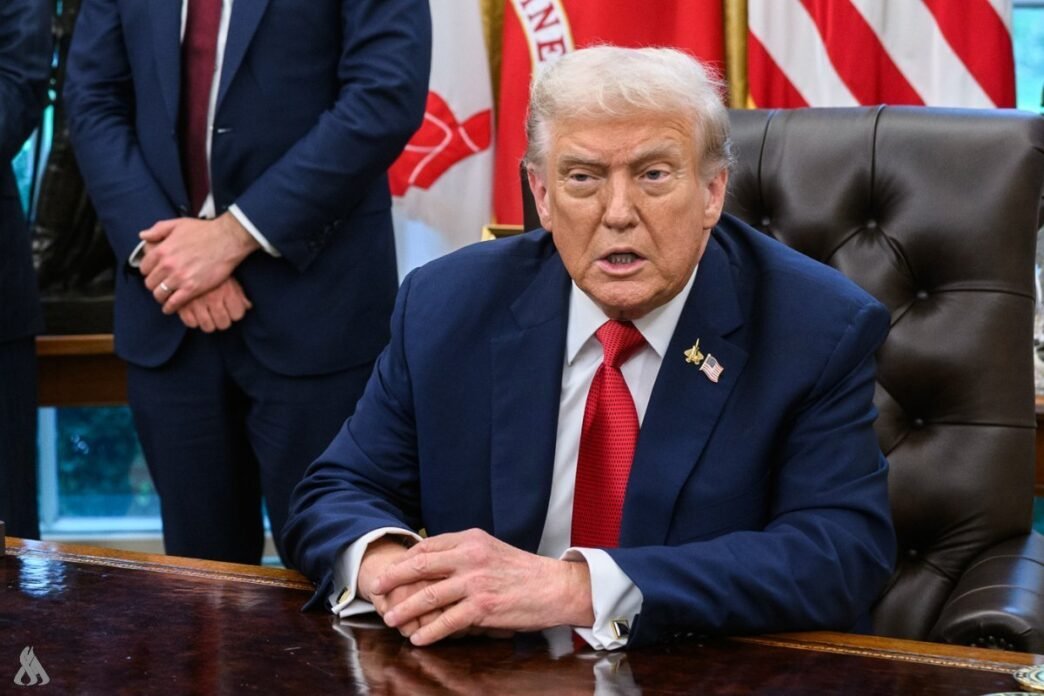
President Trump has defended the extended mission, saying the carrier’s deployment was necessary for the administration’s objectives.
The USS George Washington is now being moved from the Pacific to provide relief for the Lincoln.
The move will temporarily reduce the visible U.S. carrier presence in the western Pacific, an area where Washington has long maintained a strong naval position.
The development has attracted attention because of China’s growing military activity in the region.
China has increased naval and maritime activity around areas including the South China Sea and waters near Japan and the Philippines.
Recent developments have heightened concerns among U.S. allies about maintaining a strong American presence in the Indo-Pacific.
The temporary absence of a U.S. aircraft carrier does not mean that American military forces have left the Pacific.
The region remains home to U.S. naval vessels, aircraft, bases and allied forces.
However, aircraft carriers are considered important symbols of U.S. military reach and provide significant operational capabilities.
Their movements are therefore closely watched by allies and strategic competitors.
The USS George Washington had been providing an important U.S. presence in the western Pacific.
In July, the carrier operated in the South China Sea after transiting the Luzon Strait.
Its carrier strike group included advanced aircraft and other naval vessels operating alongside regional partners.
The carrier’s departure comes at a sensitive time for relations between China and several U.S. partners in the Indo-Pacific.
China has been involved in disputes with the Philippines over maritime activities in contested waters.
There have also been growing concerns in Japan about Chinese military and maritime activities around disputed areas.
Reuters recently reported that Beijing has intensified its strategic activities across the Indo-Pacific while international attention has focused heavily on developments in the Middle East.

The shift therefore presents Washington with a difficult balancing act.
The United States must maintain its commitments to allies in the Pacific while meeting the demands of its ongoing operations in the Middle East.
The carrier redeployment also illustrates the limitations of a relatively small number of large U.S. aircraft carriers being required to support multiple global missions.
Aircraft carriers require regular maintenance, crew rotations and periods away from operational duties.
The prolonged deployment of the Lincoln has increased pressure on the Navy to manage its available carriers carefully.
Military officials have sought to balance operational requirements with the need to avoid excessively long deployments.
The arrival of the George Washington is expected to help relieve some of the pressure on the Lincoln.
The move could also allow the Lincoln’s crew to begin preparations for its eventual return after months of extended service.
Trump’s administration has increasingly focused its military attention on Iran and the Western Hemisphere.
That strategic emphasis has raised questions about whether the Indo-Pacific will receive the same level of attention under the current administration.
U.S. officials have continued to emphasise America’s commitment to its Asian allies.
Nevertheless, the temporary absence of a carrier creates a visible gap in the region.
Analysts say the gap is not expected to last indefinitely, with another U.S. carrier potentially returning to the Pacific in the coming months.
The Navy also maintains other major assets in the Indo-Pacific that can support regional security and monitoring activities.
The temporary carrier gap therefore does not represent a complete withdrawal of U.S. forces from the region.

Still, the development offers China an opportunity to observe how Washington manages competing demands.
The situation also highlights the importance of U.S. allies developing stronger regional capabilities and maintaining close coordination with Washington.
For the Trump administration, the immediate priority remains managing its Middle East commitments while preserving America’s broader global military posture.
The carrier movement demonstrates how developments in one region can quickly affect U.S. strategic planning elsewhere.
As the USS George Washington heads toward the Middle East, attention will remain focused on how long the western Pacific remains without an American aircraft carrier.
The development could influence discussions about U.S. naval readiness, regional deterrence and the future distribution of American military resources.
For now, Washington faces the challenge of maintaining its commitments in the Pacific while addressing the demands created by its operations involving Iran.