





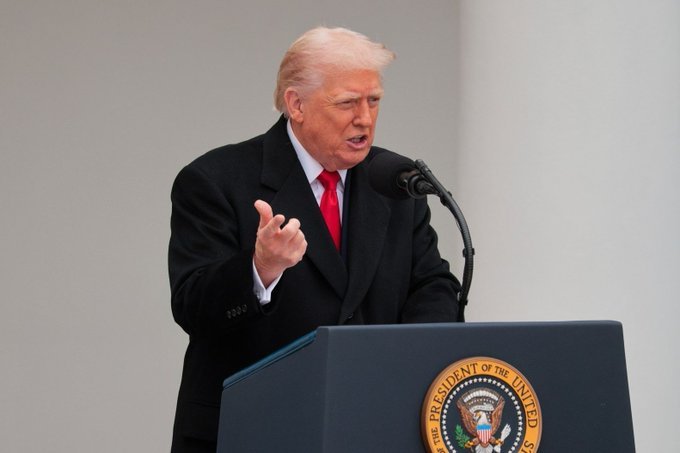
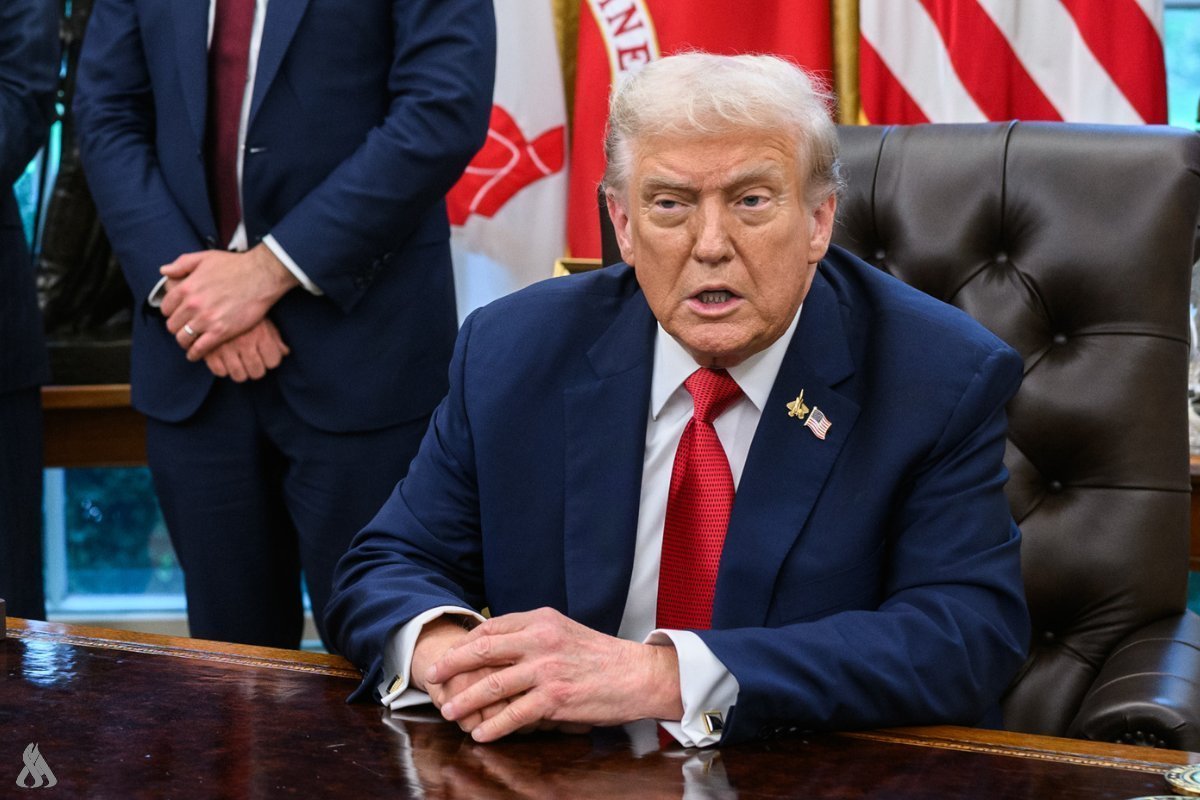
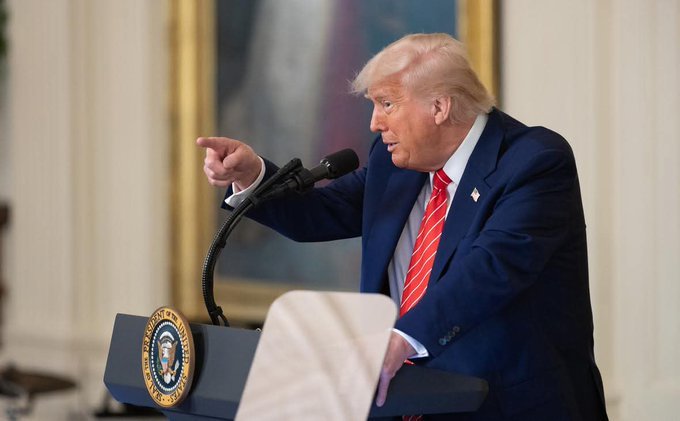
United States President Donald Trump has signed three proclamations imposing a 50 per cent tariff on a wide range of Canadian imports, marking a significant escalation in trade relations between the two neighbouring countries.
Eko Hot News reports that the White House invoked Section 338 of the Tariff Act of 1930, a provision that allows the U.S. president to impose duties of up to 50 per cent on countries found to discriminate against American commerce.
According to the Trump administration, the new measures are aimed at addressing Canada’s treatment of American products, particularly in the automobile, dairy and alcoholic beverage sectors.
Reports indicate that the tariffs will affect approximately 20 billion dollars’ worth of Canadian goods, covering a broad range of imported products.
The new duties are scheduled to take effect at 12:01 a.m. EDT on August 19, exactly 30 days after the proclamations were signed.
Products affected include wine, hockey sticks, cement, furniture, paper and plywood, among other Canadian exports entering the United States.
Unlike previous tariff measures, the latest duties will also apply to goods that previously qualified for duty-free treatment under the United States-Mexico-Canada Agreement (USMCA).
However, the administration confirmed that several key products have been excluded from the tariffs.
These exemptions include energy products, potash, fish, critical minerals and goods already covered under existing Section 232 trade measures, such as passenger vehicles, steel and aluminium.
Trade experts note that the use of Section 338 is highly unusual, with reports indicating that the provision has never previously been invoked since it became law in 1930.
According to Reuters, former U.S. trade officials said the move may be legally permissible but differs from the original intent of the legislation.
Legal analysts have also raised questions regarding the administration’s reliance on the rarely used provision.
Peter Harrell, a trade expert at Georgetown Law, argued that the administration may have bypassed procedural requirements associated with the law.
Another legal scholar, Ilya Somin, suggested that subsequent trade legislation enacted by Congress may have effectively replaced Section 338, making its use subject to legal interpretation.
The latest move comes as the Trump administration continues to reshape its trade policy using a variety of legal authorities.
Earlier this year, a federal trade court ruled against the administration’s global tariff introduced under Section 122, although an appeals court later allowed the duties to remain in place while further legal review continues.
U.S. Trade Representative Jamieson Greer recently indicated that additional trade actions could follow following the completion of an ongoing Section 301 investigation relating to international trade practices.
Canada has reacted strongly to the announcement.
Canadian Prime Minister Mark Carney described the tariffs as a direct violation of the trade agreement between both countries and said his government remains committed to defending Canada’s economic interests.
Carney also confirmed that discussions with the United States would continue over the coming weeks in an effort to resolve the dispute through dialogue.
Ontario Premier Doug Ford called for a firm response, urging the Canadian government to consider reciprocal trade measures if the tariffs proceed as planned.
Despite the announcement, officials from the Trump administration say negotiations remain possible during the 30-day period before implementation.
A senior White House official stated that discussions with Canadian authorities are ongoing and that opportunities remain for both countries to reach a mutually acceptable agreement.
The administration also acknowledged that additional trade measures remain under consideration, although no official legal framework has yet been announced for those proposals.
Economists say developments in U.S.-Canada trade relations will be closely monitored because of the strong commercial ties between both countries.
The United States and Canada remain among each other’s largest trading partners, with billions of dollars in goods crossing the border every year.
Business groups on both sides of the border are expected to continue engaging policymakers as discussions progress before the proposed tariffs become effective.
The coming weeks are likely to determine whether negotiations lead to a compromise or whether the new duties take effect as scheduled on August 19, potentially reshaping trade flows between the two North American economies.