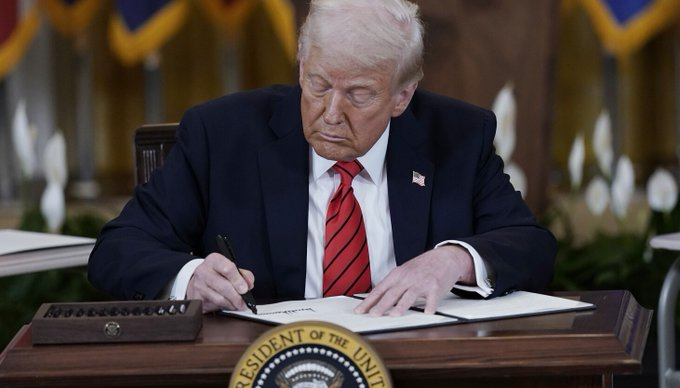




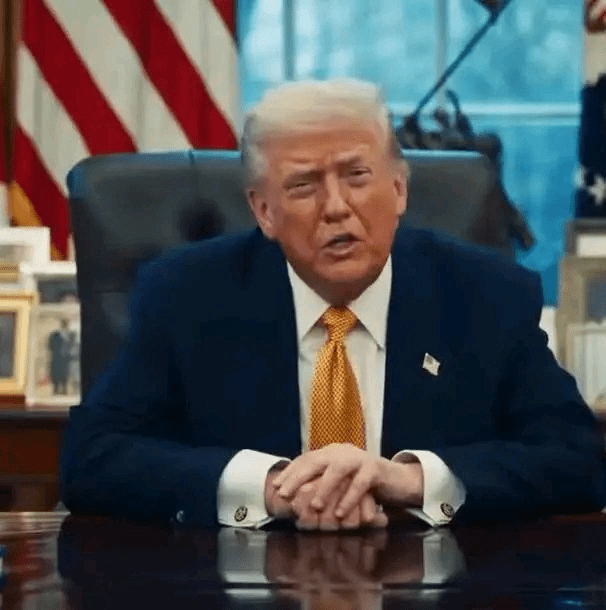
The United States President, Donald Trump, has announced plans to introduce new tariffs on imported generic medicines as part of efforts to encourage pharmaceutical manufacturing within the country.
Eko Hot News reports that Trump disclosed the proposal in a social media post, stating that a 100 percent tariff on imported generic drugs would take effect in August 2028. According to him, the tariff would increase to 200 percent in August 2029.
The proposed measure is aimed at encouraging pharmaceutical companies to expand production in the United States rather than relying on imported generic medicines. Trump said the policy would strengthen domestic manufacturing and reduce dependence on foreign suppliers.
Generic medicines are widely used because they provide more affordable alternatives to branded prescription drugs. They account for a significant share of medicines supplied across the U.S. healthcare system and help lower treatment costs for millions of patients.
Industry observers say any major tariff on imported generic medicines could influence supply chains and production decisions. Pharmaceutical companies may review manufacturing strategies if the proposal becomes official policy.
The announcement adds to Trump’s broader economic agenda, which has consistently focused on increasing domestic production across key industries. Since returning to office, he has promoted policies designed to encourage companies to manufacture more goods within the United States.
Trump has repeatedly raised the possibility of imposing substantial tariffs on imported pharmaceutical products over the past few years. However, previous proposals have not advanced into full implementation.
The latest proposal specifically targets imported generic medicines rather than the broader pharmaceutical sector. The administration believes the phased approach would give manufacturers time to adjust before the tariffs take effect.

Under the proposed timeline, companies would have nearly two years to prepare before the first tariff is introduced in August 2028. A further increase to 200 percent would follow one year later, in August 2029.
The proposed 200 percent tariff would come after the conclusion of Trump’s current presidential term, making the long-term implementation dependent on future government decisions and policy direction.
Experts note that tariff announcements often influence business planning well before implementation. Companies may begin evaluating investment opportunities in domestic manufacturing facilities if they expect the policy to move forward.
Supporters of expanding local pharmaceutical production argue that increased domestic manufacturing could strengthen supply stability and create additional employment opportunities across the healthcare and manufacturing sectors.
Others believe businesses will closely monitor future policy developments before making significant investment decisions. Many pharmaceutical manufacturers operate global supply chains that require long-term planning and regulatory approvals.
The pharmaceutical industry remains an important part of the U.S. economy, with manufacturers producing a wide range of prescription medicines, vaccines, and medical products for domestic and international markets.
Trump has frequently emphasized the importance of reducing America’s reliance on imported products. His administration has previously introduced or proposed tariffs across several industries as part of its broader trade and manufacturing strategy.
While the proposed tariffs have generated attention, no official implementation order has yet been announced. Additional regulatory processes would likely be required before the measures become effective.
Healthcare analysts are expected to monitor how pharmaceutical companies, importers, healthcare providers, and market stakeholders respond to the proposal in the coming months.
The announcement has also renewed discussions about balancing affordable medicine access with efforts to increase domestic manufacturing capacity. Industry participants say both objectives remain important for the future of the healthcare sector.
For now, the proposal remains part of the administration’s broader economic and manufacturing agenda. Further details are expected as policymakers continue discussions on the future of pharmaceutical imports and domestic production.