



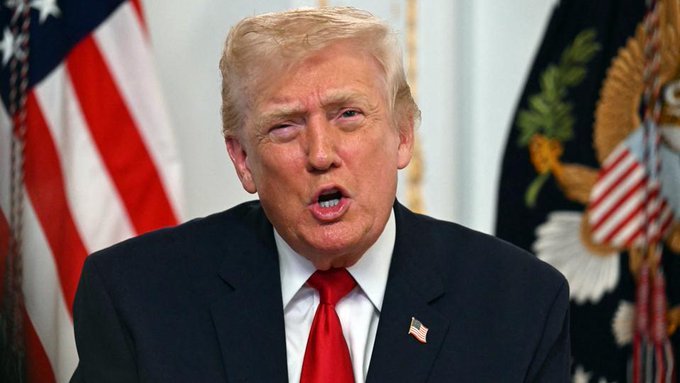
President Donald Trump has urged parents to discuss smaller vaccine doses with doctors for their children, suggesting that changing how childhood vaccines are administered could reduce autism rates.
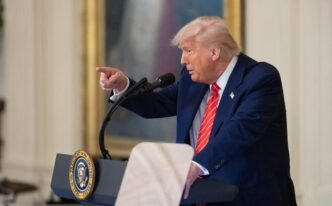
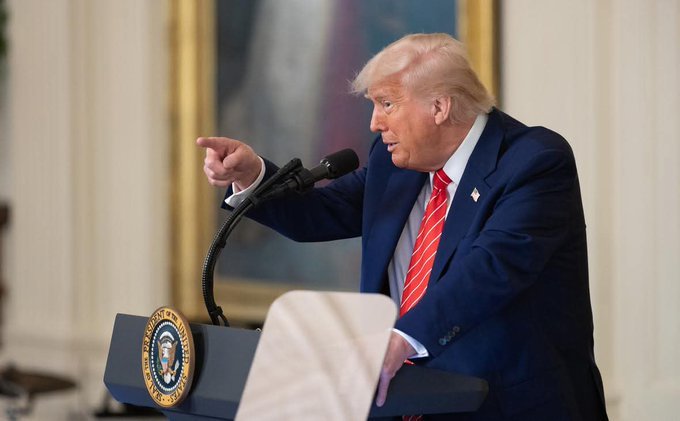
Eko Hot News reports that Trump made the remarks on Monday during a back-to-school event at the White House Rose Garden, renewing his focus on childhood vaccination policies and autism.
Trump’s comments come shortly after he signed an executive order seeking significant changes to federal recommendations for childhood vaccinations.
The August 10 order recommends routine immunisation against 11 diseases for all children, while placing some other vaccines in categories involving higher-risk groups or shared clinical decision-making.
The order also calls for the development of options for administering certain vaccines separately rather than as combination products.
It specifically directs the Health and Human Services Department to explore separate measles, mumps and rubella, known as MMR, vaccines once such products are domestically available.
Trump has repeatedly raised the subject of autism while discussing his administration’s approach to childhood vaccination.
However, the executive order itself does not establish a link between vaccines and autism.
Medical research has found no credible evidence that vaccines cause autism. FactCheck.org noted that claims that separating the MMR vaccine would reduce autism have no supporting evidence.
The American Academy of Pediatrics has strongly criticised the administration’s vaccination changes.
The organisation described the executive order as unscientific and dangerous, arguing that there is no new evidence supporting major changes to established childhood immunisation guidance.
The disagreement has placed childhood vaccination policy at the centre of a wider public debate in the United States.
Trump’s administration has argued that parents should have greater choice when making vaccination decisions for their children.
The White House says the new approach is intended to provide parents with more information and options while aligning recommendations with what it calls scientific evidence and practices in other developed countries.
The administration has also called for further research into vaccine safety, timing and sequencing.
The executive order directs HHS to present plans within 90 days covering several areas of vaccine research and policy.
These include evaluating the timing of childhood vaccinations and improving vaccine safety monitoring.
The order also calls for research into alternative vaccine ingredients and continued assessment of the benefits and risks associated with childhood immunisation.
The policy changes come as American children return to school and parents review their children’s health and vaccination records.
That timing has increased attention on the administration’s recommendations and the advice parents receive from healthcare professionals.
Medical organisations have urged parents to rely on established evidence and consult qualified healthcare providers when making decisions about childhood vaccination.
The American Academy of Pediatrics has warned that reducing or delaying vaccinations without scientific justification could leave children less protected against preventable diseases.
The debate also involves the MMR vaccine, which protects children against measles, mumps and rubella.
The administration wants to make separate versions of the three vaccines available and recommends administering childhood immunisations at separate medical visits where feasible.
Medical experts have questioned the benefits of this approach and expressed concern that additional appointments could make vaccination more difficult for some families.
The issue is particularly significant because vaccination rates have been declining in parts of the United States.
Recent data have also shown increased vaccine exemption rates among some schoolchildren, adding to concerns about maintaining adequate protection against infectious diseases.
The Trump administration’s policy has therefore generated debate among parents, doctors, public health officials and policymakers.
Supporters say the changes could give families greater flexibility and encourage more informed decisions.
Critics argue that changing established recommendations without strong scientific evidence could create confusion.
The federal government has said its recommendations will continue to be reviewed as new research becomes available.
The executive order also states that existing vaccines will remain available to Americans, while calling for additional options and research.
For parents, the latest development means vaccination decisions remain an important topic during the back-to-school period.
Healthcare professionals are expected to continue advising families based on individual medical circumstances and established clinical evidence.
The debate over vaccines and autism is likely to remain politically and publicly significant as the administration moves ahead with its proposed changes.
Trump’s latest comments have once again brought the disputed autism claim into the national conversation.
However, scientific evidence does not support the claim that vaccines cause autism or that smaller vaccine doses prevent autism.
As the administration works on its new recommendations, parents and healthcare providers will continue to follow developments closely.
The coming months could bring further changes to federal vaccination guidance as HHS carries out the tasks outlined in the executive order.