





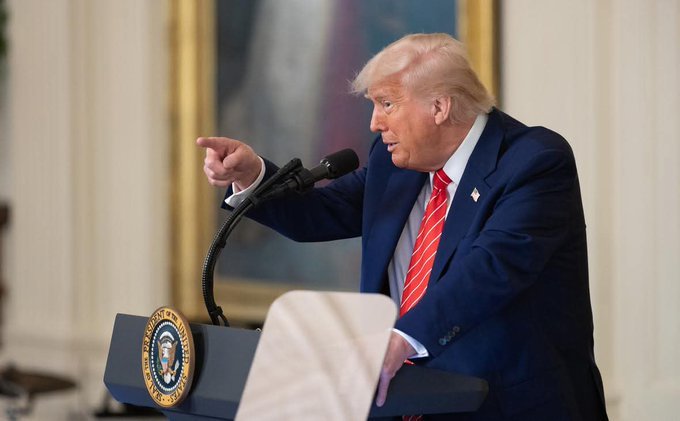
United States President, Donald Trump, has proposed a $1.5 trillion defence budget for 2027, marking a significant increase in military spending.
Eko Hot News reports that the proposal was presented to lawmakers as part of the administration’s effort to address rising global security commitments and ongoing operational costs.
The budget plan represents an increase of more than 40 percent compared to previous spending levels.
It is considered one of the most substantial year-on-year increases in recent history.
Officials say the proposal reflects the need to sustain ongoing military operations.
It also aims to rebuild equipment and strengthen overall defence readiness.
Reports indicate that the financial demands of the Iran-related conflict have contributed to the proposal.
Estimates suggest the situation may be costing up to $2 billion daily.
This has placed additional pressure on the federal budget.
The proposal is not yet binding and will undergo legislative review.
Lawmakers in Congress retain the authority to amend or reject it.
President Trump has urged Congress to approve the majority of the budget through the standard appropriations process.
More than $1.1 trillion is expected to be processed through this route.

An additional $350 billion is proposed through a separate legislative mechanism.
This approach would allow passage without requiring broad bipartisan support.
Republican leaders have expressed openness to parts of the proposal.
They view increased defence funding as a priority.
There is also support for boosting resources for immigration enforcement.
However, some lawmakers have raised concerns about the scale of spending.
Members within both parties are evaluating the fiscal implications.
The United States currently faces significant budget deficits.
Annual shortfalls are approaching $2 trillion.
Total national debt has exceeded $39 trillion.
These figures have heightened concerns about expanding federal spending.
Some lawmakers are cautious about approving additional financial commitments.
They have called for greater clarity on long-term plans.
Questions have also been raised about the trajectory of the Iran situation.
Officials have yet to provide detailed projections on future costs.
Beyond defence, the administration is proposing increased funding for domestic programmes.
This includes additional resources for federal law enforcement.
The Justice Department is expected to receive over $40 billion in additional funding.
Supporters argue that the funding will strengthen national security systems.
They believe it will improve operational capacity and preparedness.
Critics, however, are concerned about potential cuts in other areas.
Some domestic programmes may face reductions under the proposal.
Lawmakers have previously resisted similar changes.
Spending bills earlier in the year maintained funding for key programmes.
This suggests potential challenges in securing approval for the new plan.
The proposal has set the stage for detailed discussions in Congress.
Debates are expected to focus on balancing national priorities and fiscal responsibility.
Observers note that the outcome will shape future policy direction.
The administration has emphasised its commitment to national security.
It maintains that strategic investment is necessary in a changing global landscape.
As deliberations continue, stakeholders are closely monitoring developments.
The final decision will depend on negotiations between lawmakers.
The proposal highlights the complexity of managing economic and security priorities.