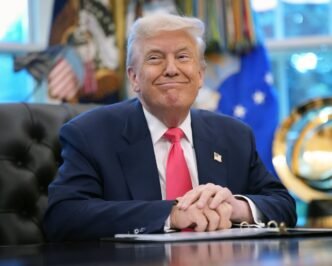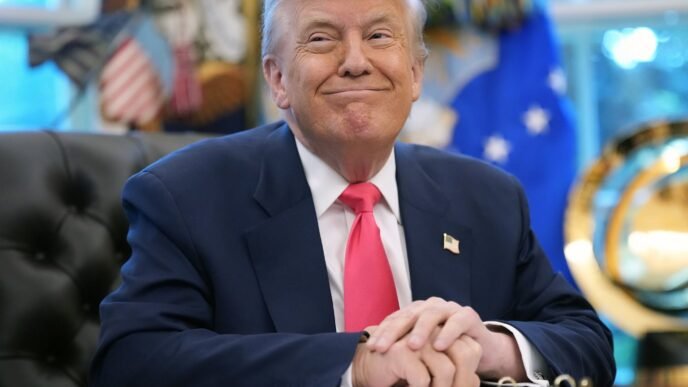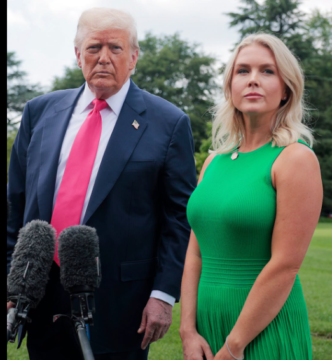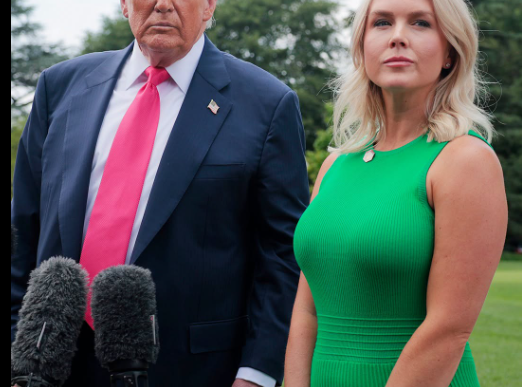




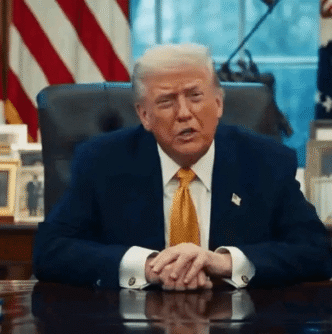
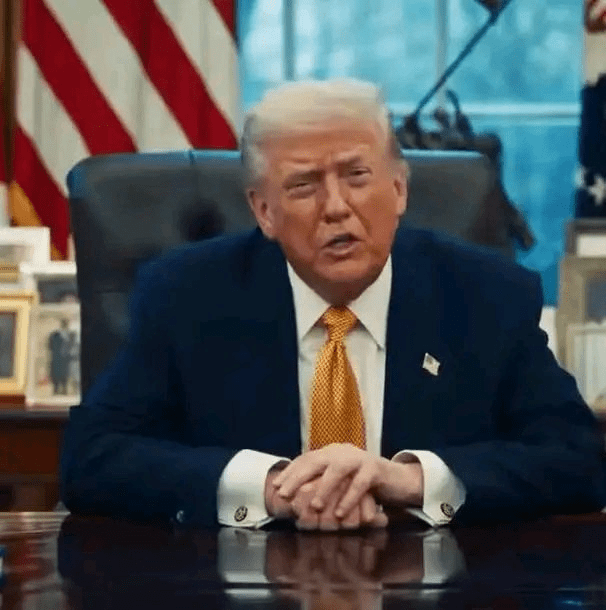
President Donald Trump has said he would support prohibiting Sharia law in the United States, arguing that the country should operate under a single legal system.
Eko Hot News reports Trump made the remarks during an interview with conservative broadcaster Glenn Beck on August 26, 2026, when he was asked whether he would support a proposed “no-Sharia law” measure for America.
Trump responded that Sharia law was not compatible with the American legal system and said he would “absolutely prohibit” it.
He also claimed that there are “pockets” of Sharia law in the United States, although he did not identify specific locations or provide evidence to support the assertion.
Trump further referenced London and Paris, saying Sharia had become “almost like a second way of life” in the two European cities.
The president did not provide details about how a nationwide prohibition would work or identify a specific federal bill he intended to support.
His comments therefore represent a political position rather than an announcement that a nationwide Sharia ban has been enacted.
The issue could also raise significant constitutional questions because the First Amendment protects religious exercise and restricts government from establishing or favouring a particular religion. The Constitution also establishes the framework under which American courts operate.
Legal experts and constitutional authorities have long distinguished between religious practices followed voluntarily by individuals and the use of religious principles as government law.
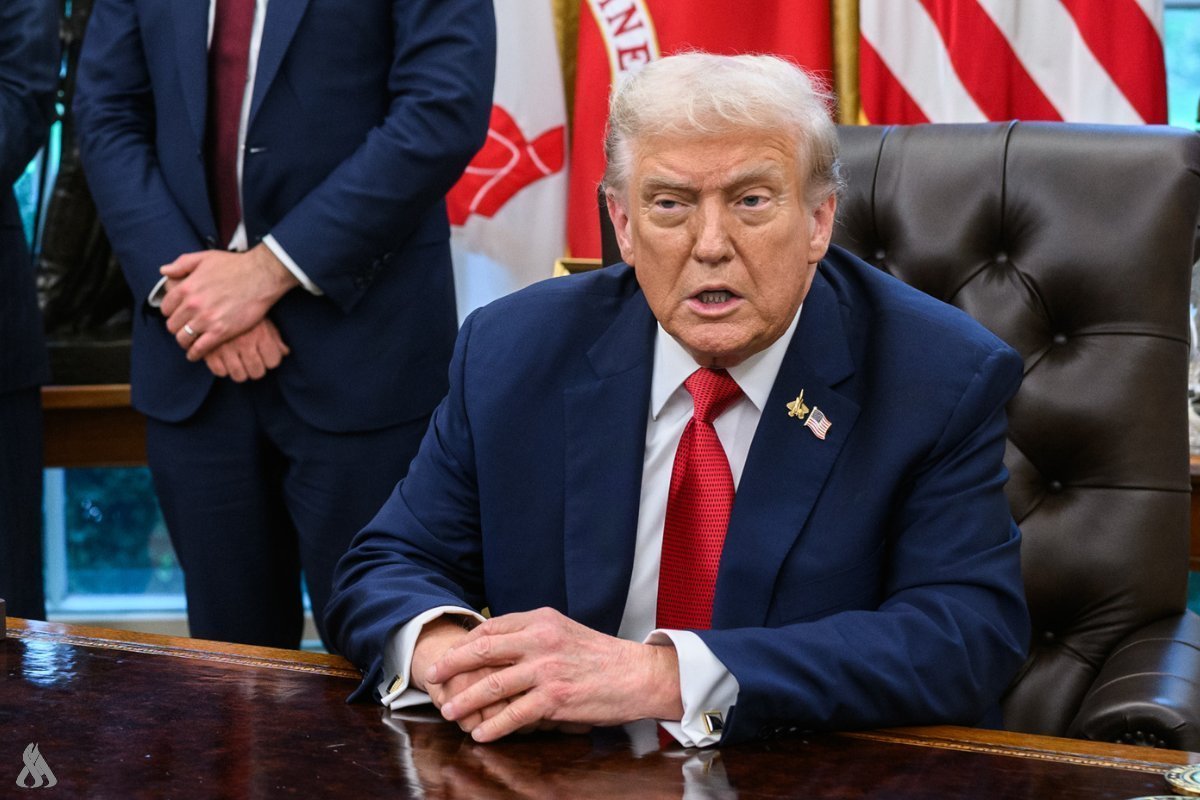
In the United States, Sharia is not recognised as a separate legal system that supersedes the Constitution or federal and state statutes. Religious principles may, however, arise in certain private agreements or arbitration arrangements when parties voluntarily agree to them and the arrangements remain consistent with American law.
This distinction is important in understanding Trump’s remarks because supporting a prohibition on a religious legal code does not automatically mean that such a code currently operates as an alternative government system in the country.
The U.S. Constitution remains the supreme legal framework, while courts can consider religious matters in limited circumstances without adopting a religious doctrine as government law. Congress’s Constitution Annotated notes that the First Amendment’s religion clauses create important boundaries between government authority and religious practice.
Trump’s comments come as debates over religion, immigration, national identity and the role of faith in public life continue to feature prominently in American political discussions.
The remarks have also drawn attention because they connect domestic concerns in the United States with Trump’s assessment of European cities.
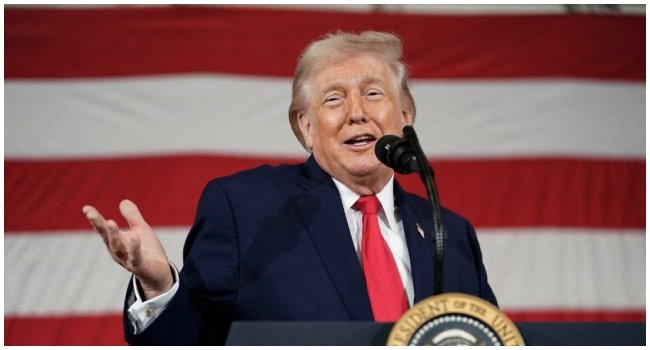
Trump offered no detailed assessment of the legal systems in London or Paris during the interview. Instead, he used the cities as examples while making his broader argument that America should maintain a single national legal framework.
The president’s comments are likely to fuel further political debate over how religious freedom should be balanced with the principle that government laws apply equally to everyone.
Any attempt by the federal government to enact a nationwide measure specifically targeting Sharia would likely face questions concerning its scope, enforcement and compatibility with constitutional protections.
For now, Trump has expressed support for prohibiting Sharia law but has not announced a concrete nationwide policy or legal mechanism to implement such a ban.
The statement therefore signals Trump’s position on the issue rather than confirming the introduction or passage of a federal Sharia prohibition.