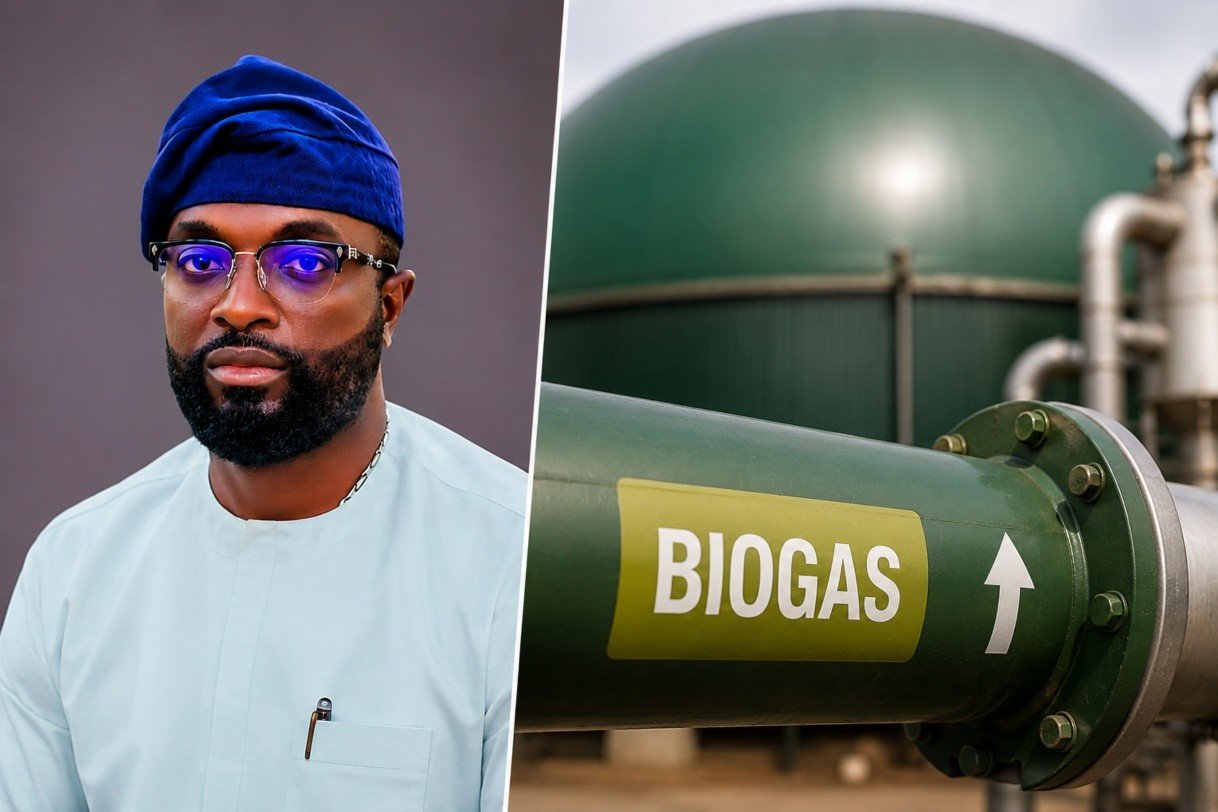




The Lagos State Government has unveiled plans to commence commercial production of biogas and bio-methane as part of efforts to reduce dependence on imported fuel and improve environmental sustainability.
Eko Hot News reports that the state government has also established a Technical Committee involving several Ministries, Departments, and Agencies to drive the implementation process.
The Commissioner for Transportation, Oluwaseun Osiyemi, disclosed the development during the annual Ministerial Press Briefing while presenting the achievements of the ministry.
According to Osiyemi, findings from a feasibility study confirmed that biogas and bio-methane are viable alternatives to diesel for transportation and energy use.
He explained that Lagos generates approximately 13,000 metric tonnes of waste daily, with nearly 45 percent classified as organic waste suitable for bio-methane production.
The commissioner noted that converting organic waste into fuel would provide a cleaner and more affordable energy source for transportation operations within the state.
He added that the newly inaugurated Technical Committee would coordinate policies, planning, and implementation toward achieving full commercial production of biogas.

Osiyemi also highlighted the Lagos State Government’s continued commitment to cleaner energy solutions and environmental sustainability.
He stated that several programmes have already been introduced to reduce carbon emissions and improve environmental quality across the state.
Among the initiatives mentioned was the conversion of 152 First and Last Mile buses from petrol-powered engines to Compressed Natural Gas (CNG).
The commissioner further explained that Lagos is developing a seven-line electric rail network aimed at improving mass transit and reducing environmental pollution.
He noted that the government is gradually replacing diesel-powered transportation systems with cleaner alternatives such as CNG, electricity, and biogas.
According to Osiyemi, CNG buses introduced since 2022 have transported over 600,000 passengers while reducing fuel costs by nearly 50 percent.
The commissioner described the development as a major step toward achieving more affordable and sustainable transportation in Lagos.
He also revealed that two electric buses deployed on Bus Rapid Transit routes recently completed a 90-day pilot programme.
The electric buses reportedly transported more than 150,000 passengers during the trial period while significantly reducing carbon emissions.
Osiyemi stated that the pilot scheme contributed to the reduction of about 200,000 kilograms of carbon emissions within the testing period.
The Lagos State Government has also partnered with financial institutions and private stakeholders to strengthen transportation reforms across the state.
As part of the initiative, the Office of the Senior Special Assistant on Transportation and Logistics collaborated with United Bank for Africa to introduce 2,000 CNG-powered trucks.
The trucks were deployed under the haulage reform programme introduced by Governor Babajide Sanwo-Olu.
Officials said the programme is expected to improve logistics operations while supporting cleaner and more cost-effective transportation systems.
Stakeholders have described the state’s investment in alternative energy as an important move toward modernising public transportation and reducing operational costs.
Environmental experts also believe that increased adoption of cleaner fuel alternatives could help improve air quality and support climate-friendly policies in Lagos.
The Lagos State Government reaffirmed its commitment to innovation, cleaner energy, and sustainable urban transportation as part of its long-term development strategy.