





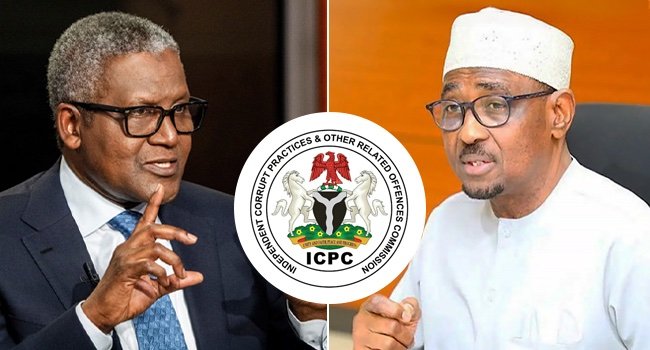
The Independent Corrupt Practices and Other Related Offences Commission (ICPC) has confirmed it will continue its review of former NMDPRA CEO Farouk Ahmed, even after Aliko Dangote withdrew his complaint. The petition raised concerns about alleged financial misconduct by the former regulator.
Eko Hot News reports that Dangote submitted the withdrawal letter on January 5, 2026, noting that another government agency had assumed responsibility for some aspects of the matter. Despite this, the ICPC emphasised that the investigation will proceed under the law to ensure accountability and transparency.
Dangote’s original petition, filed on December 16, 2025, highlighted claims that Ahmed’s personal expenditures, including over $7 million on his children’s education abroad, were inconsistent with his official earnings. The ICPC affirmed that it would review these claims thoroughly.


The commission stated that once an investigation is initiated, it cannot be halted simply because the petitioner retracts their complaint. Its statutory mandate ensures that all public sector matters are properly examined to safeguard trust in governance.
Spokesperson Okor Odey confirmed that the ICPC will verify all evidence and continue the review of Ahmed’s tenure at NMDPRA. The agency stressed that due process will be followed to ensure a fair assessment.

Farouk Ahmed resigned from NMDPRA shortly after the petition was filed, following a meeting with President Bola Tinubu, but the ICPC noted that his resignation does not affect the ongoing review.
The development highlights Nigeria’s continued focus on transparency and accountability for former public office holders, particularly in strategic sectors like petroleum.
The ICPC assured the public that the investigation would adhere to legal and procedural standards. Officials emphasised that maintaining oversight in financial and administrative matters remains crucial for good governance.