




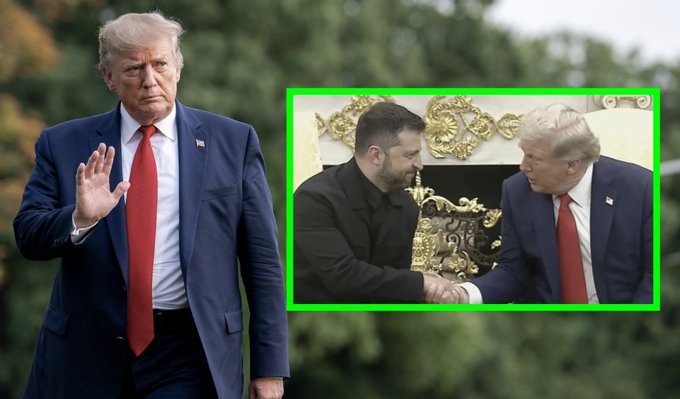
President Donald Trump hosted Ukrainian President Volodymyr Zelenskyy at his Mar-a-Lago resort in Florida on Sunday for high-level discussions aimed at advancing peace efforts in the ongoing Russia-Ukraine war.
Eko Hot News reports that both leaders reviewed a revised 20-point peace framework developed by negotiators, with Zelenskyy stating that roughly 90 per cent of the key elements have reached consensus, particularly around security guarantees and cooperation with allied nations.
The meeting, which drew global attention, focused on escalating diplomatic efforts to end hostilities that have persisted since Russia’s invasion of Ukraine in early 2022.
Trump described the talks as “excellent” but acknowledged that substantial work remains before a comprehensive peace agreement is finalised.
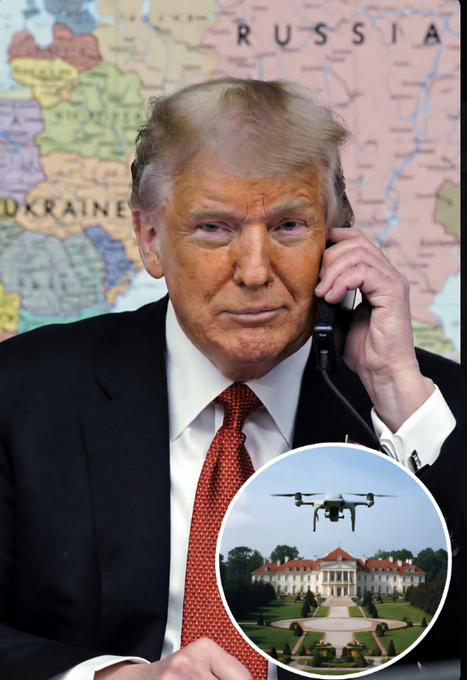
Security guarantees formed the core of the progress reported. Both Trump and Zelenskyy highlighted the importance of international support and protective measures to secure Ukraine’s sovereignty and deter further aggression, reinforcing commitments among Western partners.
However, the pair acknowledged that territorial disputes, especially regarding the Donbas region, remain a significant obstacle.
Trump described the issue as “very tough,” while Zelenskyy affirmed Ukraine’s position against ceding territory under pressure, emphasising the need for negotiations that respect national integrity.
Another critical topic was the situation surrounding the Zaporizhzhia nuclear power plant, currently under Russian control.
The facility remains a complex element of peace discussions due to its strategic significance and safety concerns, prompting calls for international oversight and clear operational agreements.
Before the Florida meeting, Trump engaged in separate talks with Russian President Vladimir Putin, indicating parallel diplomatic efforts aimed at bridging gaps between all parties involved in the conflict.
Trump’s remarks at Mar-a-Lago suggested a willingness to explore unconventional channels and open communications with multiple sides.
Despite the assertion of progress, analysts noted that Trump’s public framing suggesting Russia wanted Ukraine to succeed contrasts with ongoing military actions by Russian forces on the ground, highlighting the complex dynamics at play.
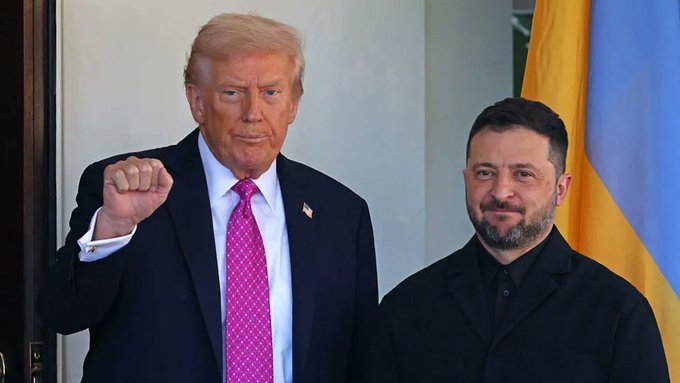
Both leaders agreed to continue dialogue, with plans for additional meetings and possibly a larger diplomatic gathering in Washington, D.C., involving European allies and other stakeholders to sustain momentum toward peace.
Critics of the talks caution that while incremental progress on certain elements is positive, the core issues of territory, security guarantees, and long-term stability will require sustained diplomatic engagement and broad international support.
The Mar-a-Lago meeting underscores the intricate balance between diplomatic negotiation and the realities of war, reflecting continuing global efforts to find a viable path to lasting peace in Ukraine.