



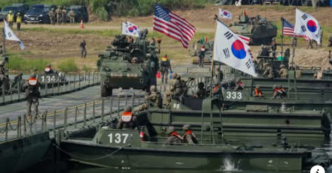
President Donald Trump has instructed the Pentagon to substantially reduce joint military exercises with South Korea, arguing that the drills are costly and send an inappropriate message to North Korea.
Eko Hot News reports that Trump made the announcement on Sunday, August 16, 2026, shortly before the annual Ulchi Freedom Shield exercises were scheduled to begin. The exercises started as planned on Monday, although the extent of any future reduction remains unclear.
Trump said the exercises could be viewed as hostile by North Korea, while pointing to what he described as his positive relationship with North Korean leader Kim Jong-un.
The president has previously expressed opposition to large-scale military exercises involving the United States and South Korea.
His latest position revives an issue that has featured prominently in his approach to relations with Pyongyang.
Trump also cited the cost of the exercises as a reason for seeking a reduction.
The decision comes as Washington continues to balance its relationship with South Korea with efforts to maintain dialogue with North Korea.
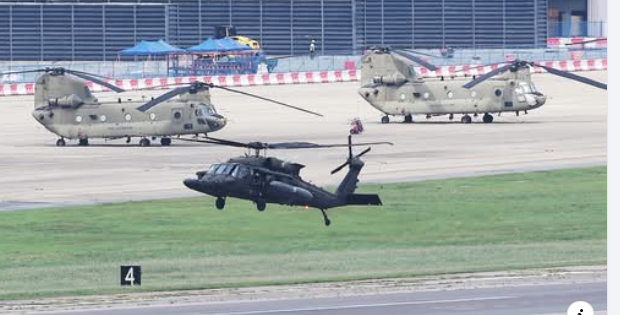
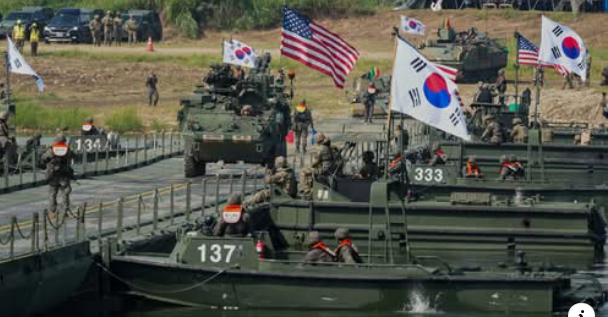
The annual Ulchi Freedom Shield exercises are designed to improve coordination between U.S. and South Korean forces and strengthen their ability to respond to potential developments on the Korean Peninsula.
This year’s exercise is scheduled to run through August 27 and involves about 18,000 South Korean personnel.
The training includes preparations involving modern security challenges such as drones, cyber threats and disruptions to navigation systems.
South Korea’s Joint Chiefs of Staff confirmed that the exercises began according to schedule.
The development means Trump’s call for reductions has not immediately stopped the annual training programme.
South Korean officials are now reviewing the president’s remarks while maintaining coordination with Washington.
The South Korean presidential office said it hoped Trump’s relationship with Kim could eventually contribute to meaningful dialogue between Washington and Pyongyang.
The response reflects Seoul’s interest in maintaining its longstanding relationship with the United States while also exploring opportunities for improved relations with North Korea.
However, the proposed reduction has generated concern among some South Korean officials and lawmakers.
Critics argue that regular joint exercises are important for maintaining operational readiness and ensuring that both countries can coordinate effectively when necessary.
The issue is particularly significant because North Korea has continued developing its military capabilities under Kim Jong-un.
Recent developments have included additional missile launches and continued efforts to strengthen the country’s strategic capabilities.
Reuters reported that North Korea had launched two ballistic missiles since August 6, ahead of the latest U.S.-South Korea exercises.
North Korea has also repeatedly criticised joint exercises between Washington and Seoul.
Pyongyang views such activities as a sign of pressure from the United States and South Korea.
The North has warned that the exercises could lead to increased tensions on the Korean Peninsula.
Despite those concerns, Washington and Seoul have continued to describe their military cooperation as an important part of maintaining regional stability.
The alliance includes approximately 28,500 U.S. troops stationed in South Korea, making the country a significant part of America’s security structure in East Asia.
Trump’s latest announcement also comes amid disagreements between Washington and Seoul over other issues.
The president said South Korea had declined to participate in U.S. efforts related to Iran.
Seoul disputed the characterization, saying it was discussing possible contributions while considering its defence requirements and domestic legal procedures.
The disagreement adds another dimension to discussions about the future of the U.S.-South Korea alliance.
Trump, however, continues to emphasise his relationship with Kim as a possible avenue for renewed diplomacy.
The two leaders previously held high-level meetings during Trump’s first administration.
Those engagements did not produce a lasting agreement on North Korea’s nuclear programme.
Trump’s current approach suggests that he may again favour direct engagement with Kim while reducing some activities that Pyongyang considers provocative.
For South Korea, the challenge is maintaining adequate preparedness while supporting diplomatic efforts that could reduce tensions.
The government in Seoul has indicated that it wants the relationship between Washington and Pyongyang to contribute to greater stability on the peninsula.
The proposed changes could therefore influence both military planning and diplomatic discussions in the months ahead.
Analysts are also watching whether North Korea responds positively to Trump’s latest position.
A reduction in exercises could create additional space for diplomatic engagement if Pyongyang is willing to return to talks.
However, concerns remain that reducing joint training could affect the readiness of U.S. and South Korean forces.
The debate highlights the delicate balance between diplomacy and preparedness in the region.
For Washington, the priority is to preserve its alliance with Seoul while exploring Trump’s preferred approach to engagement with Pyongyang.
For South Korea, maintaining a reliable security partnership remains important as North Korea continues to develop its capabilities.
The future of the joint exercises could therefore become a significant test of the U.S.-South Korea relationship.
As the current Ulchi Freedom Shield exercises continue, attention will remain focused on how the Pentagon implements Trump’s directive.
The development could also shape future discussions between Washington, Seoul and Pyongyang.