



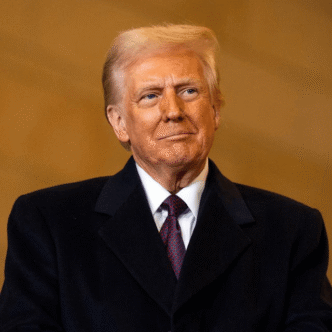
President Donald Trump has warned Oman against obstructing U.S. efforts to reach an agreement with Iran over the Strait of Hormuz, raising fresh concerns about tensions surrounding the strategically important waterway.
Eko Hot News reports that Trump issued the warning as Oman works with Iran on arrangements aimed at reopening the Strait of Hormuz to commercial shipping. The comments were reported on Monday, August 17, 2026.
Trump said Oman could face serious consequences if it interferes with Washington’s objectives regarding the waterway.
The president has maintained that the Strait of Hormuz should remain open to international shipping and should not be controlled exclusively by any country.
The latest comments come amid stalled negotiations between Washington and Tehran.
Trump has repeatedly demanded that Iran make major concessions as part of any agreement with the United States.
The Strait of Hormuz has become a central issue in the negotiations because of its importance to international energy and commercial shipping.
The narrow waterway connects the Persian Gulf with the Gulf of Oman and serves as a major route for global energy supplies.
Any prolonged disruption to shipping through the strait could have wider effects on oil markets and international trade.
Oman has played an important diplomatic role in efforts to ease tensions between the United States and Iran.
The Gulf nation has maintained communication channels with Tehran while also maintaining long-standing relations with Washington.
Its position has made Oman an important intermediary during the current negotiations.
Recent discussions between Oman and Iran have focused on arrangements that could allow commercial vessels to resume safer passage through the waterway.
The development has, however, raised concerns in Washington over who would oversee shipping arrangements in the strait.
Trump has insisted that no country should have exclusive control over the waterway.
In an earlier warning, the president said Oman would have to cooperate with the U.S. position or face consequences.
His latest remarks indicate that the issue remains a major point of disagreement.
The White House has also continued to press Iran over its nuclear programme and other issues as negotiations remain uncertain.
Trump has repeatedly said that his administration wants to prevent Iran from developing nuclear weapons.
At the same time, U.S. officials have been seeking progress on arrangements for the Strait of Hormuz.
The latest warning comes as the deadline associated with a 60-day U.S.-Iran understanding approaches or expires without a final agreement.
According to recent reports, negotiations have struggled to produce a lasting resolution.
Iran has also maintained that it has rights regarding management of the waterway shared with Oman.
That position differs from Washington’s demand that the strait remain open to international shipping without exclusive control.
The disagreement has made the waterway one of the most sensitive issues in the broader U.S.-Iran discussions.
Oman has not abandoned its diplomatic role despite the pressure.
The country has traditionally maintained a policy of dialogue with different sides in regional disputes.
Its geographical position also gives it a direct interest in maintaining stability around the Strait of Hormuz.
The waterway is particularly important to global energy markets.
Before the current disruption, it carried a significant share of worldwide oil and liquefied natural gas shipments.
Recent shipping data indicate that commercial traffic through the strait has fallen sharply.
Reuters reported that only a small number of vessels were transiting the waterway compared with normal levels before the current crisis.
The reduced shipping activity has increased concerns among energy traders and international businesses.
Oil prices have also remained sensitive to developments around the strait.
Analysts say any major improvement in shipping conditions could ease some of the pressure on global energy markets.
A prolonged disruption, however, could create additional challenges for importers and consumers.
For Oman, the situation presents a delicate diplomatic challenge.
The country must maintain its longstanding relationship with the United States while continuing its communication with Iran.
Omani officials have previously played important roles in facilitating dialogue between Washington and Tehran.
The latest developments could therefore test Muscat’s ability to maintain its position as a regional intermediary.
Trump’s warning also adds another layer to the already complex negotiations.
The president has made clear that he expects Iran to accept significant conditions before a broader agreement can be reached.
Washington is also seeking assurances concerning the reopening and operation of the Strait of Hormuz.
Iran, meanwhile, continues to defend its position regarding the waterway.
With negotiations still unsettled, diplomatic efforts are expected to continue.
The coming days could determine whether the United States and Iran can find common ground on the strait and other outstanding issues.
For global markets, the main concern remains the restoration of stable commercial shipping.
For Oman, the priority is likely to remain its role in regional diplomacy and the safe operation of the important waterway.
The latest Trump warning underscores how closely the future of the Strait of Hormuz is tied to the wider U.S.-Iran negotiations.
As discussions continue, international attention will remain focused on Washington, Tehran and Muscat.