





The Trump administration is allowing selected private companies to participate in U.S. cyber operations targeting foreign criminal organisations, marking a significant shift in how Washington plans to respond to international cybercrime.
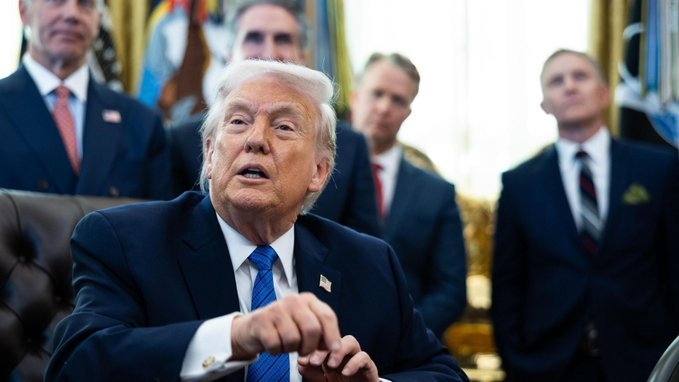
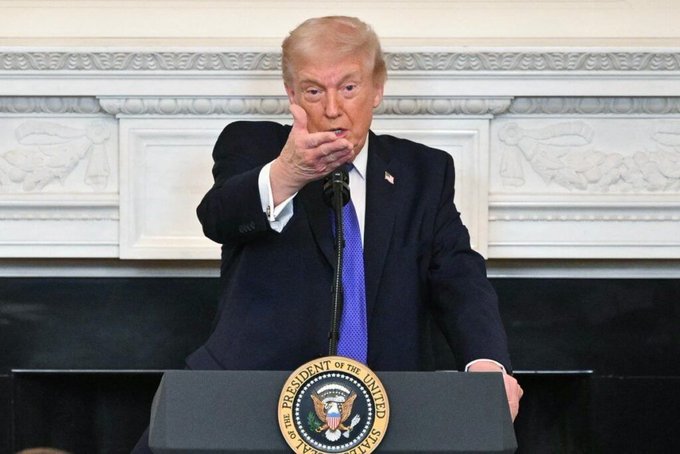
Eko Hot News reports that President Donald Trump signed a national security presidential memorandum authorising federal agencies to work with vetted private firms on cyber operations against transnational criminal organisations operating outside the United States.
The initiative is aimed at groups involved in ransomware, financial fraud and other cyber-enabled crimes affecting Americans, U.S. businesses and critical infrastructure.
Under the new programme, participating companies could assist with intelligence gathering and operations designed to disrupt criminal networks and their digital infrastructure.
The memorandum gives the Department of Homeland Security and the Department of Justice responsibility for overseeing the programme.
A National Coordination Center within the Homeland Security framework will coordinate the activities and work with approved private-sector partners.
The policy allows participating companies to conduct what the memorandum describes as cyber surveillance and cyber effects operations.
Such activities can include actions intended to manipulate, disrupt or disable foreign information systems connected to targeted criminal organisations.
The administration says greater involvement from private technology companies will provide the government with additional technical expertise and resources.
Private cybersecurity companies already possess extensive knowledge of international criminal networks and the methods used to identify suspicious digital activity.
The new programme seeks to bring those capabilities more directly into government-led efforts against cybercrime.
However, cybersecurity experts have raised concerns about the legal and operational risks associated with the policy.
Companies operating against foreign networks could face questions about which laws apply to their activities and whether actions taken abroad could create liability.
There are also concerns about accurately identifying the people and organisations behind cyber operations.
Criminal networks can operate through compromised computers, servers and other infrastructure belonging to unrelated individuals or organisations.
An operation aimed at disrupting a criminal network could therefore affect systems that are not directly controlled by the intended target.
Experts have also warned about the possibility of retaliation against participating companies or their employees.
The international nature of the programme creates additional complications because cyber operations conducted across national borders can involve different laws and jurisdictions.
The administration has therefore placed conditions on companies seeking to participate.
According to reports, approved firms will operate under federal supervision rather than acting independently.
Companies will also be required to meet technical and security standards before they can take part.
Participating firms must maintain at least a $1 million bond or escrow arrangement, which could be forfeited if programme rules are violated.
The financial requirement is intended to encourage compliance and provide an additional accountability mechanism.
Companies will also be expected to submit proposed cyber-operation plans for federal review before carrying out approved activities.
The programme represents a notable change from the traditional approach in which offensive cyber operations were primarily handled by U.S. government agencies.
The Trump administration argues that the private sector has technical capabilities that can strengthen federal efforts against sophisticated international cybercrime.
The move follows an executive order signed earlier in 2026 directing federal agencies to develop strategies for disrupting foreign transnational criminal organisations involved in cybercrime and fraud.
That earlier order called for greater use of commercial cybersecurity expertise to help identify, track and disrupt malicious cyber actors.
The latest memorandum takes that cooperation further by establishing a framework under which vetted private companies can participate directly in certain operations.
Supporters say the approach could help the United States respond more quickly to international cybercriminal networks.
They argue that private cybersecurity firms often have specialised technical capabilities and intelligence that can complement government resources.
Critics, however, remain concerned about accountability.
Questions have been raised about how private companies will be supervised and what protections they will receive if an authorised operation results in legal disputes.
There are also concerns about how the government will distinguish criminal organisations from foreign government-linked entities.
The memorandum specifically focuses on transnational criminal organisations rather than authorised foreign government systems.
Despite the restrictions, experts say determining whether a criminal network has links to a foreign government can be difficult.
The policy could therefore create diplomatic complications if an operation affects infrastructure connected to a foreign state.
For participating companies, the programme could also create new business opportunities while exposing them to unprecedented legal responsibilities.
The administration is encouraging qualified firms to participate, but companies will have to meet strict requirements before receiving approval.
The initiative comes as cybercrime continues to pose a major challenge to governments, businesses and individuals worldwide.
Ransomware, financial fraud and other online schemes have increasingly crossed international borders, making cooperation between governments and technology companies more important.
The Trump administration believes the new programme will strengthen America’s ability to disrupt such networks.
Whether the approach will improve cybersecurity without creating additional legal and international complications remains to be seen.
For now, the policy places private technology companies in a new position within U.S. national cybersecurity efforts.
The development could reshape the relationship between Washington and the private cybersecurity industry as the administration expands its campaign against international cybercrime.