



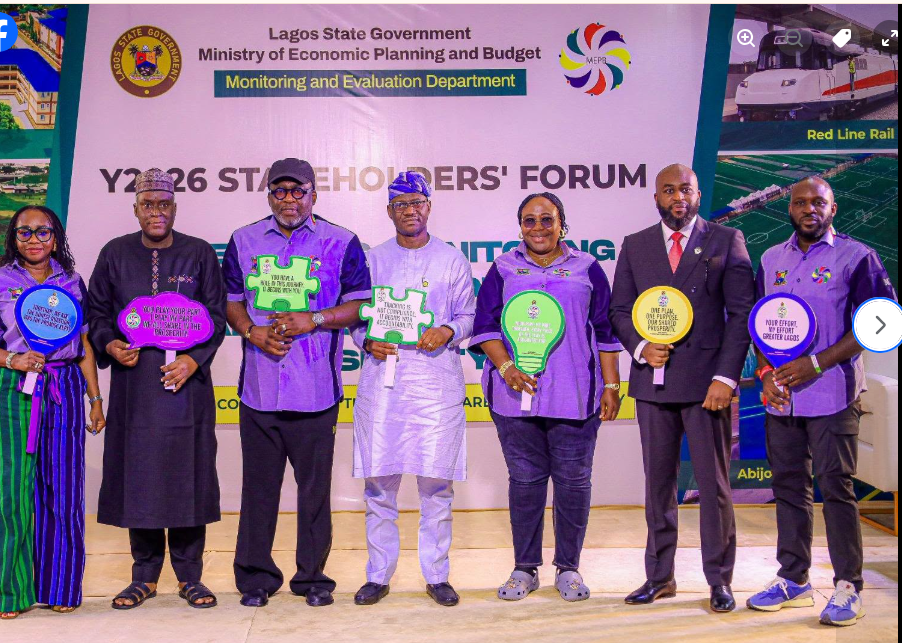
The Lagos State Government has reaffirmed its commitment to strengthening monitoring and evaluation (M&E) to improve project delivery, enhance accountability, and promote evidence-based governance across Ministries, Departments, and Agencies (MDAs).
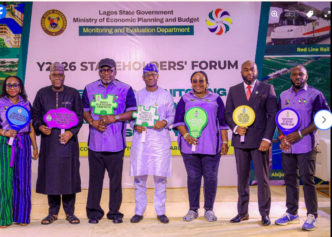
Eko Hot News reports that the commitment was reiterated at the 2026 Monitoring and Evaluation Stakeholders’ Forum, organised by the Ministry of Economic Planning and Budget in Alausa, Ikeja, under the theme: “Leveraging Monitoring and Evaluation to Advance Shared Prosperity: Chart the Course, Track the Result, Share the Prosperity.”
The forum brought together government officials, development partners, academia, private sector representatives, civil society organisations, and community leaders to explore strategies for strengthening monitoring and evaluation across Lagos State.
Speaking at the event, the Permanent Secretary of the Ministry of Economic Planning and Budget, Mrs. Olayinka Ojo, described monitoring and evaluation as an essential tool for achieving the goals of the Lagos State Development Plan (LSDP) 2052 and the THEMES+ Development Agenda.
She said effective governance depends on careful planning, efficient implementation, regular monitoring, and continuous assessment to ensure that government projects deliver meaningful benefits to residents.
According to Mrs. Ojo, monitoring and evaluation promote transparency, strengthen institutional performance, and ensure that public resources are used efficiently to achieve measurable development outcomes.
She explained that the stakeholders’ forum was organised to deepen collaboration among key partners while encouraging the exchange of ideas and best practices.
The Permanent Secretary urged participants to contribute practical recommendations that would strengthen the state’s monitoring and evaluation system and improve public sector performance.
She added that a responsive and results-driven public service depends on reliable performance measurement and continuous learning.
In his address, the Commissioner for Economic Planning and Budget, Mr. Ope George, explained that Lagos State’s monitoring and evaluation process begins during the annual budget preparation.
He said residents participate in consultative meetings held across the IBILE divisions, where communities identify projects and priorities for government consideration.
According to the Commissioner, once projects receive approval, the Ministry’s Monitoring and Evaluation Department works closely with relevant Ministries, Departments, and Agencies to monitor implementation and assess progress.
He explained that project performance is carefully evaluated before payments are processed, ensuring transparency and accountability throughout implementation.
Mr. George said the monitoring system covers all categories of government projects, including roads, bridges, hospitals, transportation, education, healthcare, and community development initiatives.
He noted that flagship projects such as the Opebi-Mende Bridge, Massey Children’s Hospital, rail infrastructure, and the Food Logistics Hub are among the projects regularly monitored.
According to him, every government project is important because of its direct impact on the quality of life of Lagos residents.
The Commissioner emphasised that every public fund allocated to development projects is monitored, evaluated, and documented to ensure value for money.
He also highlighted the growing role of technology in strengthening project monitoring across the state.
According to Mr. George, digital platforms such as the EKO360 App enable residents to monitor project implementation while improving transparency and public participation.
He added that emerging technologies, including Artificial Intelligence, are expected to further enhance data collection, reporting, analysis, and evidence-based decision-making.
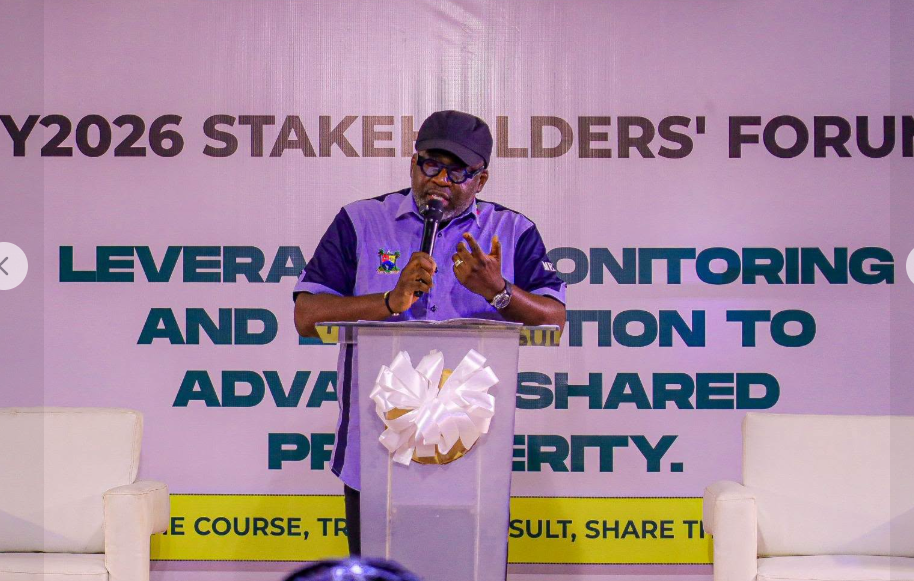
Delivering the keynote presentation, former Minister of Finance and National Planning, Dr. Shamsuddeen Usman, advocated the adoption of a Results-Based Management framework across government institutions.
Represented by the founding President of the Nigeria Association of Evaluators, Mr. Aliyu Ahmed, he said government performance should be measured by improvements in citizens’ quality of life rather than the number of completed projects alone.
He identified efficiency, effectiveness, impact, and equity as the four key indicators for evaluating public sector performance and ensuring sustainable development.
Also speaking, the Chairman of the Lagos State Community Development Advisory Council, Alhaji Hamzat Azeez, commended the state government for involving communities in project planning, implementation, monitoring, and post-completion management.
He said community participation has strengthened project ownership and helped ensure that completed projects continue to serve residents effectively.
Participants at the forum reaffirmed their commitment to strengthening collaboration and promoting best practices that will improve monitoring and evaluation across government institutions.
They agreed that stronger accountability systems, improved data management, and continuous stakeholder engagement are essential for achieving sustainable development in Lagos State.
The forum concluded with renewed optimism that effective monitoring and evaluation will continue to strengthen governance, improve project delivery, and support the Lagos State Government’s vision of shared prosperity for all residents.