



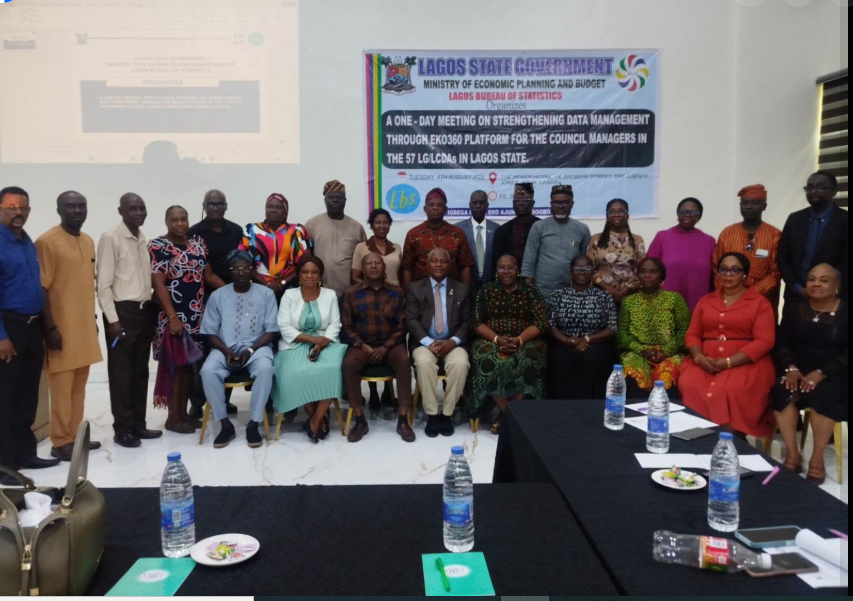
The Lagos State Government has intensified efforts to strengthen data-driven governance by training Council Managers from the 57 Local Government Areas (LGAs) and Local Council Development Areas (LCDAs) on the effective use of the EKO360 Platform.
Eko Hot News reports that the one-day capacity-building programme was organised by the Lagos Bureau of Statistics (LBS) under the Ministry of Economic Planning and Budget (MEPB) at The Dover Hotel, Ikeja, on Tuesday, August 4, 2026.
The training brought together Council Managers from across Lagos to improve their understanding of data collection, validation, analysis, and reporting through the EKO360 Platform.
The initiative forms part of the Lagos State Government’s broader strategy to promote evidence-based governance and improve public service delivery through accurate and reliable data.
Speaking at the event, the Permanent Secretary, Ministry of Economic Planning and Budget, Mrs. Olayinka Ojo, described open data governance as a vital pillar of transparency, accountability, and effective public administration.
She explained that the EKO360 Platform was created as a central data hub where government institutions can collect, validate, analyse, and share credible information to support planning and informed decision-making.
According to Mrs. Ojo, dependable data remains essential for sustainable development because it enables government agencies to design policies that reflect the real needs of residents.
She noted that the Lagos State Government is committed to building an open data ecosystem that supports policy formulation, public accountability, performance monitoring, and efficient resource management.
The Permanent Secretary added that compliance with national data governance standards will strengthen budget transparency, improve development planning, and attract greater institutional support.
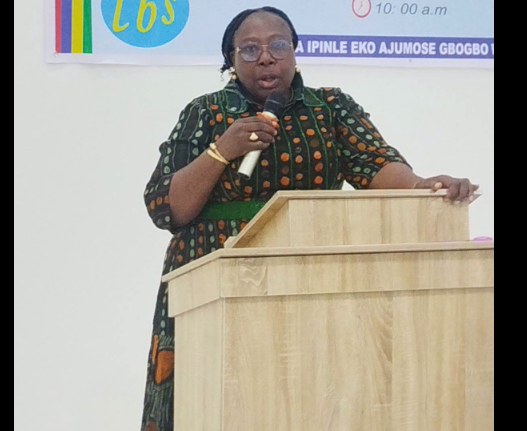
She encouraged Council Managers to embrace the platform fully and ensure that information generated within their councils meets the highest standards of quality and accuracy.
During a technical presentation, the Director of the Macro Economic Statistics Division at the Lagos Bureau of Statistics, Mrs. Bolanle Pemede, described the Bureau as the official custodian of government data in Lagos State.
She explained that Local Governments and LCDAs remain the primary sources of socio-economic information used to produce statistical reports that guide government planning and development programmes.
According to her, reliable information from local councils enables policymakers to make informed decisions that improve service delivery and support sustainable development across the state.
Mrs. Pemede identified delayed data submission, incomplete reports, data quality challenges, limited working tools, and inadequate technical capacity as some of the major obstacles affecting effective data management.
She urged Council Managers to strengthen supervision of data collection activities while ensuring that validated information is submitted promptly.
She also encouraged local government officials to provide adequate support for officers responsible for gathering and processing statistical information.
Mrs. Pemede stressed that credible data remains indispensable for effective budgeting, monitoring, evaluation, and efficient allocation of public resources.
Also addressing participants, the Director of Social Protection Coordination, Mr. Yusuf Semiu Olanrewaju, highlighted the importance of accurate data in expanding social intervention programmes across Lagos State.
He explained that reliable information on poor and vulnerable households is essential for strengthening the Lagos State Single Social Register and improving the delivery of social protection initiatives.
According to him, quality data helps ensure that government support reaches eligible beneficiaries while improving transparency and accountability in programme implementation.
Mr. Olanrewaju appealed to Council Managers to continue supporting field officers and data collection teams working across the state’s communities.
He noted that sustained collaboration among government institutions is critical to improving the quality, coverage, and reliability of the social register.
Participants at the meeting reaffirmed their commitment to strengthening collaboration with the Lagos Bureau of Statistics and improving data management practices across the 57 LGAs and LCDAs.
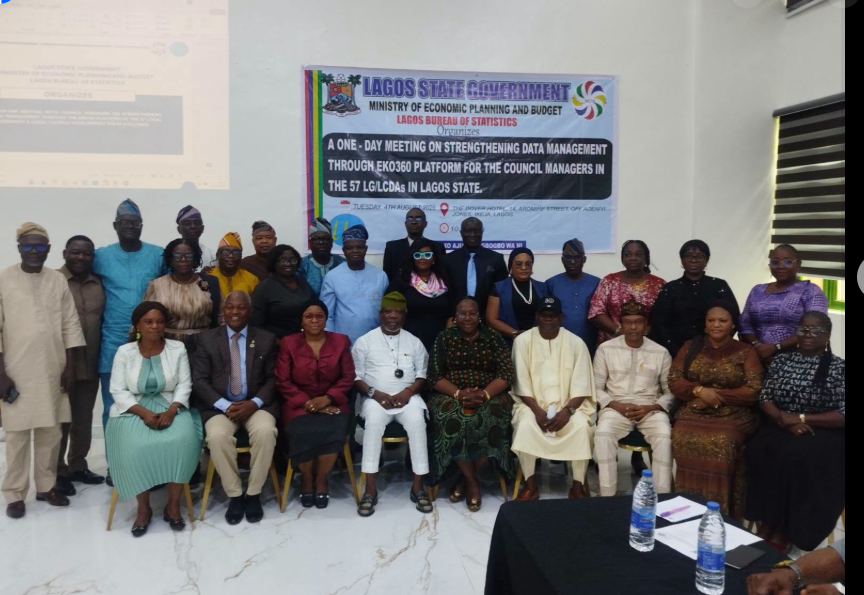
They pledged to prioritise timely submission, proper validation, and high-quality reporting in support of the EKO360 Platform.
Many participants expressed confidence that the platform would strengthen evidence-based governance by providing policymakers with reliable information for planning and decision-making.
The training also reinforced the importance of collaboration between state and local government institutions in promoting innovation, accountability, and effective governance.
Observers believe that improved data management will enable the Lagos State Government to respond more effectively to residents’ needs while enhancing transparency in public administration.
By strengthening the capacity of Council Managers and promoting the use of modern digital tools, the Lagos State Government continues to advance its vision of building a smarter, more responsive, and data-driven public sector.
The EKO360 Platform is expected to play a significant role in improving policy development, monitoring government performance, and supporting sustainable growth across Lagos State through reliable and accessible data.