



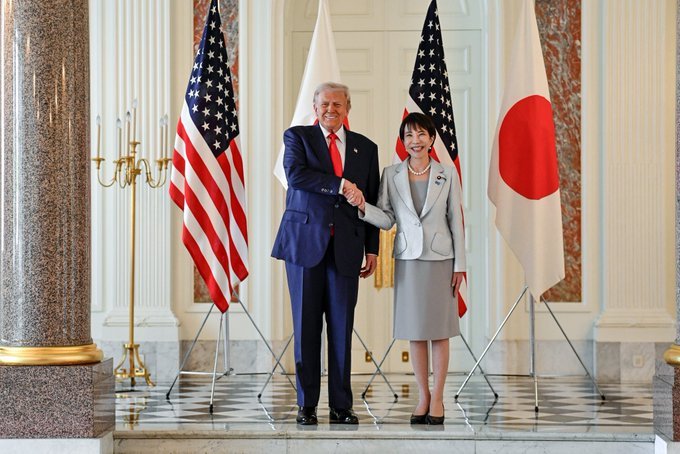
The United States and Japan have launched major oil, gas, and critical minerals projects under a new bilateral trade framework aimed at strengthening economic and energy cooperation. The announcement was made by President Donald Trump as part of broader efforts to deepen strategic ties between both nations.
Eko Hot News reports that the agreement focuses on expanding investment in U.S.-based energy infrastructure and critical mineral development. The projects are designed to reinforce supply chain resilience and reduce dependence on rival global suppliers for strategic resources.
Officials stated that the partnership will channel Japanese investment into American oil and gas production facilities, as well as projects linked to rare earth and other critical minerals. These materials are essential for advanced manufacturing, defense systems, and clean energy technologies.

The initiative aligns with Washington’s strategy to prioritize domestic production while attracting allied capital into key sectors. U.S. authorities described the arrangement as mutually beneficial, with both nations positioned to strengthen industrial capacity and long-term economic stability.
Energy security remains central to the deal. Policymakers highlighted growing global competition for access to natural resources, noting that cooperation among allied economies is critical to safeguarding future supply chains.
Japanese participation is expected to provide substantial financial backing, while operations and infrastructure development will be based primarily in the United States. Analysts say this structure ensures job creation and economic activity within American regions hosting the projects.
Industry observers view the agreement as part of a broader geopolitical strategy that links trade policy with national security considerations. The focus on oil, gas, and minerals reflects increasing concern over vulnerabilities in global resource markets.
The new U.S. Japan trade deal energy projects are also expected to stimulate private sector engagement. Experts suggest the collaboration may encourage further cross-border investments in technology, manufacturing, and industrial innovation.
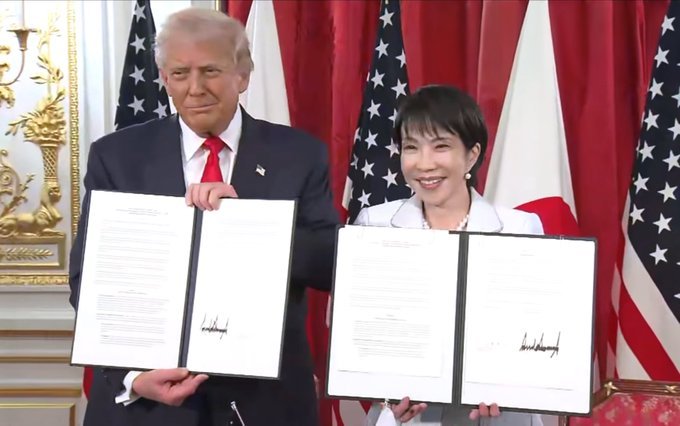
Economic analysts note that such partnerships could influence global commodity markets, especially in sectors tied to energy production and high-tech manufacturing. The agreement underscores deepening economic alignment between Washington and Tokyo.
As implementation begins, attention will turn to regulatory approvals, investment timelines, and projected economic impact. The announcement signals a continued emphasis on strategic economic partnerships under the U.S. Japan trade deal energy projects framework.