





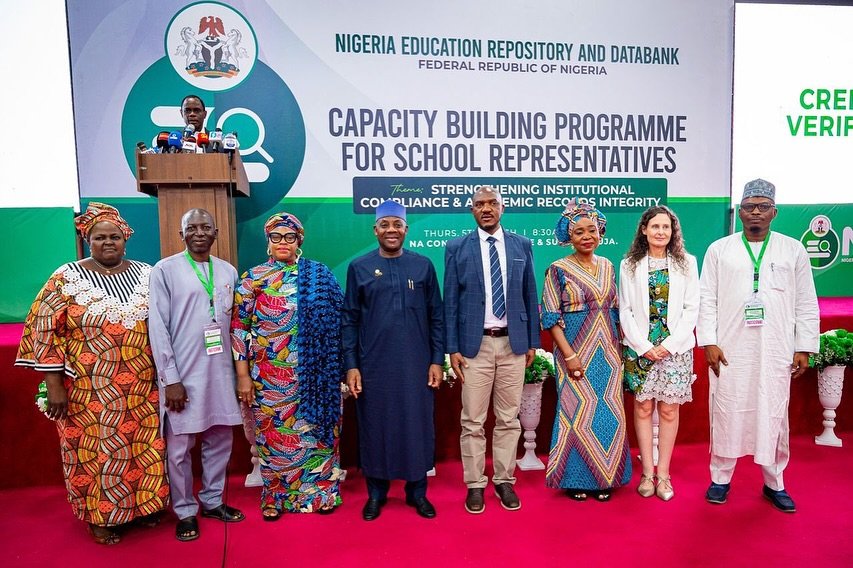
Tunji Alausa, Nigeria’s Minister of Education, has emphasised the importance of education and data systems in national development, noting that accurate academic documentation remains essential for preserving knowledge and strengthening the country’s intellectual heritage.
Eko Hot News reports that the minister made the remarks during the 2026 National Capacity Building Programme on the Nigeria Education Repository and Databank (NERD) Policy, where institutional representatives and NERD focal persons gathered to review progress and strengthen compliance with the national education data initiative.
According to the minister, the NERD platform has recorded significant progress within a short period. He revealed that nearly 100,000 student submissions have already been preserved on the system within its first four months of operation.
The platform has also onboarded more than 350 institutions across the country, while over 133,000 students and about 6,800 lecturers have registered on the system. The development reflects growing adoption of the digital repository within Nigeria’s academic community.
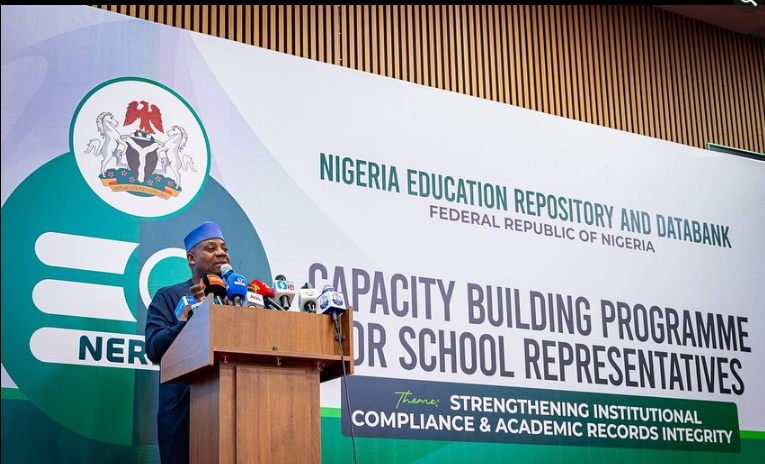
Tunji Alausa explained that each academic submission represents a valuable contribution to Nigeria’s knowledge resources. He noted that the NERD initiative ensures that academic works produced in the country remain preserved, verifiable, and accessible for future reference.
The minister added that the repository is designed to strengthen documentation and protect the intellectual output generated within universities and other tertiary institutions across the country.
Beyond preserving academic work, the initiative also aims to improve transparency and credibility within Nigeria’s education system. By creating a centralized academic databank, researchers, institutions, and policymakers can access verified academic records when needed.
To encourage excellence in scholarship, the Minister of Education also announced the approval of the NERD Annual National Laureate Prize. The award will recognise outstanding undergraduate, master’s, and doctoral research produced in Nigerian institutions.
Under the programme, winners will receive prizes ranging from ₦5 million to ₦20 million. The first edition of the award is expected to take place in November 2026.
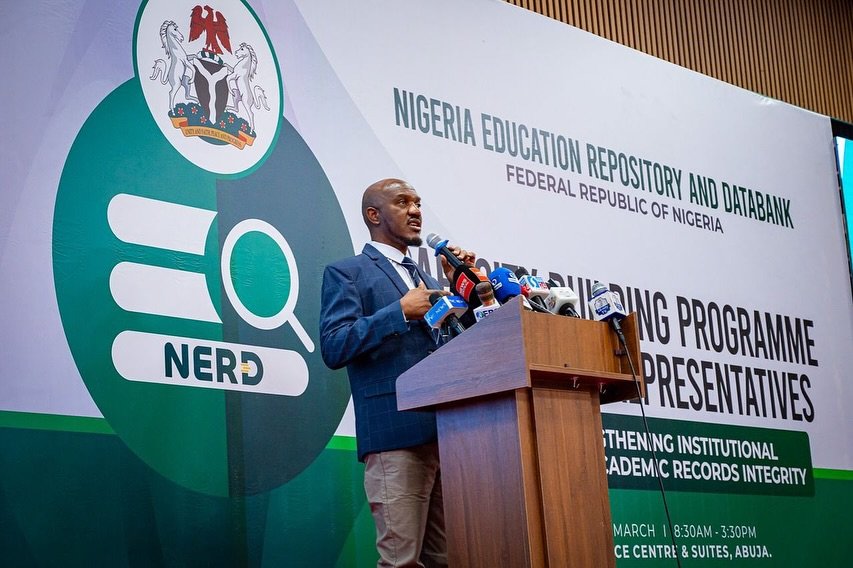
Education stakeholders have welcomed the initiative as a step toward strengthening research culture and rewarding innovation within Nigeria’s academic institutions.
The minister further disclosed that compliance with the NERD policy has now become mandatory for students seeking participation or exemption from the National Youth Service Corps programme.
In addition, institutions are expected to align with the policy in order to access services and support from key education agencies. These include Tertiary Education Trust Fund (TETFund), National Universities Commission (NUC), National Board for Technical Education (NBTE), National Commission for Colleges of Education (NCCE), and Industrial Training Fund (ITF).
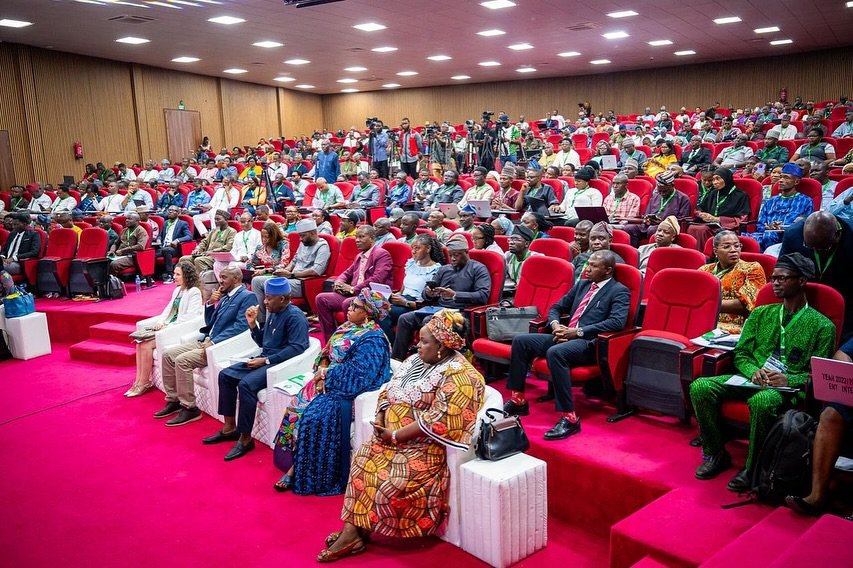
Tunji Alausa urged institutional leaders, NERD focal persons, and partner agencies to ensure full compliance with the policy. He stressed that maintaining accurate academic records is vital for the credibility and long-term development of Nigeria’s education sector.
According to him, the NERD initiative will play a central role in preserving Nigeria’s academic history while strengthening the foundation for research, innovation, and scholarship in the years ahead.
Education experts believe that digital repositories like NERD will help protect valuable academic resources and ensure that Nigeria’s research output remains accessible to future generations.