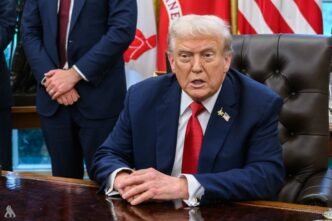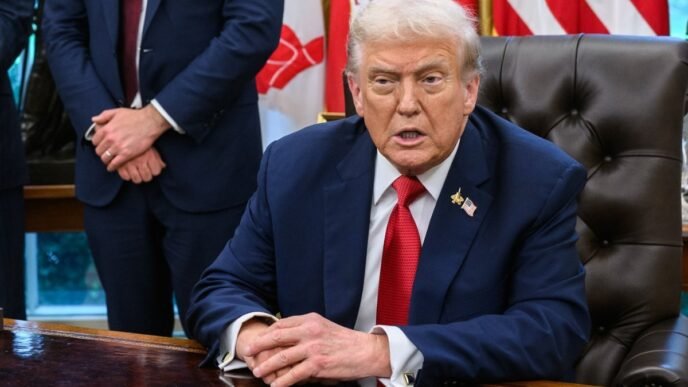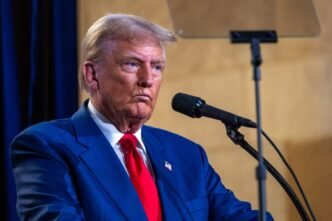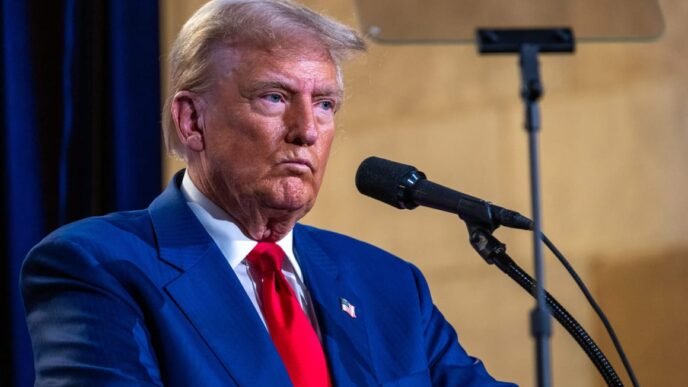




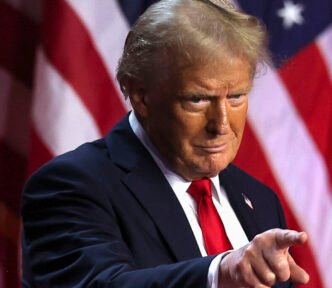
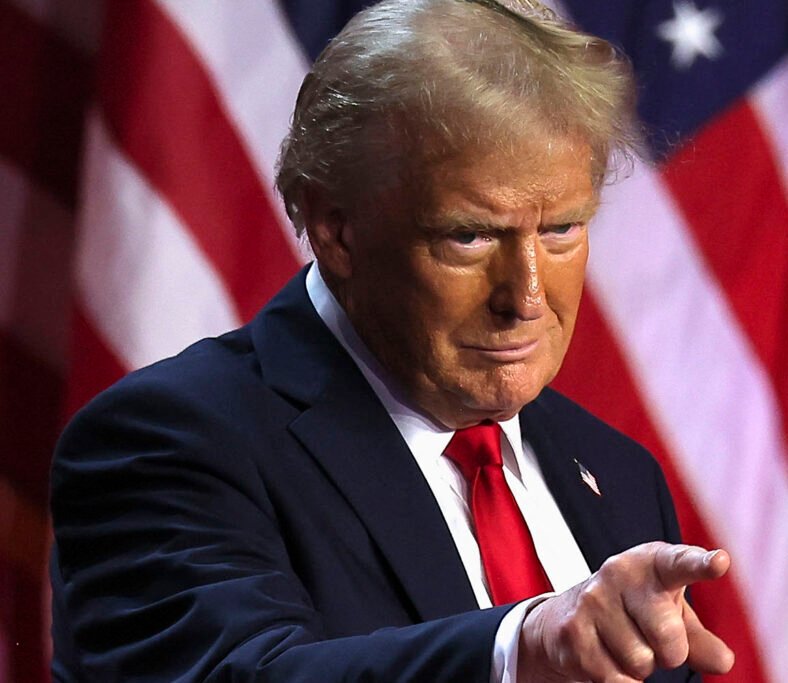
President Donald Trump is pushing his administration to explore a new face-to-face meeting with North Korean leader Kim Jong Un, raising the possibility of renewed high-level diplomacy between Washington and Pyongyang later this year.
Eko Hot News reports that Trump has expressed interest in meeting Kim as early as this autumn, potentially during a planned November trip to Asia that could coincide with the Asia-Pacific Economic Cooperation (APEC) summit in Shenzhen, China.
According to reports, Trump has privately discussed the possibility of another meeting with Kim as he seeks to reopen direct communication with North Korea.
No formal arrangements for a Trump-Kim summit have been confirmed, however. Reports indicate that planning for the proposed meeting has not yet reached an official stage.
A White House official said Trump and Kim could meet at an appropriate time, keeping open the possibility of renewed engagement between the two leaders.
Trump and Kim have previously held several high-level meetings during Trump’s first administration.
Their first summit took place in Singapore in 2018, followed by another meeting in Hanoi in 2019.
The two leaders also held a brief meeting at the Korean Demilitarized Zone later in 2019.
Those engagements created expectations of progress on North Korea’s nuclear programme, but negotiations eventually stalled over disagreements concerning sanctions and the scope of measures Pyongyang would take.
Trump has continued to speak positively about his relationship with Kim and has indicated that direct communication could help revive diplomacy.
The renewed interest comes as Washington reassesses its approach to North Korea and the wider security situation in East Asia.
Trump recently ordered a substantial reduction in planned joint military exercises between the United States and South Korea.
The exercises were shortened from 11 days to five days, with field training activities also reduced.
Trump has described the exercises as costly and has argued that reducing them could create room for dialogue with Pyongyang.
The decision has generated interest in South Korea, where officials have expressed hope that the development could contribute to renewed diplomatic engagement.
South Korean President Lee Jae Myung’s administration has continued to support dialogue with North Korea.
However, North Korea has not shown clear signs of accepting a new round of negotiations.
Kim’s sister, Kim Yo Jong, has questioned some of Trump’s recent statements about communication between Washington and Pyongyang.
She reportedly denied knowledge of recent direct communication between Trump and Kim while maintaining that the relationship between the two leaders had been cordial.
The mixed signals highlight the uncertainty surrounding any potential Trump-Kim meeting.
Trump, nevertheless, has said he expects to meet Kim later this year.
Speaking on Wednesday, the US president said he plans to meet the North Korean leader and discussed North Korea’s nuclear capabilities.
The issue of North Korea’s nuclear programme is expected to remain central to any future discussions.
Since the breakdown of negotiations in 2019, North Korea has continued developing its nuclear and missile capabilities, according to assessments of the country’s military programme.
The strategic environment has also changed since Trump’s previous meetings with Kim.
North Korea has strengthened its relationships with Russia and China while continuing to develop its military capabilities.
These developments could make any future negotiations more complicated than the talks held during Trump’s first term.
Analysts have also questioned whether Pyongyang currently has sufficient incentives to return to negotiations.
A former Trump administration official said earlier this year that North Korea currently has limited motivation to return to discussions over its nuclear programme, although circumstances could change.
Trump’s renewed outreach therefore faces several diplomatic challenges.
The United States would have to determine the objectives of any meeting and establish whether Pyongyang is prepared to discuss meaningful steps concerning its nuclear programme.
North Korea, meanwhile, has previously sought changes in US policy and relief from economic restrictions.
A meeting between Trump and Kim could nevertheless provide an opportunity to reopen communication at the highest level.
Supporters of direct diplomacy argue that personal engagement between the two leaders could reduce tensions and create opportunities for negotiations.
Critics may question whether another summit can produce concrete results after the previous diplomatic process failed to reach a lasting agreement.
The proposed meeting could also have implications for South Korea and other US allies in the region.
Any changes to military exercises or diplomatic policy are likely to receive close attention in Seoul and other regional capitals.
China could also become an important factor if the meeting takes place during Trump’s expected Asia trip.
The possibility of a summit in Shenzhen would place Trump and Kim’s potential meeting within a broader regional diplomatic setting.
For now, however, the proposed engagement remains at the discussion stage.
There is no confirmed date, venue or formal summit agreement between Washington and Pyongyang.
Trump’s latest statements nevertheless show that he remains interested in direct diplomacy with Kim.
The coming months will determine whether the renewed push develops into an official meeting.
If successful, another Trump-Kim summit could reopen a diplomatic channel that has remained largely inactive since the breakdown of their previous negotiations.
For the United States, the central challenge will be converting renewed personal diplomacy into practical progress.
For North Korea, any decision to return to talks would likely depend on the terms and potential benefits of engagement.
The possibility of a new Trump-Kim meeting has therefore placed North Korea diplomacy back in focus.