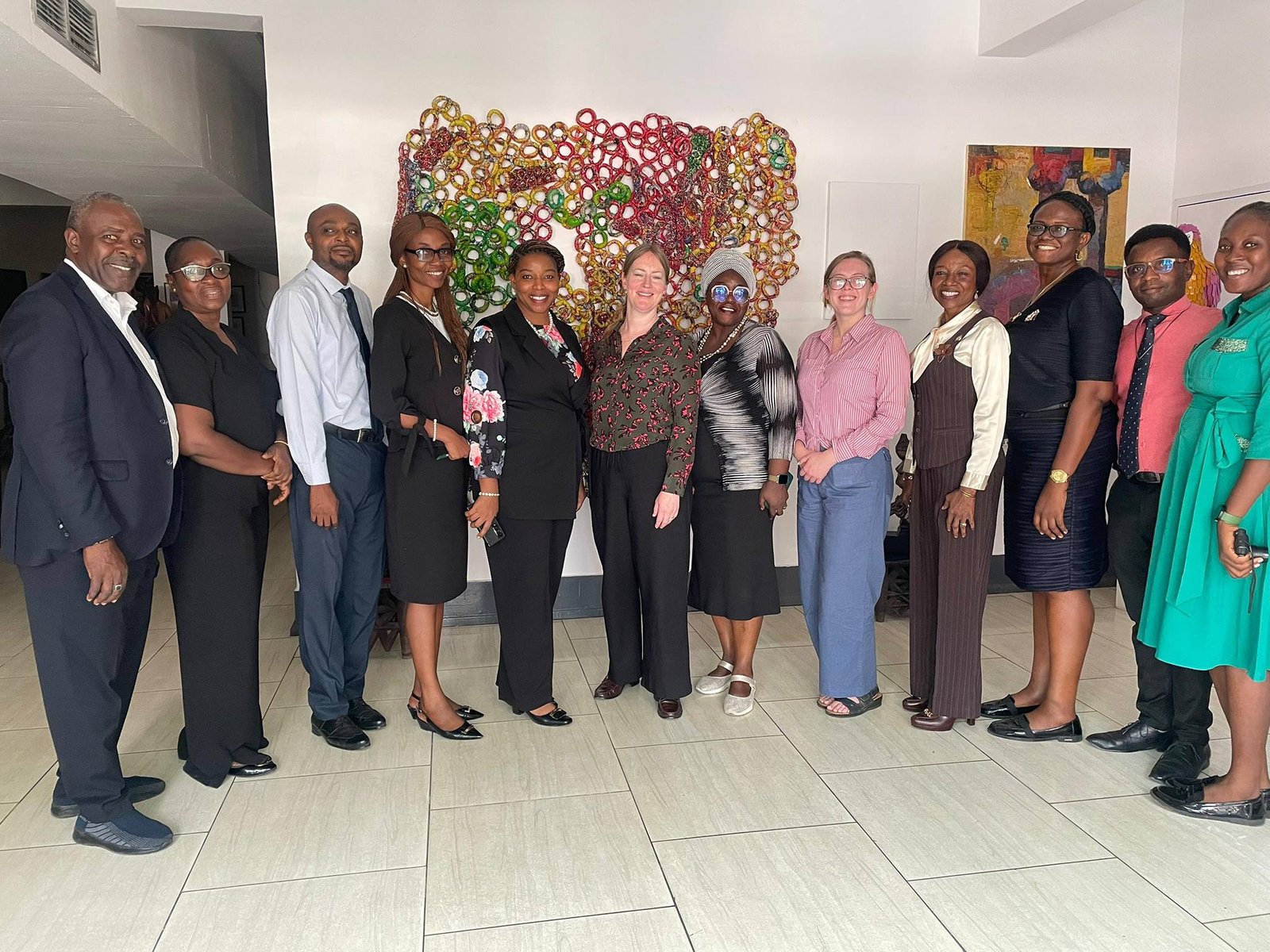





The Lagos Multi-Door Courthouse (LMDC) recently hosted a delegation from the United Kingdom Ministry of Justice on a learning visit focused on Alternative Dispute Resolution (ADR) and court-connected mediation.
Eko Hot News reports that the visit was designed to promote knowledge exchange and strengthen collaboration between both jurisdictions. It also highlighted the growing global interest in efficient and accessible dispute resolution systems.
The UK delegation included Sorrel Evans, Justice and Home Affairs Attaché, and Christina Soper, Head of Unit, Rule of Law. They were received by the former Director and CEO of LMDC, Achere Cole, alongside members of the management team.
In her remarks, Cole reaffirmed LMDC’s commitment to institutional excellence and continuous learning. She emphasized the importance of international partnerships in advancing modern justice systems.

The LMDC management team provided a comprehensive overview of their operations. This included insights into their roles, responsibilities, and the framework that supports the institution’s effectiveness.
Leading the technical discussions, Olubusola Ojo, former Registrar and Head of Operations, highlighted key aspects of LMDC’s case management processes. She explained how structured systems contribute to timely and efficient dispute resolution.
Ojo also discussed the guiding principles behind the LMDC model. These principles focus on accessibility, fairness, and flexibility in resolving disputes outside traditional courtroom processes.
Earlier, the UK delegation outlined the purpose of the visit. They expressed interest in understanding the Multi-Door Courthouse model and exploring best practices that improve access to justice.

The visitors noted that ADR mechanisms continue to gain recognition globally. They acknowledged LMDC’s role as a leading institution in promoting mediation and other alternative approaches to dispute resolution.
The engagement created an opportunity for both sides to share experiences and practical insights. It also encouraged discussions on how to adapt successful models across different legal systems.
Participants explored ways to strengthen collaboration in justice delivery. The exchange of ideas focused on improving efficiency, reducing case backlogs, and enhancing user experience in legal processes.

The visit further underscored the importance of innovation in the justice sector. Institutions like LMDC continue to demonstrate how structured ADR systems can complement conventional legal frameworks.
Both parties reaffirmed their shared commitment to promoting the rule of law. They also emphasized the value of cooperation in building more responsive and inclusive justice systems.
The learning visit marks another milestone in LMDC’s international engagements. It reinforces its position as a reference point for ADR excellence in Nigeria and beyond.