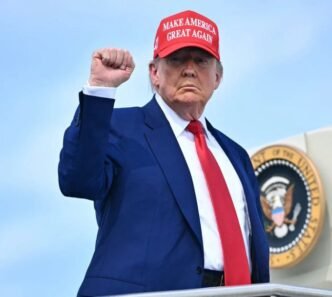





The Trump administration has renewed its appeal to the US Supreme Court, seeking to allow new restrictions on mail-in ballots ahead of the November midterm elections.
Eko Hot News reports that the administration filed the emergency request on Sunday after a federal judge extended an order blocking the US Postal Service from implementing the proposed changes.
The latest filing marks the third time the Trump administration has asked the Supreme Court to intervene in the dispute.
The legal battle comes as several states have already started preparing and sending mail ballots to voters for the November elections.
US District Judge Indira Talwani recently extended the block against the Postal Service, preventing enforcement of rules linked to Trump’s executive order.
The administration argues that the restrictions are necessary to establish consistent procedures for handling federal election mail.
According to the administration, the proposed rules would require states to provide the Postal Service with information about voters expected to receive mail ballots.
The rules would also require unique barcodes and specific information on ballot envelopes.
The administration says the requirements are intended to improve the processing of election mail and ensure that ballots are properly addressed.
Solicitor General John Sauer argued that the rules do not take control of elections away from individual states.
He maintained that states would continue to determine voter eligibility and establish their own procedures for voting by mail.
The administration has also warned that delays in implementing the rules could create uncertainty as states move closer to Election Day.
Several states have already begun mailing ballots, increasing pressure for a legal decision before the election process advances further.
North Carolina has started sending mail ballots, while other states are expected to begin the process in the coming days.
The administration says the Supreme Court should act quickly because election officials need sufficient time to prepare for any changes.
Judge Talwani, however, has raised concerns about the timing of the proposed rules.
Her ruling indicated that implementing major changes so close to the election could create difficulties for election officials and voters.
The judge’s order currently prevents the Postal Service from enforcing the disputed requirements.
The administration has challenged that decision and is asking the Supreme Court to temporarily suspend the lower court’s order.
The Supreme Court has previously allowed parts of the administration’s plan to move forward temporarily but has not issued a final ruling on whether the restrictions are legally valid.
Justice Ketanji Brown Jackson has set Wednesday as the deadline for responses to the administration’s latest request.
The court’s decision could have significant implications for the November midterm elections.
Control of both chambers of Congress will be contested during the elections, making voting procedures a major issue for political parties and election officials.
Mail voting is widely used across the United States, with nearly one-third of voters expected to use the method in the election.
Election officials in several states have expressed concerns about changing procedures after preparations for the midterms are already underway.
They argue that modifying systems, ballot envelopes and mailing processes at this stage could create additional administrative challenges.
Opponents of the Trump administration’s proposal have also questioned whether the federal government has the authority to impose the requirements on state-administered elections.
They have urged the courts to maintain the existing procedures for the upcoming election.
The Trump administration, meanwhile, maintains that its proposed requirements fall within federal authority over the US Postal Service.
The administration has also described the measures as reasonable preparations for handling federal election mail.
The dispute highlights the continuing legal debate over the role of the federal government in regulating aspects of federal elections.
Under the US electoral system, states traditionally administer elections, while federal authorities establish certain national requirements.
The Supreme Court’s decision could therefore clarify how far the federal government can go in setting requirements for mail ballots.
For now, the lower court’s block remains in place while the Supreme Court considers the administration’s renewed request.
With the November election approaching, both federal officials and state election authorities are awaiting further direction from the nation’s highest court.
The outcome could determine whether the proposed mail ballot requirements take effect before voters cast their ballots.