




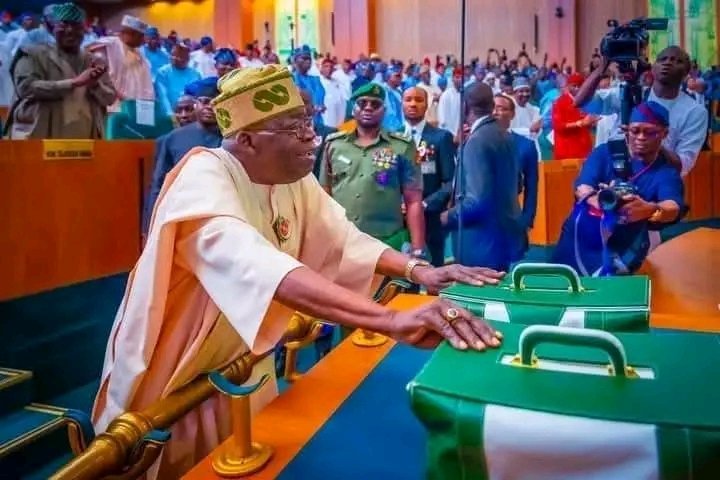
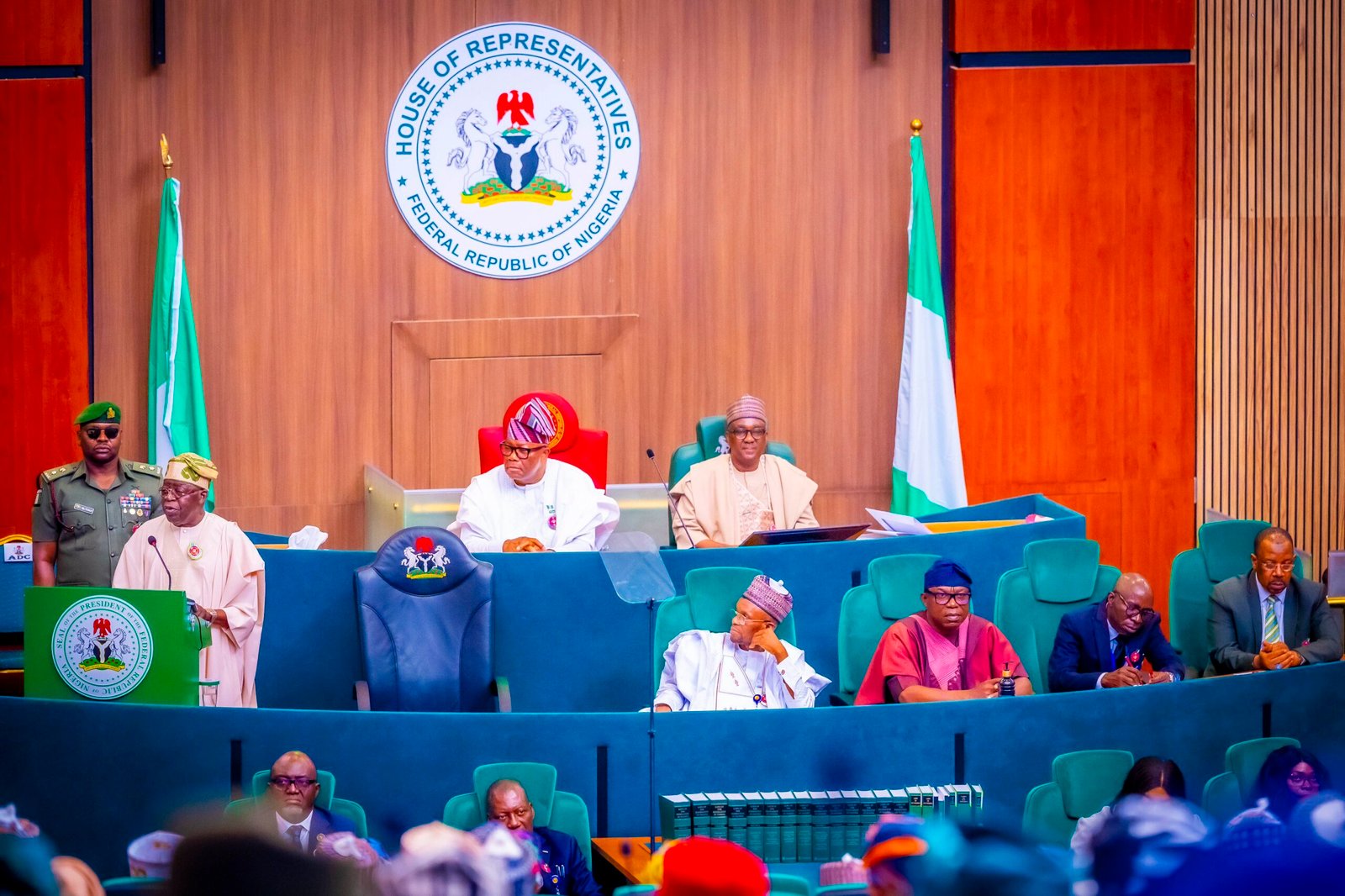
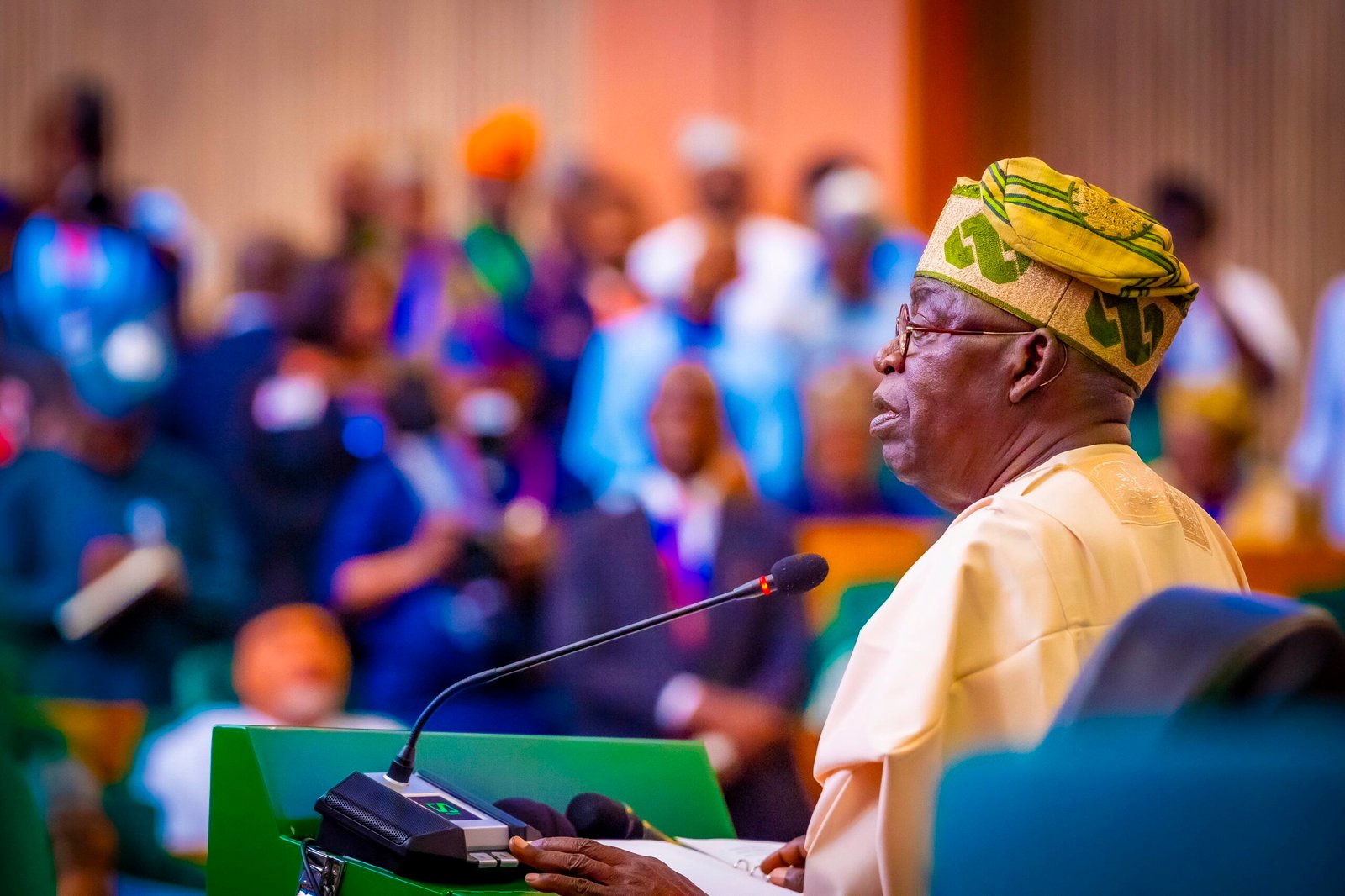
President Bola Ahmed Tinubu has presented the 2026 Appropriation Bill to a joint session of the National Assembly, outlining a comprehensive fiscal plan aimed at consolidating economic reforms and strengthening national resilience.
Eko Hot News reports that the proposed budget, themed “Budget of Consolidation, Renewed Resilience and Shared Prosperity,” is estimated at between ₦58.18 trillion and ₦58.47 trillion, reflecting minor adjustments across official documents.
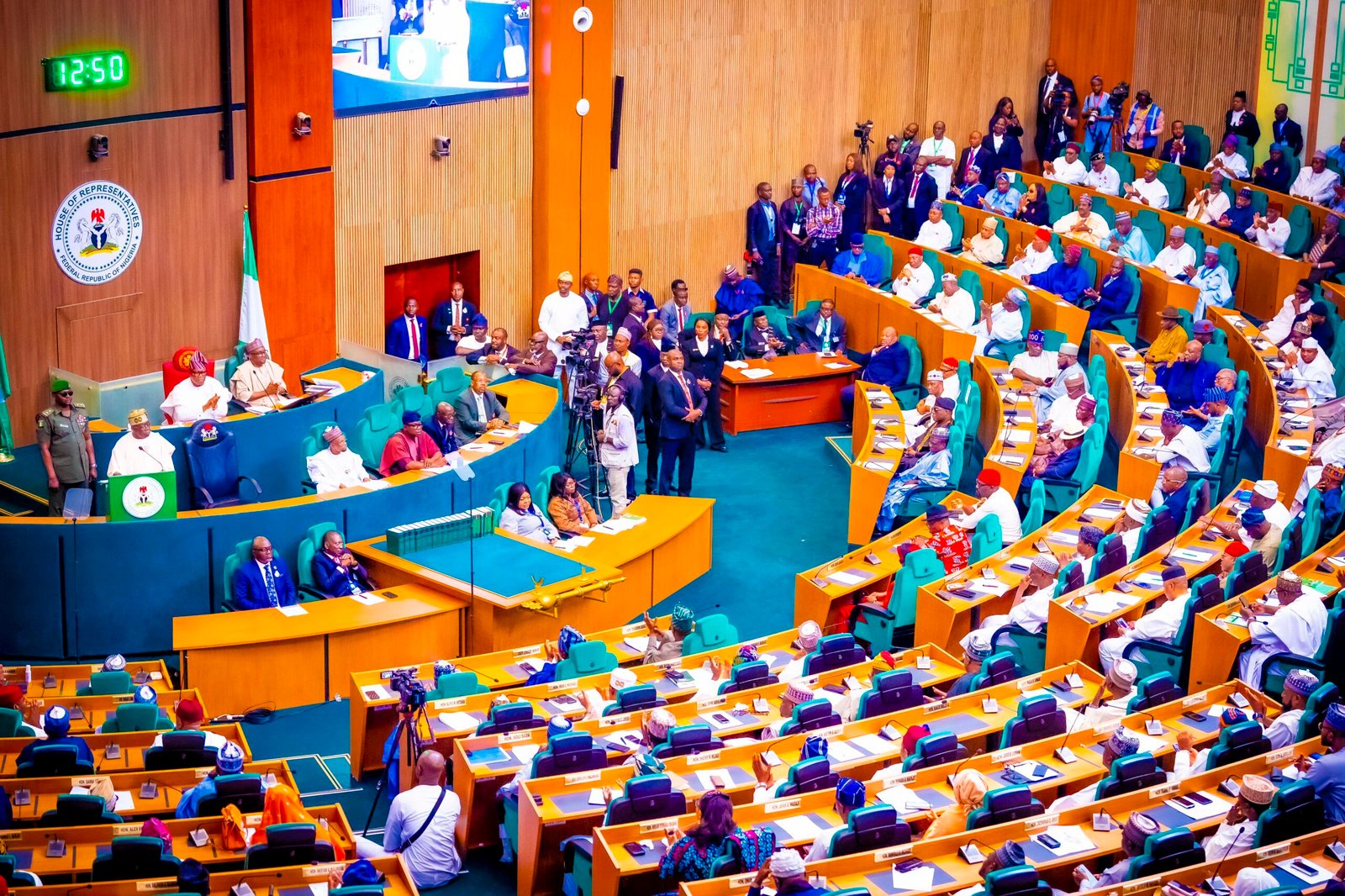
The presentation marks President Tinubu’s third full budget since assuming office in 2023.
The 2026 budget proposal is built on the already approved 2026–2028 Medium-Term Expenditure Framework and Fiscal Strategy Paper, which provides the macroeconomic foundation and fiscal assumptions guiding government spending and revenue expectations for the coming years.
Key assumptions of the budget include an oil benchmark price of $64.85 per barrel, daily oil production of 1.84 million barrels, and an exchange rate of about ₦1,512 to one US dollar.
The Federal Government projects a GDP growth rate of approximately 4.68 percent for the 2026 fiscal year.
Total projected revenue for the year stands at ₦34.33 trillion, while the deficit is estimated at ₦23.85 trillion, representing about 4.28 percent of the nation’s Gross Domestic Product. To bridge the deficit gap, the government plans to raise ₦17.88 trillion through a mix of domestic and foreign borrowing.
A major highlight of the 2026 fiscal plan is the emphasis on fiscal discipline. The administration announced plans to end overlapping budget cycles by March 2026, transitioning fully to a single annual budget cycle that begins implementation in April.
On expenditure priorities, the budget allocates ₦15.52 trillion to debt servicing, including provisions for a sinking fund to manage maturing bonds.
Capital expenditure takes the largest share at ₦26.08 trillion, targeted at infrastructure projects, ministries, departments, and agencies, as well as multilateral loan-funded initiatives.
Non-debt recurrent expenditure is estimated at ₦15.25 trillion, covering salaries and routine government operations. Security and defence receive ₦5.41 trillion, underscoring the administration’s focus on national security as a foundation for economic stability and investment growth.
The education and health sectors are also prioritised, with allocations of ₦3.52 trillion and ₦2.48 trillion, respectively, aimed at improving access, skills development, healthcare delivery, and system strengthening. Infrastructure spending of ₦3.56 trillion focuses on road, power, and transport development nationwide.
The budget now awaits detailed scrutiny, debate, and possible amendments by the National Assembly before passage.
The Federal Government expressed confidence that the 2026 budget will translate economic reforms into improved living standards, job creation, and sustainable growth for Nigerians.