




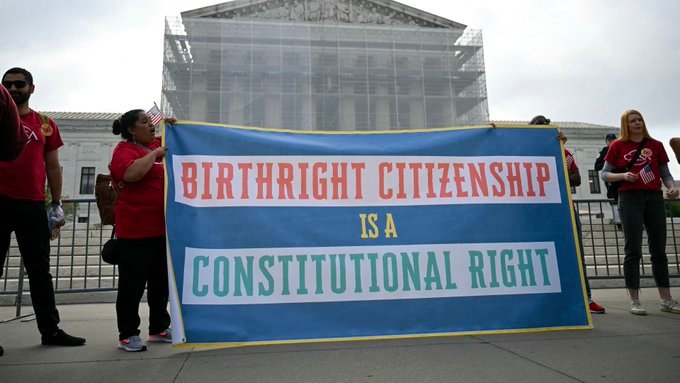
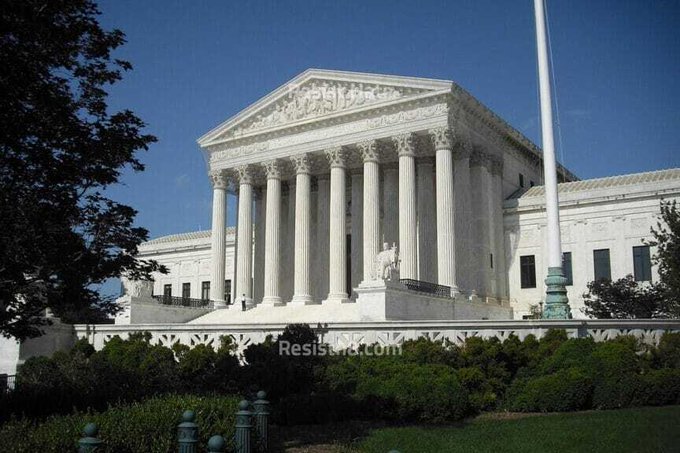
The Supreme Court’s decision to hear arguments on President Donald Trump’s executive order ending birthright citizenship is expected to reshape national debate on U.S. immigration policy.
Eko Hot News reports that the White House views the case as a pivotal opportunity for the president to reframe his immigration agenda and regain public confidence. Regardless of the outcome, officials believe the court’s decision will open the door to major reforms, including removing undocumented people from census counts, eliminating the diversity visa lottery, and expanding merit-based admissions.
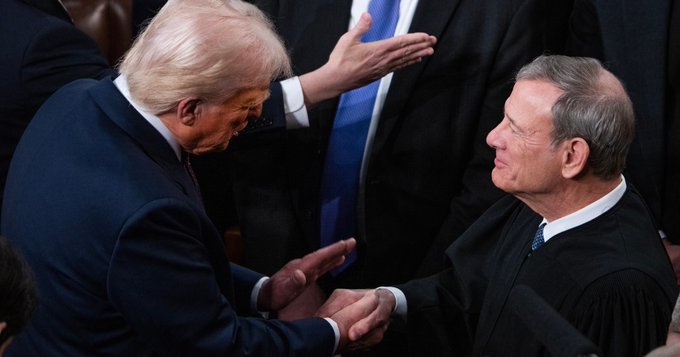
Trump campaigned on fixing what he described as an immigration crisis inherited from former President Joe Biden. The administration blamed Biden for a surge in illegal crossings, including the record 300,000 migrants who entered the U.S. in December 2023. Although Trump later tightened border security, his deportation policies remain unpopular, contributing to a decline in his approval rating on immigration.
The White House hopes to reconnect with Hispanic voters, who supported GOP candidates in significant numbers last year. Many Latino voters oppose illegal immigration but also reject aggressive enforcement that targets long-standing community members.
Birthright citizenship, which grants automatic citizenship to anyone born on U.S. soil, is at the heart of the case. Critics say the rule encourages illegal immigration and fuels “birth tourism,” where foreigners travel to the U.S. to give birth and secure citizenship for their children.
Supporters argue the practice is protected under the 14th Amendment, which states that all persons born in the United States and “subject to the jurisdiction thereof” are citizens. The Trump administration maintains this language was never intended to cover people in the country illegally, but rather to overturn the Dred Scott ruling that excluded Black Americans from citizenship.
Trump has repeatedly called for a merit-based immigration system, arguing that current admissions rely too heavily on random lotteries and family ties. He previously proposed a Canadian-style points system that would increase merit-based admissions from 12 percent to 57 percent. A Harvard poll in 2018 found that 84 percent of registered voters supported such a shift.
The administration accuses Democrats of blocking immigration reform for political gain, arguing that counting undocumented migrants in the census gives Democratic-led states larger congressional representation despite population losses caused by high taxes and out-migration.
Trump officials say long-term undocumented residents who have lived responsibly should be considered for legal residency, but not citizenship, as a consequence of entering illegally. They argue that mass deportations are neither practical nor humane.
While the Supreme Court’s review focuses narrowly on birthright citizenship, the White House believes it will catalyse broader immigration reform. Even if the executive order is struck down, officials insist that significant policy changes are still necessary to “put America first” in the immigration system.