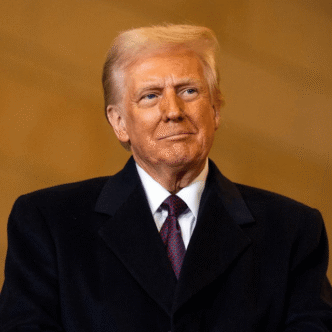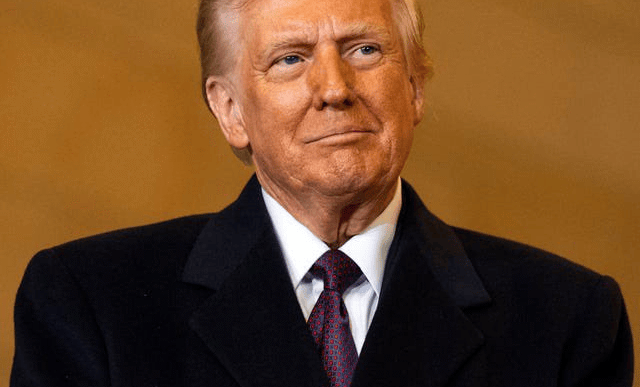




The attorney representing Lindsay Clancy, a Massachusetts mother accused of killing her three young children, has appealed to US President Donald Trump to consider granting her a pardon.
Eko Hot News reports that the request has raised legal questions because the US president’s pardon authority generally applies to federal offences and does not extend to criminal cases prosecuted under state law.
Clancy is facing state criminal charges in Massachusetts over the deaths of her three children.
Her attorney has asked Trump to consider using his presidential pardon powers in the case, despite the constitutional limitations surrounding presidential clemency.
Under the US Constitution, the president has the authority to grant reprieves and pardons for offences against the United States.
That authority does not ordinarily cover offences prosecuted by individual states.
This distinction means that a presidential pardon would not normally be able to dismiss or erase criminal charges brought against Clancy under Massachusetts law.
The appeal nevertheless places renewed attention on the case and on the limits of presidential clemency in the United States.
Clancy’s case has attracted significant public attention since the deaths of her three children.
Her legal team has maintained that her circumstances should be considered carefully as the case proceeds through the Massachusetts justice system.
The request to Trump represents an attempt to draw federal attention to a case that remains within the state court system.
However, the president’s constitutional pardon power presents a major legal obstacle to the request.
State criminal matters are generally handled by state courts and authorities rather than the federal government.
As a result, any decision concerning Clancy’s state charges would ordinarily fall within the Massachusetts legal system.
The appeal to Trump therefore does not automatically create a legal mechanism for ending the proceedings.

It does, however, highlight the broader debate over presidential clemency and the boundaries of federal executive authority.
Trump has used his presidential pardon powers in a number of federal cases, but those powers have constitutional limits.
The distinction between federal and state jurisdiction is particularly important in determining whether a presidential pardon can affect a criminal case.
For Clancy, the charges she faces are connected to Massachusetts law.
Her attorney’s appeal therefore faces the question of whether the president has any constitutional authority to intervene in the state proceedings.
Legal experts have long recognised that the president cannot generally pardon people for crimes committed under state law.
State governors and other state authorities may have separate clemency powers under their respective state laws.
Any relief available to Clancy through clemency would therefore need to be considered within the appropriate Massachusetts legal framework.
The attorney’s appeal to Trump nevertheless brings additional national attention to the case.
It also raises questions about the extent to which presidential intervention can influence criminal proceedings handled by state authorities.
As the legal process continues, Clancy’s defence team is expected to pursue available legal options on her behalf.
The case remains subject to the procedures and decisions of the Massachusetts court system.

The appeal to Trump does not change the jurisdiction of the case or automatically suspend the legal proceedings.
Instead, it represents a request for presidential consideration despite the constitutional limitations surrounding federal pardons.
The development has also renewed discussions about the difference between federal and state criminal jurisdiction in the United States.
While the president has broad clemency powers over federal offences, those powers are not unlimited.
State criminal cases remain largely outside the president’s pardon authority.
For now, Clancy’s case continues within Massachusetts, where the relevant legal authorities will determine the next steps.
Her attorney’s appeal to President Trump has nonetheless added a new dimension to the closely watched case.
The request demonstrates the defence team’s willingness to explore every possible avenue for relief.
However, the constitutional limits on presidential pardons remain a significant consideration.
Further developments are expected as the legal process continues and Clancy’s defence team pursues its case in Massachusetts.