




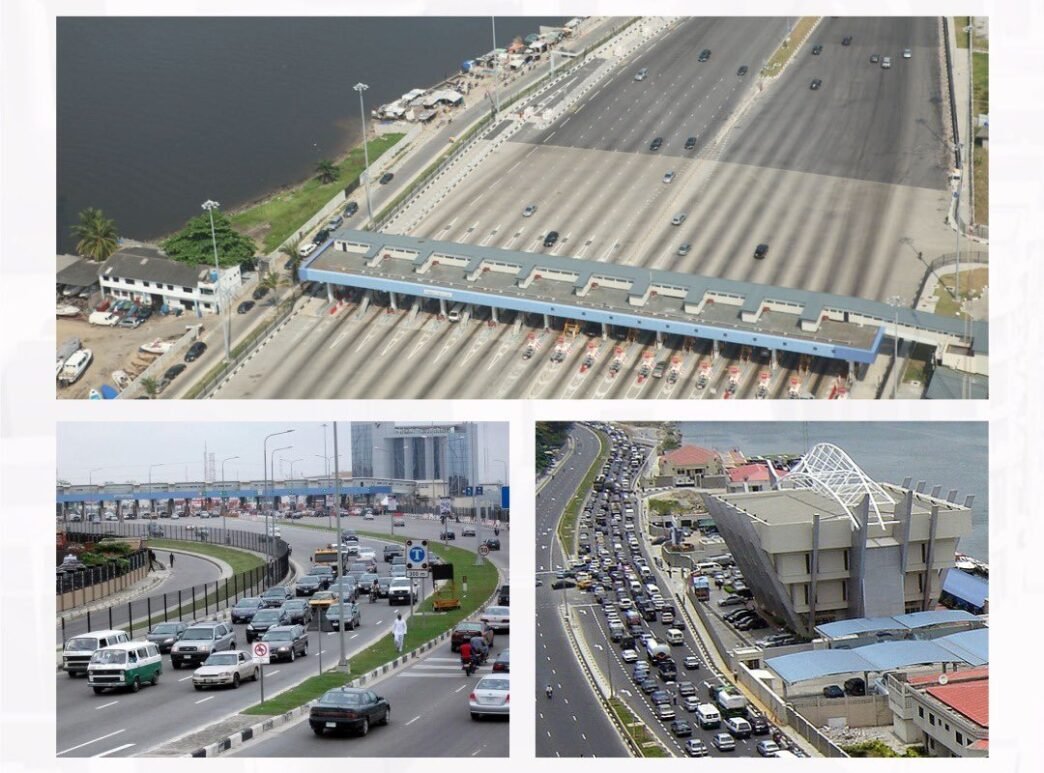
The Lagos State Government is set to introduce regulated bus operations along the Lekki–Epe corridor on 8 December, marking a major shift in the state’s transport system.
Eko Hot News reports that the initiative forms the first phase of the Lekki–Epe Bus Reform Scheme, implemented by the Lagos Metropolitan Area Transport Authority (LAMATA) to improve mobility, safety, and orderliness across the fast-growing corridor.
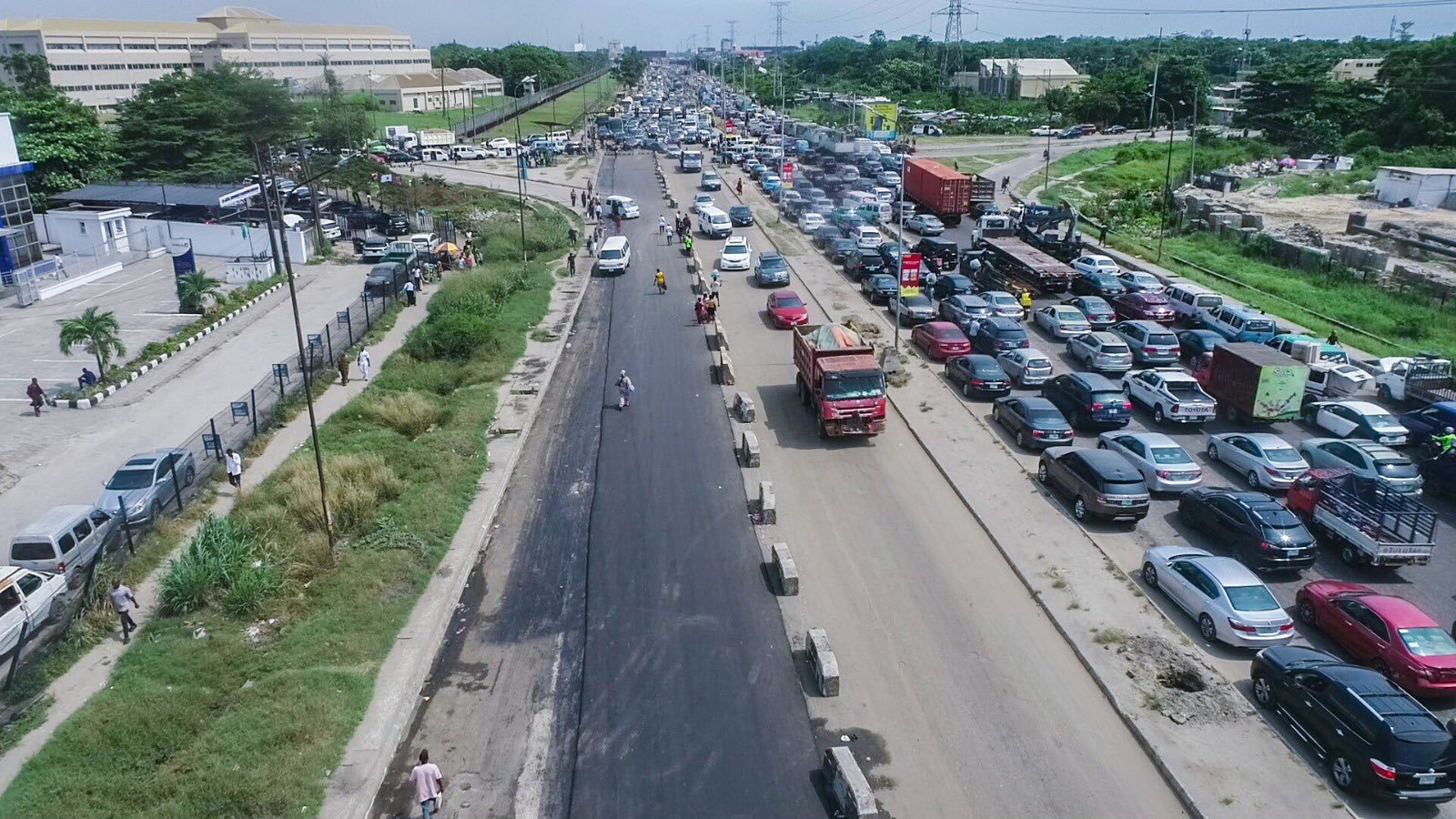
The rollout will begin with 229 high- and medium-capacity buses operating under a structured regulatory framework. Commuters will, for the first time, access predictable routes, transparent fares, modern payment systems, and a controlled service aimed at reducing travel time.
The Lekki–Epe axis has experienced pressure from rapid population growth, extensive real estate development, and limited formal transport options. More than two million residents now depend on the corridor for daily movement to major business districts.
Until now, most commuters have relied on private vehicles and informal buses such as korope and danfo, which often operate without regulation. These vehicles frequently attract complaints over random stops, fluctuating pricing, discomfort, and safety concerns.
The new reform seeks to replace unregulated operations with safer, higher-capacity buses capable of transporting more passengers per trip and easing congestion along busy routes.
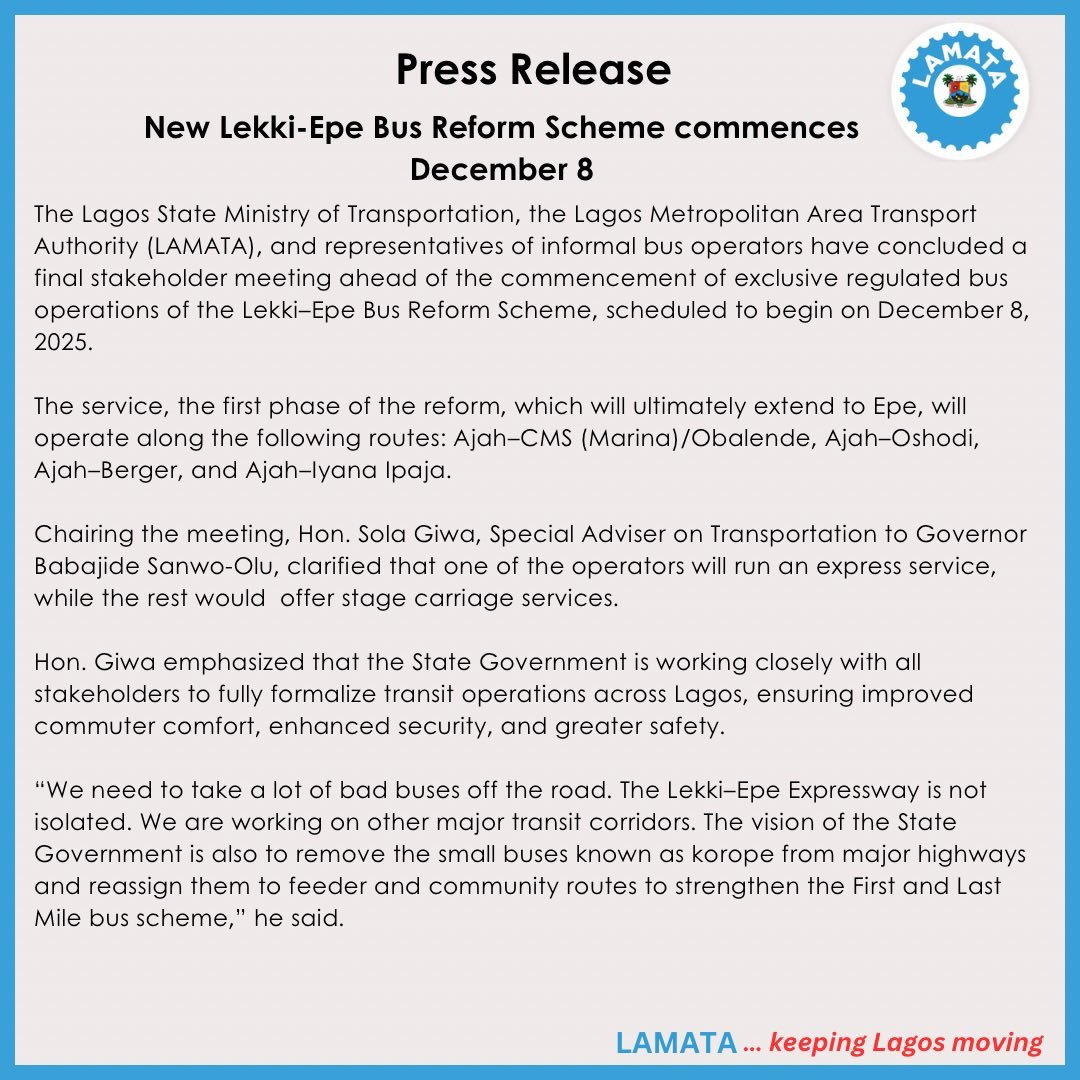
LAMATA said the scheme will introduce services on major routes, including Ajah–CMS/Marina, Ajah–Obalende, Ajah–Oshodi, Ajah–Berger, and Ajah–Iyana Ipaja. One operator will run express services, while others will provide stage-by-stage options to meet varied commuter needs.
Each bus will carry Lagos’ blue-and-white regulated colours, PTCS verification stickers, unique fleet codes, and Touch and Pay (TAP) stickers for seamless transactions.
A key component of the scheme is the enforcement of fully cashless payments through the Cowry card system. The government warned that any driver, commuter, or staff member caught conducting cash transactions will face arrest and prosecution.
Special Adviser to the Governor on Transportation, Hon. Sola Giwa, said the state is collaborating with unions to phase out ageing minibuses from highways and redirect them to feeder and community routes under the First and Last Mile scheme.
The Lekki–Epe initiative builds on previous transport reforms, including the BRT system and regulated routes from TBS to Ikorodu, Ikeja, Egbeda, and Marina. These reforms have reduced travel time by up to 30 percent on several corridors.
The deployment of 229 regulated buses represents the first structured effort to bring stability and predictability to one of Lagos’ most congested corridors.
The reform is expected to deliver long-term benefits, including reduced traffic through higher passenger capacity, improved safety standards, shorter travel times, and transparent fares supported by digital payment systems.
The initiative will also curb fare exploitation, enhance commuter discipline, and strengthen monitoring across the transport network.