



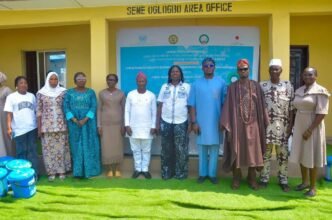
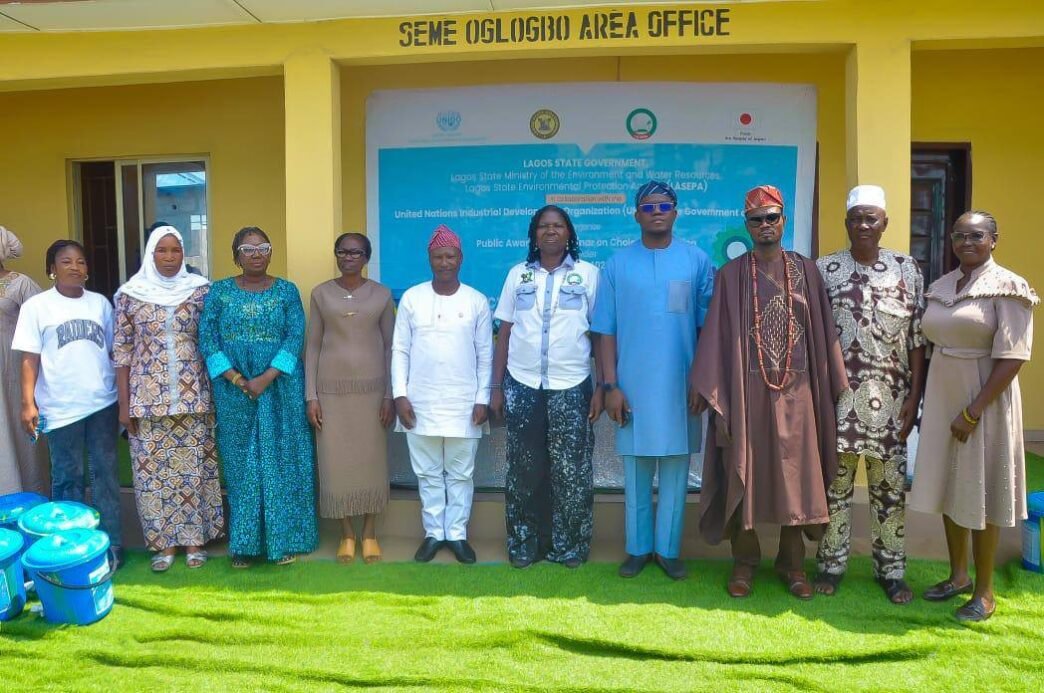
The Lagos State Environmental Protection Agency (LASEPA), in collaboration with the United Nations Industrial Development Organisation (UNIDO) and the Government of Japan, has strengthened its cholera prevention campaign with renewed sensitisation activities in Badagry West Local Council Development Area (LCDA).
Eko Hot News reports that the engagement forms part of Project 240236, titled “Emergency Capacity Building of the Informal Food and Water Vendors and Waste Workers in Flood-Affected Lagos to Combat Cholera Outbreaks.”
The initiative targets informal food handlers, water vendors, and waste workers, equipping them with practical knowledge to prevent cholera and other waterborne diseases across Lagos State.
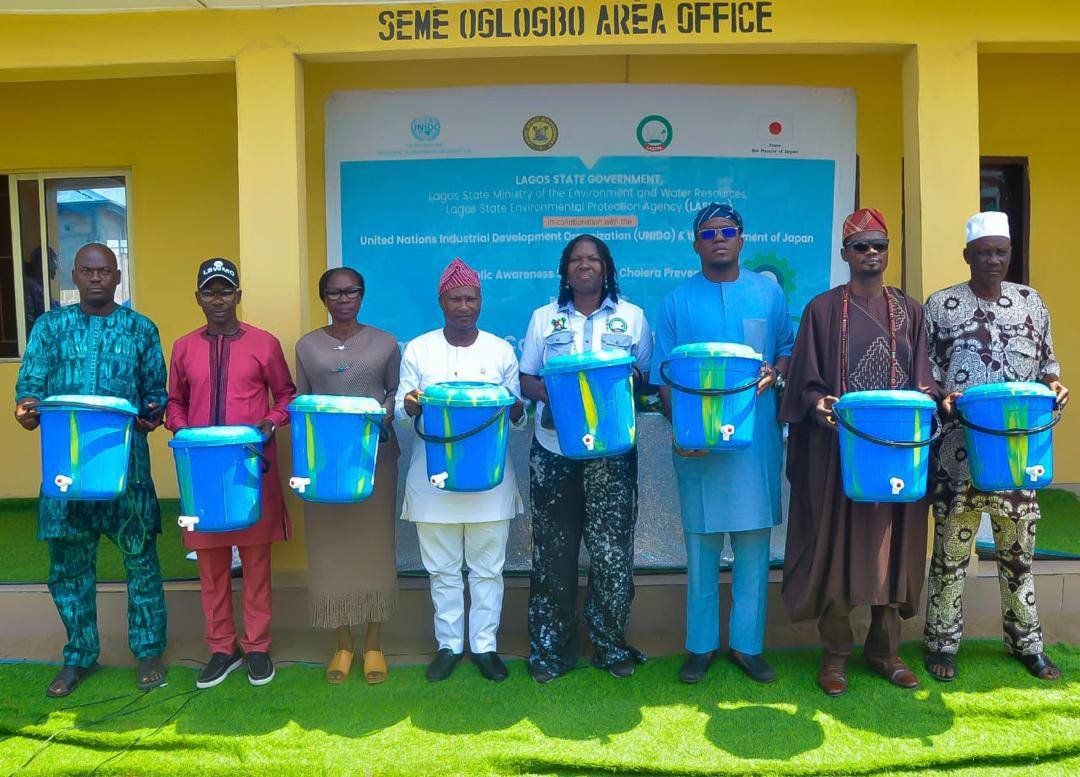
Prior to the Badagry West exercise, similar awareness workshops were held in Lagos Island, Alimosho, Ojo, Kosofe, Ikorodu, and Lagos Mainland, making the Badagry session the eighth in the ongoing advocacy campaign.
The programme, held at Custom Quarters, Seme Border, Badagry, drew food and water vendors, waste handlers, artisans, students, market leaders, community members, and environmental health officials.
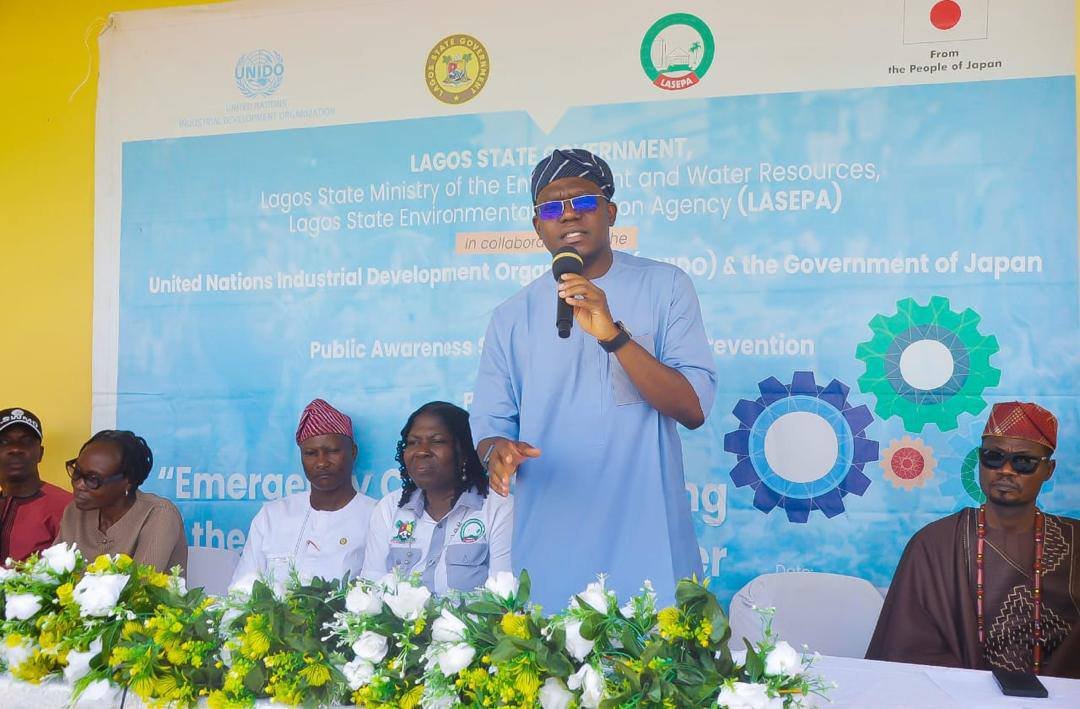
Discussions focused on environmental hygiene, safe food handling, access to potable water, and proper waste management, especially during the rainy season when cholera risks increase.
LASEPA General Manager, Dr Babatunde Ajayi, stated that the agency is responsible for identifying water contamination sources, boosting public awareness, and building community capacity for pollution prevention.
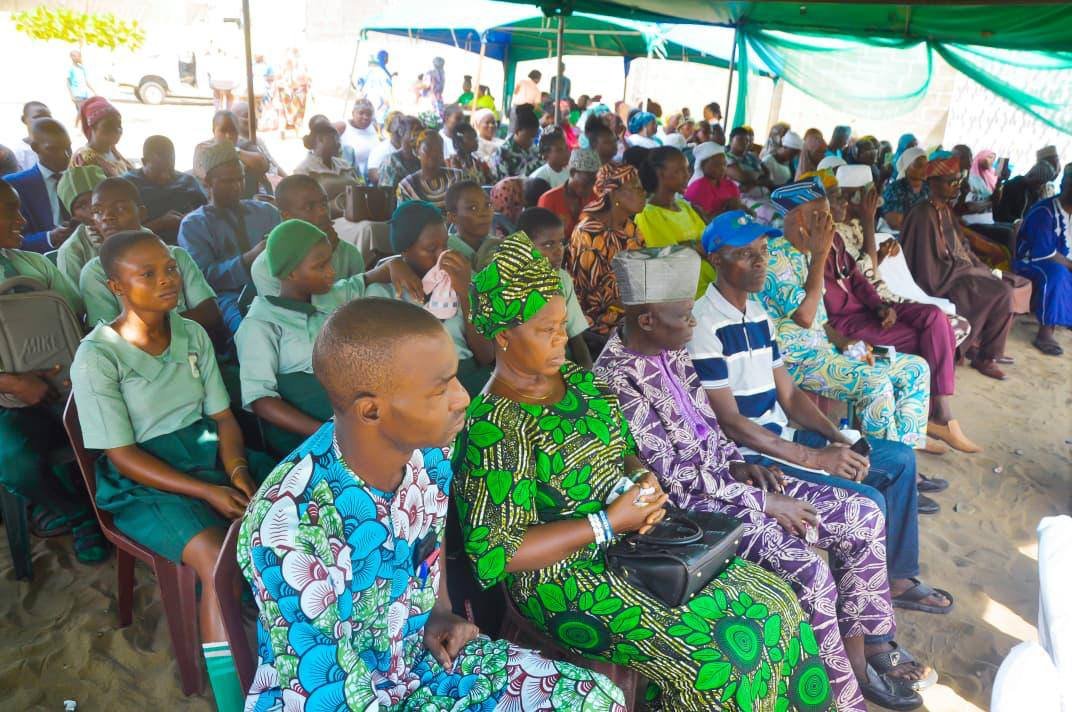
He commended UNIDO and the Government of Japan for supporting grassroots engagement and disclosed that environmental health enforcement would be intensified.
Also speaking is the General Manager of the Lagos State Wastewater Management Office, Engr. Adefemi Afolabi warned that cholera is a fast-spreading and deadly disease linked to poor sanitation and unsafe water.
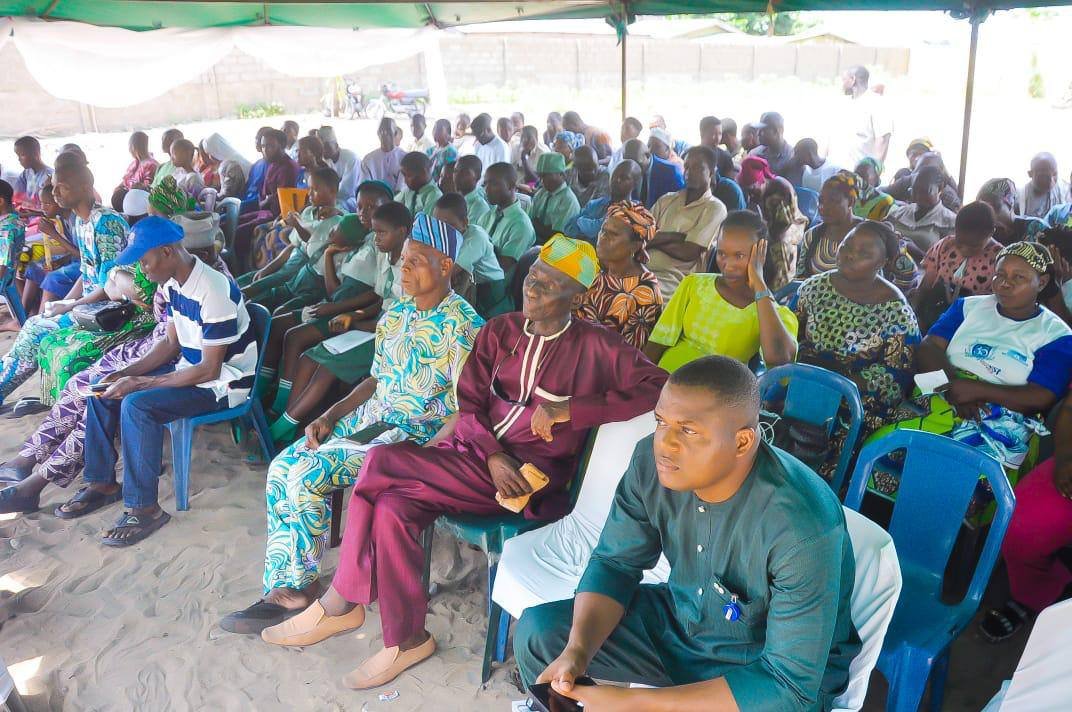
Representing the Badagry West LCDA Chairman, Mrs Sesi Okoosi-Adepoju stressed the link between clean environments and public health, applauding sustained community sensitisation.

Community leader Chief Bokoh Jacob appealed to the state government for piped water, citing health risks from reliance on well water.