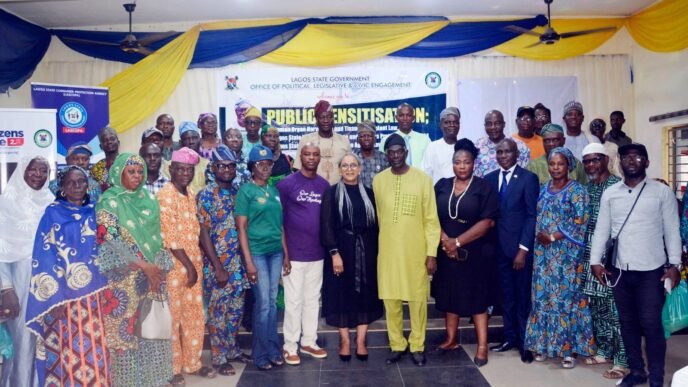




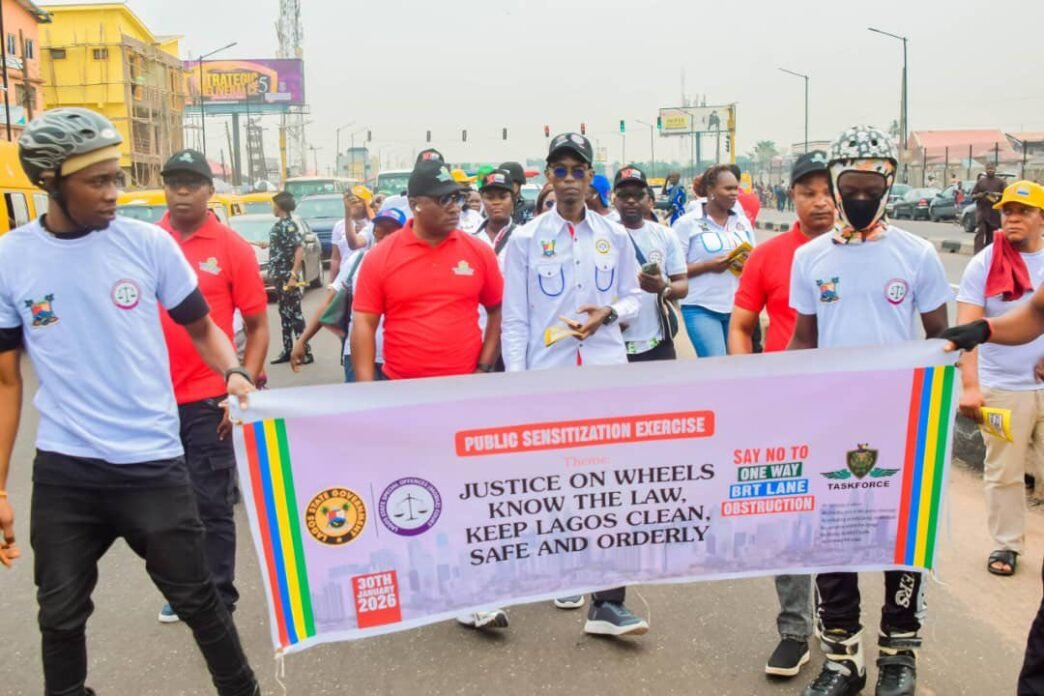
The Lagos State Government has intensified public enlightenment on traffic and environmental regulations through a sensitisation exercise organised by the Special Offences (Mobile) Court across key locations in the state.
Eko Hot News reports that the sensitisation programme took place at the Lagos Safety Arena and strategic areas, including Oshodi, Iyana Ipaja, Ojota, and Ikorodu, targeting motorists, traders, and pedestrians.
The exercise, themed “Justice on Wheels: Know the Law, Keep Lagos Clean, Safe and Orderly,” focused on common infractions such as one-way violations, misuse of Bus Rapid Transit (BRT) lanes, and obstruction of public spaces.
Representing the Attorney-General and Commissioner for Justice, Mr Lawal Pedro, SAN, the Director of Citizens’ Rights, Mr Ogunsanya Jonathan, stated that the initiative reflects the government’s commitment to accessible, corrective, and people-centred justice.

He explained that the Special Offences (Mobile) Court serves not only as an enforcement mechanism but also as a platform for public education, aimed at preventing violations through improved understanding of laws, rights, and responsibilities.
The Coordinator of the Special Offences (Mobile) Court, Mr Olufemi Adekunle, noted that the programme was designed to bridge the information gap between the justice system and the public. According to him, increased legal awareness reduces avoidable offences and promotes voluntary compliance.

Also speaking, the Chairman of Lagos State Environmental Sanitation and Special Offences, Mr Adetayo Akerele, stressed that traffic discipline and environmental cleanliness are essential to public safety and urban order in Lagos.
He warned that practices such as driving against traffic, obstructing roads, and abusing BRT lanes undermine the state’s development efforts and urged residents to obey existing laws for the collective good.
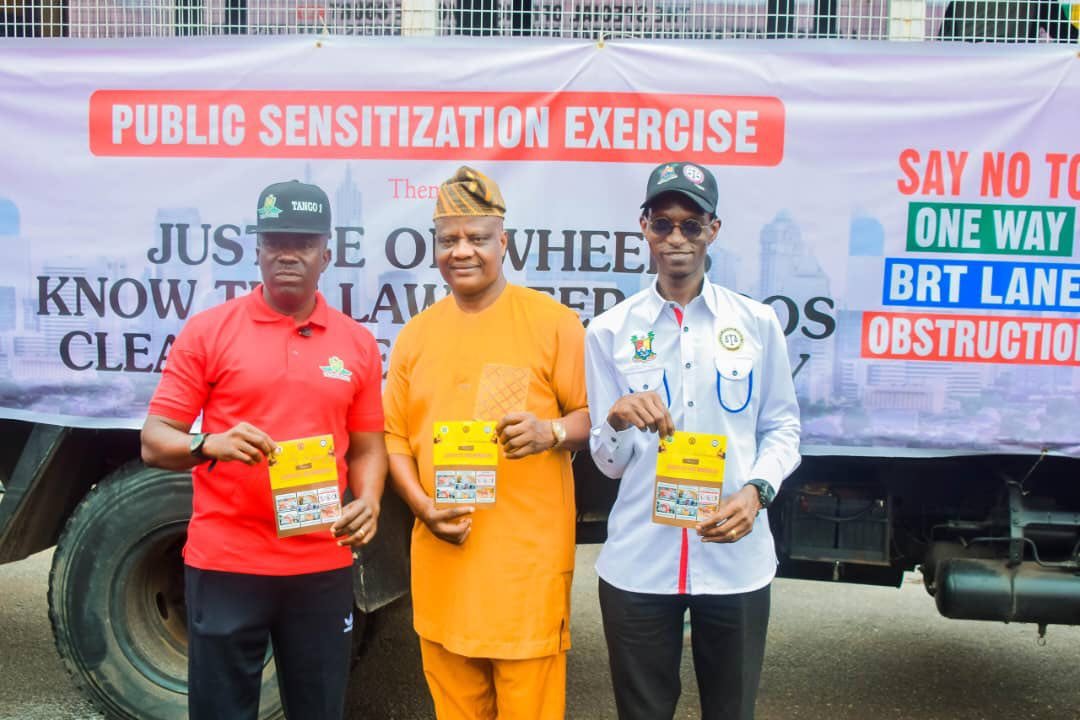
The sensitisation featured interactive engagements at bus stops, distribution of informational flyers, and practical explanations of offences and penalties handled by the Mobile Court.
Residents were encouraged to uphold traffic regulations, maintain environmental cleanliness, and conduct daily activities within the law.