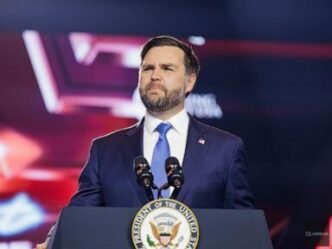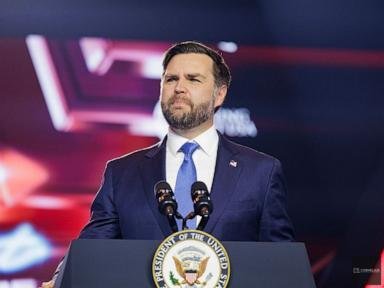




Vice President JD Vance’s growing profile ahead of the 2028 U.S. presidential race has triggered early divisions within the Republican Party, following public reluctance by senior GOP figures to endorse his potential bid.
Eko Hot News reports that Senators Rand Paul of Kentucky and Lindsey Graham of South Carolina have declined to back Vance as the party’s next presidential standard-bearer, despite increasing speculation about his political future after the 2024 elections.
Speaking during separate television interviews, Senator Rand Paul made it clear that he does not view Vance as aligned with his vision of Republican principles. Paul cited concerns over issues such as free-market policies, international trade, and limited government, stating plainly that Vance does not represent those priorities.
Senator Lindsey Graham, meanwhile, avoided offering a direct endorsement when questioned about supporting Vance for 2028. Instead, Graham deflected the question and shifted focus to immediate political matters, while offering praise for President Donald Trump’s leadership and foreign policy decisions.
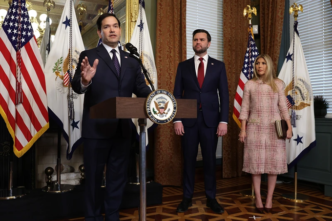
The hesitation from Paul and Graham comes amid a wave of endorsements from other prominent Republicans. U.S. Secretary of State Marco Rubio has openly expressed support for Vance, describing him as a likely frontrunner should he decide to contest the 2028 presidential election.
In addition, conservative activist Erika Kirk has pledged organisational backing for Vance, signalling strong grassroots support within parts of the Republican base. Her endorsement was announced at a major conservative gathering, adding momentum to Vance’s growing influence.
Political observers note that the contrasting positions highlight internal divisions within the GOP. While Trump-aligned and populist factions appear increasingly comfortable with Vance as a successor, libertarian-leaning conservatives remain cautious about his policy direction.
Vance, who has not formally declared his intention to run in 2028, has remained largely silent on the endorsements and criticisms. However, his rising national profile and close association with President Trump have kept him at the centre of succession discussions.
The debate over Vance’s future also reflects broader uncertainty about the Republican Party’s post-Trump leadership. While some party leaders are eager to consolidate around a clear successor, others argue that it is too early to anoint a nominee.
Analysts say the refusal by influential senators like Paul and Graham underscores the ideological balancing act facing the GOP as it navigates generational change, shifting voter priorities, and the enduring influence of Trump’s political movement.
As the 2028 election cycle slowly begins to take shape, Vance’s ability to unify competing factions within the Republican Party may prove decisive in determining whether he emerges as the party’s consensus candidate or faces significant internal opposition.