



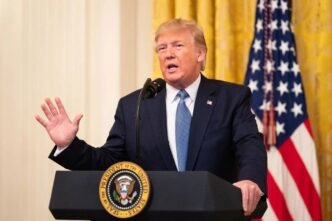

President Donald Trump says the U.S. has yet to feel the “full benefit” of his tariffs because companies stocked up on goods to avoid paying them.
Eko Hot News reports that the former president defended his tariff policies in a Monday morning Truth Social post, arguing that the economic impact of his trade measures will soon intensify as businesses exhaust inventories they purchased in bulk. Trump claimed that these stockpiles had temporarily softened the effect of tariffs but insisted that companies would soon face unavoidable duties that would significantly increase federal revenue.
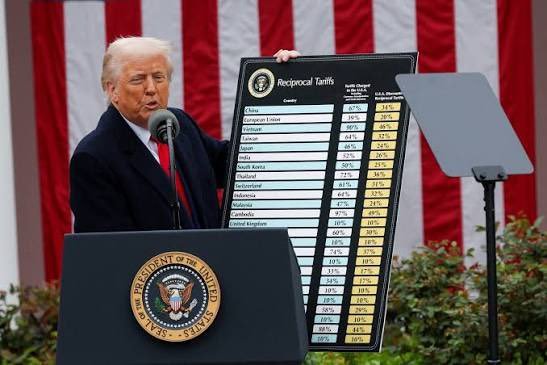
In his post, Trump said the United States has already earned “hundreds of billions of dollars” from tariffs imposed on foreign countries, asserting that the payments would “skyrocket” once companies can no longer rely on pre-purchased goods. He described the expected revenue as “record-setting” and said it would place the U.S. on an “unprecedented course” of security and wealth.
Doubling down on his message, Trump framed opposition to tariffs as unpatriotic, alleging that critics are “serving hostile foreign interests” and undermining U.S. prosperity. He positioned tariffs as not only an economic tool but a matter of national security, claiming they would propel the country to new levels of global dominance.
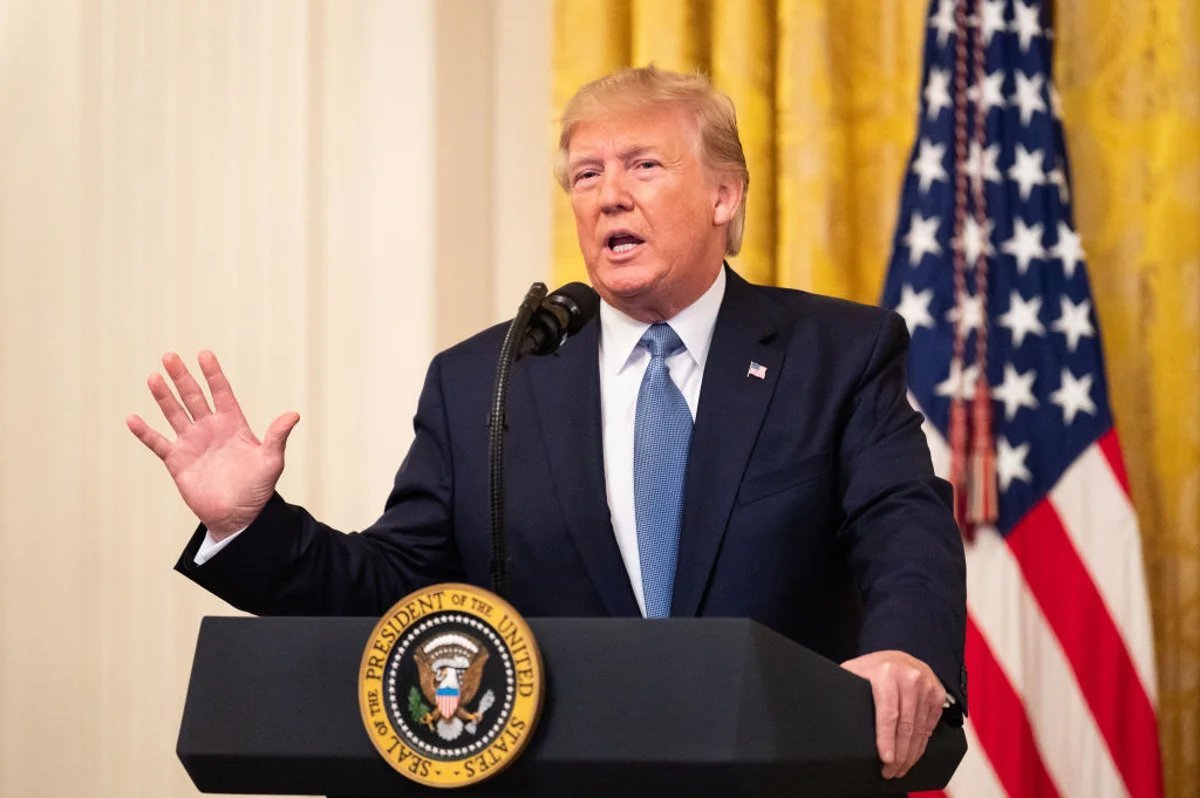
However, recent polling indicates that the American public is still not persuaded by Trump’s claims. Only 35% of registered voters support Trump’s handling of tariffs, while 63% disagree—nearly a two-to-one ratio—according to a Fox News poll from November 14–17. The findings suggest that even among those who have previously shown support for Trump’s economic program, mistrust of his trade policies is still pervasive.
According to the survey, only 38% of respondents support Trump’s management of the overall economy, while 61% disagree. Just 15% of respondents claimed they felt aided by his economic policies, compared to 46% who said they had been harmed. A substantial 39% claimed that the policies had little impact on their day-to-day existence.
With a margin of error of plus or minus three percentage points, the survey sampled 1,005 registered voters countrywide. The results indicate that most people do not think Trump’s trade policy is helping them, despite his strong claims of tariff success.
Economists have long cautioned that tariffs frequently act as consumer levies, driving up the cost of imported goods and exacerbating inflationary pressures. But Trump still maintains that foreign nations, not American companies or consumers, are bearing the expense. In an effort to mobilise followers around a platform of economic nationalism and trade antagonism, his most recent remarks indicate that tariffs will continue to be a key component of his economic discourse.
As Trump steps up his tariff defence, analysts warn that any additional economic impact, favourable or negative, will be determined by how quickly corporations clear their remaining inventory and how global trading partners respond. Voter sentiment currently reveals a large discrepancy between public opinion and Trump’s rhetoric, paving the way for further discussion about the actual cost of his tariff plan.